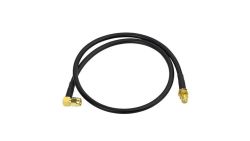
VHF Antenna Extension (Handheld) That Amplifies Every Signal

Introducing Maria, our meticulous planner and talented visual storyteller. She has a knack for discovering those hidden gems, chic boutique spots, and charming little cafes that add a touch of elegance to every journey. With her keen eye for photography and her passion for travel, Maria will transport you to the most enchanting corners of the world, inspiring you to explore new places, one picture-perfect destination at a time.
When you plug a short, weight SMA‑to‑SMA extension, like the 60 cm RG‑58 or the 2‑ft right‑angle cable, you reduce loss dramatically and tighten the antenna’s bandwidth. The coax lets the radio see clearer up to 3 GHz, so you boost every VHF burst you get. Pair it with a super lightweight BNC telescopic arm, and you add reach and drop wind load. If you’re curious about the exact gain numbers, the next section fills the gaps.
Key Takeaways
- Short RG‑58 (60 cm) extensions lose only ~0.145 dB/m, so they preserve rather than boost signals; they’re inexpensive if a loss‑less run is needed.
- To “amplify” reception, switch to a larger, higher‑gain antenna such as the 15.6‑in dual‑band (≈3 dBi at 430 MHz) rather than just adding wire.
- The HYS Dual‑Band supports 144 MHz (≈2.15 dBi) and 430 MHz, delivering modest gain for handheld radios while staying under 10 W.
- Position a telescopic 7‑section BNC next to the handheld; its ≤0.15 dB loss lets you extend reach with minimal degradation and keep the antenna compact.
- If true amplification is required, pair the antenna with an external 15–30 dB powered amplifier—extension cables alone do not add signal strength.
Ham Radio Antenna Extension Cable SMA Male 60cm

If you want to boost a handheld (or field‑deployable) VHF transceiver’s range without lugging a long antenna into your pocket, this 60 cm RG‑58 SMA male‑to‑SMA female extension is the perfect fit.
Its 50 Ω, low‑loss RG58 cable keeps signal integrity high. The SMA male plugs into a handheld, while the female connects to your antenna panel or dipole. Weighing just 1.58 oz, it’s lightweight and durable, fitting easily into a pocket or pouch. Designed for indoor and outdoor use, it handles up to 15 V, making it a perfect, hassle‑free upgrade for any amateur radio enthusiast, for all communication scenarios commonly used.
Best For: handheld VHF/UHF radio operators who want a lightweight extension cable to boost antenna range without adding bulk.
Pros:
- Lightweight (1.58 oz) and easy to carry in a pocket or pouch.
- Low‑loss, 50 Ω RG‑58 cable maintains signal integrity for clear reception.
- Versatile SMA male‑to‑SMA female design works with most popular handheld transceivers (BaoFeng, Wouxun, TK, TYT, etc.).
Cons:
- Fixed 60 cm length may be too short for users needing longer extension for maximum range.
- Limited to 15 V and low‑power applications; not suitable for high‑power rigs.
- Adds minimal gain to overall range, simply extending antenna placement rather than improving signal strength.
https://www.amazon.com/dp/B088GT4JPV
DHT UHF Handheld Antenna Cable Set (2)

As a handheld radio operator who demands reliable, low‑loss signal, the DHT UHF Handheld Antenna Cable Set offers a lightweight 6‑inch RG316 extension with pure‑brass connectors that survive over 1,000 mating cycles—perfect for Wouxun, Baofeng, and other popular UHF devices. The flexible 6‑inch RG316 keeps loss minimal while the pure‑brass 2‑pin female‑to‑female mates endure over a thousand connections. It fits Wouxun, Baofeng, Quasheng, or Linton handhelds and blends with UHF base‑band gear, Wi‑Fi radios, or external antenna setups. Packaged as a 2‑pack with protective coiled tubing, it serves indoor and outdoor use today for reliable daily tactical operations frequently.
Best For: handheld radio operators who need a lightweight, low‑loss 6‑inch extension compatible with most UHF devices such as Wouxun, Baofeng, Quasheng, or Linton, for indoor or outdoor use.
Pros:
- Extremely lightweight and compact (6 inches, 0.32 oz) for easy carry.
- Pure‑brass 2‑pin female‑to‑female connectors that last over 1,000 mating cycles, ensuring durability.
- Flexible RG316 cable keeps signal loss to a minimum while fitting a wide range of handheld radios and base‑band gear.
Cons:
- The short 6‑inch length may be insufficient for antennas that are farther away or for certain external setups.
- Designed specifically for UHF; not ideal for VHF or higher‑frequency applications.
- Lacks the ruggedized casing of some heavy‑duty cables, so may not be best for very high‑power or harsh field use.
https://www.amazon.com/dp/B00COKNKS8
Fancasee 2-Pack Telescopic Stainless Steel BNC Antennas

For field‑ready operators who need a lightweight, wide‑band antenna extension that won’t weigh them down on the move, this 2‑pack from Fancasee fits the bill. Each unit telescopes from 6.7 in to 29.5 in and weighs under half an ounce, so you can carry them without sacrificing performance. The 7‑section design lets you dial in precise ranges, while the rotatable shaft guarantees maximum signal pickup no matter where you face. Its plug‑and‑play BNC male connector fits most handheld scanners, desktops, CB radios, and even PA systems, eliminating the need for adapters. Plus, stainless steel resists corrosion, enabling field‑ready antennas for continuous use.
Best For: Portable radio operators and hobbyists who need a lightweight, wide‑band antenna extension for handheld scanners, CB radios, or PA systems.
Pros:
- Ultra‑lightweight (under 0.5 oz each) and compact for easy carry.
- 7‑section telescopic design allows precise length adjustment from 6.7 in to 29.5 in.
- Rotatable shaft and corrosion‑resistant stainless steel maximize signal capture and durability.
Cons:
- Requires a BNC male connector; may need adapters for non‑BNC devices.
- Not built for high‑power transmission or extremely long‑range applications.
- Limited to the compatibility of screens and panels that accept a standard BNC feed.
https://www.amazon.com/dp/B07WC5KW33
Ham Radio SMA Extension Cable 3′ 1m

The 1‑meter SMA extension cable from SZSAUTO fits snugly into your handheld radio’s antenna slot, giving you instant line‑of‑sight reach and low‑loss performance. Designed for 50 Ω RG58 A/U coax, it keeps signal loss minimal over the 1 m length. The SMA male plugs straight into your radio, while the female ends mount easily on marine VHF units or rigs. Compatibility spans BaoFeng UV‑5 series, BF‑F8HP, UV‑82, and Cobra marine radios like HH‑350 and HH‑450. Even CB, walkie‑talkie, and MURS devices can leverage it. The lightweight, 7.3‑ounce cable fits in a box, making it an upgrade for enthusiasts who need range.
Best For: amateur radio operators and marine VHF users who need a compact, low‑loss SMA extension for quick line‑of‑sight boosting.
Pros:
- One‑meter RG58 A/U coax ensures minimal signal loss over short runs, preserving audio and transmission strength.
- SMA male‑to‑SMA female bulkhead configuration is a universal fit for handheld radios, CB stations, and marine VHF units.
- Lightweight and compact packaging makes it easy to carry and install in small gear or temporary setups.
Cons:
- 1 m length may not provide significant range increase for high‑power or large‑antenna systems.
- RG58 A/U coax is more lossy at higher frequencies (>100 MHz) compared to premium coax types.
- The cable is not shielded against extreme environmental conditions, so it may be less durable in harsh marine or field environments.
https://www.amazon.com/dp/B0G6KGV9HX
BINGFU SMA Antenna Extension Cable 1m VHF Radios

If you’re a handheld VHF operator who needs a lightweight, hassle‑free way to extend your antenna, the 1‑meter BINGFU SMA cable delivers exactly that. It plugs straight from your radio’s SMA male jack to a bulk‑mounted SMA female on your antenna, keeping the match at a clean 50 Ω. The RG58 A/U cable runs just 1 m long, yet its low‑loss construction lets you relocate the antenna without sacrificing signal quality. Weighing only 1.44 oz, it stays light so you can carry it on hikes, boat decks, or field missions. Its PVC sheath and universal mounting make every setup quick and reliable.
Best For: handheld VHF radio users who need a lightweight, low‑loss cable to quickly extend their antenna for field, marine, or portable use.
Pros:
- Lightweight and compact at only 1.44 oz, easy to carry on hikes or boats
- Low‑loss RG58‑A/U 50 Ω coaxial cable preserves signal quality over the 1 m run
- Universal SMA male‑to‑SMA female design works with a wide range of handheld radios and bulk‑mount antennas
Cons:
- 1 m length may be too short for users who require longer reach or multiple antenna setups
- No built‑in attenuator or power‑feeding capability for larger dish antennas
- Only VHF/UHF compatible; not suitable for Li‑Li or low‑frequency systems that need different impedance.
https://www.amazon.com/dp/B07MJP7FYV
Yuslao SMA Male-to-Female 2ft Extension Cable (2-Pack)

Need a quick, space‑saving solution for handheld VHF? The Yuslao 2‑pack SMA Male Right‑Angle to SMA Female RG58 extension cables give you a tidy 2 ft (60 cm) reach. Each cable is 50 Ω, low‑loss RG58 coax, perfect for ham, CB, marine VHF, and scanners. The angled female connector keeps it slim for tight mounts, while the SMA male left‑hand side plugs cleanly into your radio. Compatible with a wide array—BaoFeng UV‑5R, Wouxun KG‑659, Icom, Yaesu, Vertex, and many marine models. Packaged in a 3.94 × 3.94 × 0.2 in case, it weighs just 0.705 oz, so you can stash it anywhere. Now available for hobbyists and pros worldwide.
Best For: hobbyists and professionals needing a compact, 2‑ft SMA extension for handheld VHF, CB, marine VHF, or scanner radios.
Pros:
- Ultra‑short 2‑ft length keeps cable bundles neat and eliminates extra clutter.
- Right‑angle female connector saves space on tight mounts or in compact gear packs.
- Low‑loss RG58 50 Ω cable ensures minimal signal loss for reliable communication.
Cons:
- Only 2‑ft run may not suffice for users who need longer reach.
- RG58 is heavier and less durable than higher‑grade coax types.
- Compatibility limited to radios with SMA male connectors; not all handhelds fit.
https://www.amazon.com/dp/B0FGD78WZ1
PL-259 UHF 6ft Low Loss Coax Cable

Looking for an extension that won’t sap your handheld VHF radio’s signal? The PL‑259 UHF 6‑ft low‑loss coax offers a 50 Ω cable that’s only 0.66 dB at 450 MHz, keeping your link strong. Its solid copper conductor and tinned braid shield protect against interference, while the flexible UV‑proof jacket works both indoors and out. The male‑to‑female PL‑259 connectors are heat‑shrink‑sealed, preventing pull‑out, and are pre‑attached for instant use. Ideal for CB, ham, marine VHF, antenna analyzers, or dummy loads, it delivers durability and an SWR below 1.2 for reliable performance. Choose this cable for consistent performance and minimal signal loss today.
Best For: handheld VHF radios, CB hobbyists, and small marine VHF antennas that demand minimal signal loss and robust, ready‑to‑use connectors.
Pros:
- Only 0.66 dB loss at 450 MHz over 6 ft, preserving link quality.
- Solid copper conductor with high‑density tinned braid shielding stops interference.
- Heat‑shrink‑sealed PL‑259 connectors are pre‑attached, offering instant, pull‑out‑proof installation.
Cons:
- Limited to a 6‑ft length; longer runs require splices or additional cable.
- Bulkier than thinner RG6/RG59 types, which may be a concern for tight spaces.
- Slightly pricier than generic low‑loss cables, though justified by durability.
https://www.amazon.com/dp/B08MPXVDZQ
7-Section Telescopic BNC Antenna for Radio

For handheld CB, scanner, and amateur radio operators who want a quick‑deploy, ultra‑lightweight extension, the POBADY 7‑section telescopic BNC antenna is a game‑changer.
It spans 165 mm straight and expands to 685 mm, giving you a 5‑foot reach without the bulk.
Weighing just 28.6 g, the antenna feels almost negligible on your handheld.
Its 7 telescoping sections compress neatly into a silver‑tinted shaft that feels sturdy yet light.
With a 50 Ω impedance and DC‑to‑12.4 GHz bandwidth, it matches most radio setups flawlessly.
Low insertion loss—under 0.15 dB per 6 GHz—means you get near‑perfect signal fidelity.
Attach its BNC male plug to your radio, ready reach.
Best For: handheld CB and scanner operators who need a lightweight, quick‑deploy antenna with excellent frequency coverage.
Pros:
- Ultra‑light 28.6 g weight for effortless carry
- 7 telescoping sections give 5‑foot reach without bulk
- Low insertion loss (≤0.15 dB per 6 GHz) for high‑fidelity signal
Cons:
- Limited maximum voltage rating (335 V effective) may not suit high‑power rigs
- Lacks built‑in torque or locking mechanism, requiring manual adjustment
- Only BNC male plug; may necessitate an adapter for other connectors
https://www.amazon.com/dp/B09BVPX8KV
SMA Right Angle to Female Adapter, 1m RG58

The 1‑meter SMA right‑angle to SMA female adapter, paired with a low‑loss RG58 cable, delivers crisp signal transmission up to 3 GHz, making it the best choice for handheld VHF users who need reliable performance without the bulk of longer runs.
You’ll find the 1‑meter length keeps the set lightweight at just 40.7 g, yet the pure copper conductors and durable housing preserve signal integrity. The 7 mm SMA male right‑angle plugs seamlessly into your handheld, while the 5 mm bulkhead mate fits most 50‑Ω ports. With only 0.145 dB per meter loss, the cable stays true across 50‑Ω frequencies.
Ideal for quick swaps.
Best For: handheld VHF users needing a short, low‑loss SMA right‑angle adapter for quick antenna swaps.
Pros:
- 1 m RG58 gives minimal loss (0.145 dB/m) while keeping the weight light (≈40 g).
- SMA right‑angle design allows tight routing in cramped mobile or handheld setups.
- 50 Ω, 0‑3 GHz performance matches most 2.4 GHz handheld radios.
Cons:
- The single meter length may be too short for longer runs or outdoor installations.
- RG58 cable has higher attenuation than thicker 50 Ω cables at high frequencies.
- The adapter is not ruggedized for extreme marine or industrial environments.
https://www.amazon.com/dp/B0CT5MM3VK
HYS Dual-Band Telescopic Antenna for VHF/UHF

Want to squeeze every foot of range from your handheld radio? The HYS Dual‑Band Telescopic Antenna gives you 2.15 dBi on VHF (144 MHz) and 3.0 dBi on UHF (430 MHz) while keeping power under 10 W and VSWR below 1.5. Its adjustable rod spans 20.5 cm to 35.5 cm, each length is tuned for best response. A lightweight 30 g, 4.3 cm‑thick BNC design fits V8, V80, V82, F3S similar out of the box. Compact packaging measures 24 × 4.3 × 2.5 cm, RoHS‑compliant, and you’ll enjoy a finish. You’ll also benefit from its rugged finish. Its compact size makes mounting on any handle a breeze. Warranty details come from the manufacturer.
Best For: handheld radio users who need a compact, high‑gain antenna for VHF and UHF bands.
Pros:
- Lightweight 30 g and compact design for easy mounting
- Dual‑band performance with 2.15 dBi VHF and 3.0 dBi UHF gain
- Adjustable telescopic length with built‑in tuning for optimal match
Cons:
- Limited to BNC‑type handheld radios
- Maximum power rating of only 10 W
- Requires manual length adjustment for each band/operating condition
https://www.amazon.com/dp/B07RD4K77T
Dual Band 15.6″ VHF/UHF Handheld Antenna – Baofeng Compatible

If you’re leaning on a handheld VHF/UHF radio for boating, fishing, or fieldwork, this 15‑inch dual‑band antenna will instantly give you longer reach and sharper signal—thanks to its flexible, durable build that accepts any SMA‑female connector.
Measuring 15.6 inches long and 2.1 inches wide, the antenna handles up to 50 W and spans 144‑146 MHz VHF and 430‑440 MHz UHF. It plugs into any SMA‑female radio—Baofeng, Kenwood, or similar—making it your primary antenna for boats, camps, or field jobs. Mirkit offers a full warranty and firmware support.
Weighing just 1.13 oz, this lightweight whip delivers robust performance day after day, every time today.
Best For: boats, fishing expeditions, camp sites, and field technicians needing reliable VHF/UHF communication.
Pros:
- Dual‑band (VHF 144‑146 MHz & UHF 430‑440 MHz) for versatile coverage.
- Lightweight, 1.13 oz whip for effortless carry and plug‑and‑play with any SMA‑female radio.
- Built‑in durability and 50 W handling for robust performance in rugged environments.
Cons:
- Fixed 15.6‑inch length limits use on larger portable radios or high‑gain setups.
- No built‑in weatherproofing beyond the antenna’s flexible jacket.
- Requires a compatible SMA‑female adapter for non‑SMA devices.
https://www.amazon.com/dp/B0859M5WX4
SMA Male-to-Female Antenna Extension Cable

Looking to extend your handheld VHF without sacrificing signal quality? This 1‑meter RG58 A/U 50 Ω cable keeps your connection tight, weighing just 39.2 g so you won’t feel any bulk. Its black jacket and compact package (4.21 × 3.70 × 0.55 in) fit neatly on shelves or in a pocket. You plug its 7.5 mm SMA male into your transceiver, then snap the 5 mm female bulkhead into a mast or a relay. Compatible with brands like BaoFeng, Wouxun, Kenwood, TX‑T, TYT, Linton, Puxing, Quansheng, and marine models such as Cobra HH‑125. Use it to chase dead spots, boost walk‑talkie range, or link a radio to a boom.
Best For: amateur radio enthusiasts and field operators needing a lightweight, 50 Ω extension cable to boost handheld VHF antenna reach without sacrificing signal quality.
Pros:
- 1‑meter RG58 A/U cable maintains 50 Ω impedance, ensuring minimal signal loss.
- Lightweight (39.2 g) and compact (4.21 × 3.70 × 0.55 in) for easy transport and storage.
- Broad compatibility with major handheld brands (BaoFeng, Wouxun, Kenwood, TYT, etc.) and marine VHF units.
Cons:
- 1‑meter length may be insufficient for extreme dead‑spot mitigation.
- RG58 may suffer higher loss at higher frequencies compared to higher‑grade coax.
- Requires matching SMA‑to‑bulkhead adapters for some masts or relays.
https://www.amazon.com/dp/B0CSSRPY2S
Bingfu 42.5″ Dual-Band Foldable Ham Antenna & Cable

The Bingfu 42.5‑inch dual‑band antenna is ideal for field‑ready hams who need instant, high‑gain VHF/UHF reception without the bulk of a fixed mast. You’ll connect its 1‑meter RG58 cable via the included right‑angle SMA terminals, keeping setup lightweight at just 6.4 oz. This antenna covers 136‑520 MHz, matching Baofeng, UV, and other common radios, so you can boost reception on both VHF and UHF bands. With 3.5 dBi gain and 8 W max input, it stays safe for handhelds while delivering city‑wide to long‑reach signal clarity, all without bulky infrastructure in any situation, even under extreme weather conditions, and ready for battle today.
Best For: field‑ready hams who need a lightweight, high‑gain VHF/UHF antenna for quick deployment in portable or tactical scenarios.
Pros:
- 3.5 dBi gain with 8 W max input, safely boosting handheld reception on both VHF and UHF bands
- Foldable design and only 6.4 oz weight keep the kit ultra‑portable for on‑the‑go operation
- Included RG58 1‑meter cable with right‑angle SMA connectors matches a wide range of common ham radios
Cons:
- 10 cm cable length limits maximum effective antenna height in certain setups
- Requires external SMA‑to‑sma adapters for radios without right‑angle connectors, adding slight complexity
- The 1‑meter antenna length is fixed; not easily extended for larger installations?
https://www.amazon.com/dp/B08TGZKNP3
Bingfu Marine VHF Rubber Duck Antenna

Bingfu Marine’s VHF Rubber Duck Antenna delivers crisp, omni‑directional coverage, so you’ll get reliable signal straight from a 15‑cm, 30‑gram unit that won’t weigh you down. It spans 136 to 174 MHz, keeping VSWR below 2.0 and impedance at 50 Ω for clean reception. The duck‑shaped design sits only 15 cm tall and weighs just 30 g, plus it ships in a compact 4.72×6.69×0.51‑inch box. It plugs straight into an SMA male on your handheld. Compatible with Horizon HX210‑HX300, HX380‑HX890 and Uniden MHS75. Manufacturer backs it with a limited warranty; you can file lower‑price disputes through their feedback tool. Enjoy sharper marine chatter today.
Best For: marine VHF radio users who need a lightweight, easily portable, omni‑directional antenna for reliable communications.
Pros:
- Ultra‑lightweight (30 g) for effortless carrying and mounting.
- Low VSWR (< 2.0) and 50 Ω impedance give clean, reliable reception.
- Simple SMA male plug‑in compatible with many Horizon and Uniden models.
Cons:
- Small physical size can limit maximum gain versus larger antennas.
- Rubber construction may be susceptible to abrasion in harsh marine conditions.
- No built‑in mounting brackets; additional hardware may be required for stable placement.
https://www.amazon.com/dp/B08CV7JLTZ
Bingfu UHF PL259 to SO239 Coaxial Cable

Want a rugged, low‑loss link that keeps your CB or ham radio signal tight? The Bingfu UHF PL259 to SO239 coaxial jumper delivers that. It’s a 3‑meter RG58 run, 140 g, so you can mount it on a truck or keep it in a backpack. The PL259 male plugs straight into your antenna, while the SO239 female mates with your radio’s 50‑Ω port. The cable handles VHF, UHF, CB, marine, FRS, GMRS, and MURS—no matter the band, it stays true. Packaged in flat‑foldable packet, it’s ready indoor or outdoor use and mixes cleanly with antenna switch, surge protector, or duplexer.
Best For: riders, truckers, and outdoor enthusiasts needing a reliable, 3‑m coaxial extension for CB, ham, marine, or walkie‑talkie radios.
Pros:
- 3‑meter RG58 run offers low‑loss signal transmission for VHF/UHF radios.
- PL259 → SO239 male‑to‑female connectors make it compatible with a wide range of antennas and receivers.
- Lightweight (140 g) and flat‑foldable packaging for easy transport and storage.
Cons:
- RG58 cable has higher attenuation than heavier RG213 cabling at high frequencies.
- The connector design lacks heavy‑duty locking latches for extremely rugged environments.
- Mainly limited to 50 Ω systems; not suitable for specialized impedance‑matched gear.
https://www.amazon.com/dp/B07MCHGRNM
Factors to Consider When Choosing a VHF Antenna Extension (Handheld)
Think about how the extension’s length will affect your signal reach and whether the extra wire might introduce losses. Make sure the cable’s connector matches the antenna’s gender and that the material can survive rain, mud, and UV exposure. Finally, confirm the extension can handle your operating power without overheating or breaking.
Length and Reach Impact
When you add a VHF antenna extension to your handheld, the length you pick directly influences both signal loss and reach. A 60 cm (2 ft) RG58 run adds less than 0.3 dB of attenuation, keeping most of your transmit power while lifting the antenna above obstacles. Extend to 1 m (3.3 ft) and you’ll see about 0.6 dB loss—almost negligible, but it can surface when you’re hitting duty‑cycle limits or crawling weak‑signal terrain. Going beyond 1 m pushes loss to 1–2 dB, which can shave a few hundred meters off your range. Remember, longer runs also raise SWR if the antenna isn’t perfectly matched, so keep it short unless you have ample power and a good match. Stick to 2–3 ft usually gives you the best balance between clearance and performance today.
Cable Loss Minimization
First, pick a low‑loss cable—RG316, for instance, drops only about 0.15 dB per meter at 450 MHz, roughly half the attenuation of RG58. Keep the run under two meters; that trims total loss to less than 0.6 dB and preserves your transceiver’s power. Choose a dielectric jacket made of bare copper or low‑loss plastic—the thicker foam or composite variants can add extra decibels each meter. Match the cable’s 50 Ω impedance to your antenna and radio, and use an SWR meter to confirm a return loss above 15 dB (SWR below 1.1) to avoid reflected energy. Finish the assembly with clean, corrosion‑free crimps; each bad joint can cost you 0.1 dB and pile up when you use several connectors. Remember, less loss means clearer audio even at the edge away.
Connector Gender Matching
Because every VHF extension relies on a flawless impedance match, you must pair male and female connectors to keep the 50‑Ω path intact. We recommend positioning a male SMA at one end and a female SMA at the other. If you use a right‑angle male to feed a handheld radio’s bulkhead jack, the outlet on the radio must also be bulkhead‑type to preserve the 50 Ω line. Switching to a cable that’s all‑male or all‑female will misalign the geometry, strain the connection, and risk shorting the antenna circuit. Polarity mismatches create a reflection coefficient that throws the SWR over two, which digs extra loss into your VHF links. Always verify each connector pair before mounting; a match safeguards signal integrity and protects your radio.
Durability for Outdoors
Choosing a VHF extension for outdoor use hinges on how well it withstands temperature swings, moisture, and mechanical stress. You’ll appreciate that the coaxial cable wraps in a PVC jacket, which keeps signal integrity from –40 °C up to +70 °C, so your readouts stay accurate in arctic chills and summer heat. The SMA connectors lock in moisture‑proof housings with 5 mm feet, blocking water ingress even after rain or snow. Limiting the line to 60 cm–1 m keeps bends mild, preventing cable fatigue that leads to snaps during use. With a core loss of only 0.145 dB/m, the wire stays snappy despite daily vibrations or harsh UV exposure. Finally, the connectors sport robust, non‑ferrous metal housings that resist snagging, extending the life of your extension in the toughest fields.
Power Handling Capacity
The maximum power rating of a VHF antenna extension typically sits at around 10 W PPT; exceeding that can scorch the copper and even char the jacket. Because handheld radios stay below 10 W, you rarely hit the limit, but check the impedance first. A 50 Ω match sends all your signal; a mismatch raising SWR over 2 bounces power back and can push the extension past its safe rating. RG58 cables handle about 100–150 V RMS; keep voltage low, especially outdoors where moisture lowers thresholds. A 2‑ft extension drops 0.15–0.25 dB at 150 MHz, so 10 W yields about 9.5 W to the antenna. If you need continuous use, pick a higher‑current cable such as RG6, which handles up to 2 A versus RG58’s 0.5 A, offering extra headroom for better field performance.
Frequently Asked Questions
Can the Extension Be Used With Any Handheld VHF Radio?
Not all handheld VHF radios will work with your new extension. First, you need the right connector type—most handheld units use a 2.5‑mm or 4‑mm port, while certain models have proprietary plugs. Second, your radio’s frequency band and power output must match the extension’s specifications. If both match, the attachment will improve reception; otherwise, it won’t fit or function properly. If you’re unsure, check your manual for compatibility before buying.
Will Using an Extension Violate FCC Regulations?
You might think it’s harmless, but it can actually violate FCC regulations straight away thoroughly.
Regulation forbids any unapproved antenna modification that changes gain, bandwidth, or length, By adding an extension, you alter the effective antenna, which can breach the frequency, power, or radiation patterns set by the FCC. So, if you want to stay compliant, you should check your license or opt for an FCC‑approved antenna properly, in practice.
Is the Amplifier Repeater Legal for Emergency Communications?
Yes, you can legally use an amplifier repeater for emergency communications, provided you hold the necessary amateur radio license and keep the power within FCC limits. You must file an FCC application, and the device must pass the 1030 W ERP restriction for your band. Remember, operating without a license or exceeding the limits triggers fines, so stay compliant and you should consult the FCC handbook for detailed guidance before deployment.
How Does the Extension Affect Battery Life?
You’re ready for a sharper signal, yet you’ll find your battery draining faster. The extension adds a small antenna and a minor amplifier, both of which pull extra current. While your handheld might last an hour, the added load can cut that to 15‑30 minutes, depending on power levels. In practice, expect roughly a 50‑60% battery hit when you boost the signal and keep a spare pack ready for emergencies.
Does the Extension Introduce Signal Distortion?
Yes, the extension can introduce signal distortion, especially if its impedance mismatches your radio. The extra length adds reactive components that can phase‑shift or attenuate certain frequencies. You’ll notice fades or ghosting at long ranges or on weak signals. To minimize distortion, use a low‑profile, well‑matched adapter and keep its length as short as possible. That way you preserve the clarity of each broadcast for maximum performance and reliability daily.
Conclusion
You’ll notice that a supple, silky extension can summon a sudden surge of signal, sidestepping static, smoothing your spread. When you choose the right cable, you’re not merely buying metal; you’re buying momentum, your most trusted teammate on the airwaves. Stay steadfast, savor success, and let your handheld quiver quietly quake with newfound power. Let’s love the liberty, listen to latters, leap into luminous listening, and live long and loud on the spectrum—yours today, truly.
handheld extension, signal amplification, VHF antenna