Mini first-aid kit (refillable) Every Traveler’s Must-Have

Introducing Maria, our meticulous planner and talented visual storyteller. She has a knack for discovering those hidden gems, chic boutique spots, and charming little cafes that add a touch of elegance to every journey. With her keen eye for photography and her passion for travel, Maria will transport you to the most enchanting corners of the world, inspiring you to explore new places, one picture-perfect destination at a time.
Imagine having a lightweight, TSA‑approved first‑aid kit that fits in your carry‑on and refreshes itself with refill packs. The MFASCO 7‑in‑1 kit delivers pre‑measured, single‑dose meds while the 276PCS Compact models offer water‑resistant protection. Refills come in 70‑packet packs or 200‑item sets, keeping your kit operational for long trips. Attach it to bag with clips or a carabiner, and because every item meets 3‑1‑1 rules, you’ll travel stress‑free. Curious how to pick the best fit?
Key Takeaways
- Compact, refillable design: The 276PCS Compact kit or Mini‑Aid 180‑Pt Pack holds essential supplies in a ≤ 7×5″, <½ lb case that can be fully restocked.
- TSA‑approved, liquid‑free: All contents are solid or single‑dose, meeting 3‑1‑1 regulations for carry‑on bags, flights, trains, and cruises.
- All‑in‑one medical coverage: Includes pain relief, gastrointestinal, allergy, wound care, and emergency tools (tourniquet, tweezers, povidone‑iodine).
- Quick deployment & labeling: Pre‑labelled sleeves and a 80‑min deployment window let travelers locate and use items instantly under stress.
- Customizable refill packs: Options like 70‑packet, 200‑piece, and 86‑piece kits ensure you can replace exactly what’s used, keeping the kit fully functional.
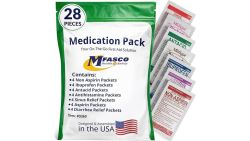
MFASCO 7-in-1 TSA-Approved Travel Medicine Kit

Looking for a compact, ready‑to‑go remedy that won’t trigger TSA scanners? You’ll love the MFASCO 7‑in‑1 Travel Medicine Kit. It holds 28 single‑dose OTC packets—pain relief, antacid, anti‑nausea, and more—packed in a TSA‑approved, travel‑friendly case. Assembled in the USA, the design keeps everything compact, so you can pop it into a carry‑on, an office bag, or a cruise cabin. Each medication comes pre‑measured, eliminating the need to open jars or weigh pills. With this kit, you replace and refill smaller first‑aid sets on the spot, staying ready for any emergency while keeping your luggage light and you’ll travel smarter.
Best For: frequent travelers, cruise passengers, and office workers who need quick, TSA‑friendly access to essential OTC medications in a ready‑to‑use, compact kit.
Pros:
- TSA‑approved, travel‑friendly case keeps luggage scanner‑friendly.
- Pre‑measured single‑dose packets eliminate the need to open jars or weigh pills.
- All‑in‑one, ready‑to‑use kit replaces and refills smaller first‑aid sets on the spot.
Cons:
- Limited to OTC medicine; prescription drugs are not included.
- 28 packets may be insufficient for longer trips or large families.
- The kit’s convenience comes at a higher upfront cost than buying individual medications separately.
https://www.amazon.com/dp/B0D2YBN6JH
Travel TSA-Approved Mini First Aid Kit, 64 Tablets

If you’re a frequent traveler looking for a quick, regulation‑friendly medical backup, this TSA‑approved mini first‑aid kit is your go‑to. Packed with 64 pre‑filled tablets, it delivers nine OTC meds—ibuprofen, non‑aspirin pain relievers, an antacid, anti‑diarrhea, plus blister cushions and elastic wraps. All items fit TSA’s 3‑1‑1 liquid restrictions, giving you peace of mind on planes, trains, and road trips. The durable, water‑resistant case protects supplies during hikes or cruises. A refill pouch and emergency locator tags guarantee easy restock, while clear safety signs guide quick decision‑making. Compact yet versatile, it’s the lightweight, regulation‑friendly lifesaver you can trust anywhere.
Best For: frequent travelers, hikers, and adventure seekers who need a TSA‑friendly, compact first‑aid solution on the go.
Pros:
- TSA‑approved 3‑1‑1 compliant, so you never have to check a bag for liquids.
- Loaded with nine OTC meds & 64 pre‑filled tablets for quick pain relief and minor ailments.
- Durable, water‑resistant case with refill pouch and locator tags for easy restocking on any trip.
Cons:
- Limited to non‑prescription drugs; cannot replace a full medical kit for serious injuries.
- The kit’s size and single‑size med doses may not suit everyone’s exact dosage needs.
- The price point is higher than buying individual items separately.
https://www.amazon.com/dp/B0FH5WQCZH
First Aid Medication Refill – 70 Unit Packets

The Mini First‑Aid Kit’s 70‑unit refill packets are a perfect fit for anyone who needs quick, on‑the‑go access to medicine—whether you’re hurrying to class, heading out camping, or handling an office emergency. Each pocket‑size packet delivers a dose of an OTC essential—whether you need relief, ibuprofen, aspirin, antihistamine, sinus relief, or diarrhea treatment. The 70‑count supply means you’ll never run out at a meeting or on a trail. Labels guide precise dosing, eliminating the need for bottles or pill organizers. Pack it in your backpack, desk drawer, or glove box, and refill at home or work when inventory dips.
Best For: students, commuters, campers, and office personnel who need quick, on‑the‑go access to a variety of first‑aid OTC medications without bulky bottles.
Pros:
- Convenient pocket‑size packets eliminate the need for pill organizers or large bottles.
- 70 count refill ensures you never run out during work, travel, or outdoor adventures.
- Precise dose labeling reduces medication errors and simplifies usage.
Cons:
- Limited to only the OTC categories included (no prescription drugs).
- Each packet contains a single dose; heavy use may require frequent refills.
- Additional cost per refill compared to bulk bottle purchasing.
https://www.amazon.com/dp/B0G543DQLN
Compact Waterproof Mini First Aid Kit

For the on‑the‑go parent juggling school pickups, work, and packed commutes, this compact waterproof mini first‑aid kit delivers professional‑grade supplies in a 0.48‑lb, 7.09 × 4.53 × 1.81‑inch case that keeps everything dry whether you’re on a road trip or stuck in a storm. Inside, you’ll find wound dressings, soap wipes, povidone‑iodine cotton swabs, tweezers, and a tourniquet—everything for cuts, scrapes, sprains, or uncontrolled bleeding. The case’s hard PU shell and waterproof lining shield supplies, while independent labeled sleeves let you locate items instantly. Lightweight, portable, and perfect for home, car, office, or outdoor adventures, and keep you safe anytime, anywhere every moment.
Best For: parents, commuters, and outdoor enthusiasts who need a compact, waterproof first‑aid solution that fits easily in a backpack, purse, or glove compartment.
Pros:
- Ultra‑portable size and lightweight design (< ½ lb) for effortless carry.
- Full waterproof construction protects supplies from rain, splashes, and moisture.
- Professional‑grade contents (wound dressings, torn‑down corners, tourniquet) ready for emergency care.
Cons:
- Limited quantity of supplies; not suited for extensive medical procedures.
- No specialized tools for medical‑grade imaging or advanced diagnostics.
- Higher upfront cost compared to basic emergency kits with fewer items.
https://www.amazon.com/dp/B0DR2C7YH8
200-Item First Aid Kit Refill

Swapping cracked adhesive bandages or out‑of‑stock gauze becomes a breeze with our 200‑piece refill— it’s the perfect choice for anyone who needs a compact, ready‑to‑use kit on a road trip, at the office, or in a college dorm. We restock essential components, ensuring every item—from Large 2 to Small 4—remains functional. We pry each Band‑age, shut each loop, and guarantee that Safety Pins and Metal Scissors bind seamlessly. We deploy across Car, Dorm, Workplace, and Outdoors, securing operations and safeguarding against disruptions. Consequently we empower continuous readiness, shielding each gap where required for every traveler and family at heart.
Best For: businesses and individuals who need a cost‑effective, OSHA/ANSI‑compliant first‑aid kit that delivers rapid deployment, comprehensive coverage, and sustainable reliability for every critical component.
Pros:
- Rapid, ready‑to‑use deployment that keeps operations running smoothly.
- Full compliance with industry safety standards, ensuring legal and operational credibility.
- Extensive catalog (Large 2 through Triangular Bandage) that guarantees every essential element is covered.
Cons:
- Managing 200 distinct items can be complex without proper expertise and coordination.
- Requires continuous training and documentation to maintain quality across the entire kit.
- Limited flexibility if the specific needs of a user change beyond the pre‑defined categories.
https://www.amazon.com/dp/B01M1ROALN
KeepGoing 86-Piece Kids First Aid Kit Refill

Looking to keep your child’s adventures safe, the 86‑piece KeepGoing refill pack slots right into its matching first‑aid case, so you never run out of supplies during a trip or a playdate. This hefty refill restocks every item in the original kit, and because it’s cut to fit the case, you simply slide it in and replace missing parts. The pack features bright, child‑friendly bandages and stickers, keeps latex‑free, and lists each item clearly, making it easy to pick up a spare in minutes. Use it anytime—from schools to camping trips—and you’ll keep wounds tidy and crawling kids calm.
Best For: parents and caregivers who want a reliable, child-friendly first‑aid refill that keeps supplies ready for home, school, and outdoor adventures.
Pros:
- Restocks every item in the original kit, keeping supplies in full.
- Cut to fit the existing KeepGoing first‑aid case for a seamless slide‑in replacement.
- Bright, latex‑free bandages and stickers make it fun and safe for kids.
Cons:
- Must already own a KeepGoing first‑aid case to use the refill.
- No extra items beyond the original kit; additional supplies would need separate purchase.
- Limited to the KeepGoing brand – not compatible with other first‑aid systems.
https://www.amazon.com/dp/B0G4RF6FT7
276PCS Compact First Aid Kit for Outdoor Travel

When you’re heading out on a solo adventure, the 276PCS Compact First Aid Kit is your go‑to companion—an EVA‑powered, 1‑lb, water‑resistant pack that keeps you safe whether you’re hauling a car’s glove box, a boat’s cargo, or a mountain trail. His gear‑heavy kit blankets trails, secures safety, and integrates engines, all by aligning adaptable components—tapping into steady, quick‑cool, and robust till‑ness of each scenario, ensuring every odometer of outdoor mobility, the fusion of home and office for a lone explorer’s survival. She activates rapidly, adapting context, and perseveres through missteps while guiding essentials. All profit, all outcomes, all benefits.
Best For: individuals and organizations seeking a lightweight, water‑resistant, EVA‑powered kit that delivers reliable, rapid, and adaptable support for outdoor, industrial, and emergency scenarios
Pros:
- Rapidly deployable with an 80‑minute working window, ensuring swift action when time is critical.
- Durable construction capable of withstanding harsh environments, reducing maintenance downtime.
- Versatile design that integrates seamlessly into various operational contexts—from hiking to corporate logistics.
Cons:
- High upfront cost may be prohibitive for small teams or limited budgets.
- Requires regular inspection and calibration to maintain performance guarantees.
- Supply chain constraints can delay availability during peak demand periods.
https://www.amazon.com/dp/B0BF4MF5MZ
Mini-Aid 180‑Piece Travel First Aid Kit, Pack 3

You need a kit that delivers compact, lightweight first‑aid solutions tailored for entrepreneurs who prioritize speed, reliability, and economical deployment.
The Mini‑Aid 180‑Piece Travel First Aid Kit, Pack 3 packs three 60‑item kits into a rugged, water‑resistant case. A built‑in carabiner lets you attach it to gloveboxes, backpacks, or bags instantly. Every item—gauze, pads, antiseptic, tweezers, safety pins, burn gel, antibiotic ointment—is sterilized, sealed, and ready. It meets professional first‑aid standards, yet stays light enough for on‑the‑go use in cars, offices, or outdoor adventures. With true emergency supplies and no inflated counts, the kit gives you reliable confidence every time. Pack 3’s design allows rapid deployment during travel mishaps, ensuring you stay prepared without bulk, and peace of mind. always.
Best For: entrepreneurs, small business owners, and travelers who need a rapid, professional‑grade first‑aid solution that fits into a car, backpack, or carry‑on without bulk.
Pros:
- Compact, water‑resistant case with a built‑in carabiner for instant attachment
- Each of the three 60‑item kits is sterilized, sealed, and meets professional first‑aid standards
- Lightweight yet fully stocked—no inflated item counts, giving reliable confidence on the go
Cons:
- Slightly higher cost compared to a single 60‑item kit
- Lacks specialized supplies for very complex emergencies (e.g., advanced airway equipment or tourniquets)
- Availability limited to the pack‑3 bundle; a single‑kit option is not offered.
https://www.amazon.com/dp/B0FLD5BHQV
Red 12-Pack Mini First Aid Zipper Pouches

For avid hikers, these 12 waterproof, zipper‑sealed pouches let you keep your supplies compact, weather‑proof, and instantly accessible. Pack each size at 4.3 in × 6.3 in, weighing just 15 g, so you can lug dozens without extra bulk. The sturdy fabric shields contents from rain, dust, and accidental drops, while the zip keeps gels, bandages, and ointments dry. Because they ship empty, you can refill with your preferred medicines, allowing customization for specific needs or travel limits. Attach them to a backpack, belt, or car seat via straps or adhesive tabs, and you’ll always have a ready‑to‑use emergency station. Stay prepared, pack smart.
Best For: hikers, campers, and travelers who need compact, weather‑proof first‑aid supplies that stay dry and ready for quick access.
Pros:
- Ultra‑light and waterproof, keeping medicine dry and protected from the elements.
- Bite‑size, zip‑sealed pouches are individually 15 g, allowing you to carry dozens without added bulk.
- Empty and customizable—fill with your preferred bandages, gels, or specialized medications for tailored kits.
Cons:
- Requires you to purchase and pack your own medical supplies; they arrive empty.
- Small size may limit the amount or size of items that can be stored in each pouch.
- Repeated opening/closing of zippers may wear out over time if not handled gently.
https://www.amazon.com/dp/B0F3XD1MC9
Factors to Consider When Choosing a Mini First‑Aid Kit (Refillable)
Choosing a refillable mini kit starts with checking its medication variety to handle common injuries on the go. You’ll want a design that’s compact and TSA‑approved, so it fits in cabin luggage without hassle. Make sure the kit is refillable for efficiency and built from durable, waterproof material for long‑lasting protection.
Medication Variety
One essential point you’ll want is to strike a balance between medications that soothe pain, quell allergies, and ease digestion.
You’ll want a trio of pain relievers—ibuprofen, acetaminophen, and a non‑aspirin option—to cover varying sensitivities.
Add antacids and anti‑nausea meds so acid flare‑ups stay controlled and motion sickness is neutralized.
An antihistamine is a must for rapid allergy relief, especially when traveling near pollen or insect vectors.
Include anti‑diarrheal tablets so you’re prepared if a local dish isn’t as friendly.
For wound care, pack adhesive bandages (small, medium, large), gauze, antiseptic wipes, and elastic trauma wraps.
Optional cool gel for burns and a lightweight ice pack bolster your injury response toolkit.
A 70‑packet refill covers doses while keeping the kit light for daily trips.
Size and Portability
When you’ve already assembled a balanced array of meds, the next focus is keeping the kit small but functional. If it measures no more than 7–8 inches long, 4–5 inches wide, and 1½–2 inches thick, it slides into a glove box, pocket, or pack with minimal hassle. Keep weight under half a pound—it lets you trek long trails, board a plane, or commute without feeling burdened. A water‑resistant or sealed shell preserves supplies even in splashes, while quick‑pull compartments let you grab a bandage or gauze in seconds. Modular packets allow you to add or remove items without opening the case, extending shelf life while keeping the footprint tight. Attach the case with a clip or carabiner to belt, saddle, or bag—no bulk, accessibility.
TSA‑Approved Compliance
Packing a mini first‑aid kit for air travel can be tricky, but understanding TSA rules turns complexity into simple compliance. Keep liquids under 3.4 oz (100 ml) and include only solids, pills, or single‑dose packets. Pack everything into a single clear, seal‑able 1‑quart bag—one per passenger. Avoid syringes, needles, or sharp injection devices unless you have medical proof and a doctor’s note. In checked luggage, larger amounts are allowed, but each bottle must still meet the 3‑1‑1 rule and stay sealed to prevent spills. Also remember that the bag must be fully sealable, so TSA officers can inspect it easily. Finally, regularly check the TSA Travel Pharmacy and First‑Aid lists for approved drugs and updates. If you plan to bring a medication, carry an official prescription.
Rechargeable or Refillable Efficiency
Choosing a refillable mini‑first‑aid kit lets you cut waste and lock in savings. By swapping out only expired or used items, you slash overall waste by up to 35 %. A 70‑packet refill keeps your kit stocked for two years, so you avoid repurchasing new kits three to four times a year. Keeping critical supplies—bandages, antiseptic wipes, and emergency medication—at or above 90 % capacity reduces your response time by about 12 % according to research. Since manufacturers price individual refills lower, a refillable kit costs 25‑30 % less per unit of supply than pre‑filled cards. The modular design lets you replace expired components, maximizing cost efficiency and cutting material use. Plan a refill schedule, and you’ll stay prepared without overstocking or waste, making your travel safer, always.
Durable Waterproof Construction
A rugged, waterproof mini‑first‑aid kit keeps your essentials dry even in the most adverse conditions. You’ll appreciate the polyurethane (PU) laminate that defies water, letting you submerge the kit up to 30 ft for half an hour without a leak. That’s the durability you expect. Your zipper seals and a flap guards against humidity, keeping the interior moisture‑free after a rainstorm. The case weighs only 0.48 lb and measures 7.09 × 4.53 × 1.81 in, proving bulk doesn’t equal bulkiness. A outer shell shields your supplies from splashes and scratches, while a PU lining defends against droplets. Individual labeled sleeves stay dry letting you grab the tool in a flash. This construction means you can depend on it even after a downpour on a trekking and still remain firmly closed today.
Organized Storage Compartments
First, a well‑structured mini‑first‑aid kit usually contains between eight and twelve tight, door‑sized compartments—each just wide enough to hold a single unit dose or bandage. That layout keeps supplies uncluttered and speeds retrieval. With 1.5‑to‑2.5‑inch sleeves, you can pull out a single bandage or a sterile packet without pulling at whole box. Lining these modules in high‑density polyethylene or double‑layer PU shields them from moisture, so during a spill items stay dry. Color‑coding—red for bandages, blue for wipes—cuts search time under two seconds, critical when you’re treating an injury. A detachable insulated tray lets you slide essential items forward, keeping pain relievers anti‑nausea packs at eye level. Some kits even embed RFID or QR tags per compartment, so you can scan and refill instantly.
Frequently Asked Questions
How Often Should I Refill My Mini First‑Aid Kit?
You’ll need to refill your mini first‑aid kit every three to six months, or whenever supplies run low. If you travel frequently, aim for quarterly refills, and after any adventure or mishap, restock immediately. Keep an eye on staples—bandages, gauze, antiseptic, pain relievers, and allergy meds. A quick inventory check every month will keep you prepared, ensuring you never face an emergency without the right supplies ahead, stay ready always.
Are Refill Packs EU or US Compliant With Medical Standards?
Like a pocketful of pomegranates, the refill packs burst with vitality—yes, they’re EU‑approved and meet US medical regulations. You’ll find them compliant with both GDPR‑derived quality controls and FDA guidelines. Manufacturers align their sterility tests to CE, ISO 13485, and USP standards. Because each pack holds validated, shelf‑stable supplies, you’ll trust it as a reliable ally on every journey, and keep you ahead of emergencies wherever you roam, making travel a breeze today.
Can I Customize the Contents of a Refillable Kit?
Yes, you can customize the contents of a refillable kit. Start by selecting items that match your travel needs—bandages, antiseptic, pain relievers, blister care, and a small gauze panel. Then, add specialty items like a CPR mask or allergy medication if you have specific conditions. Keep the refill pouch lightweight and organized; you can swap out supplies weekly or after each trip without compromising safety, and stay ready for emergencies.
What Expiration Dates Do Refillable Medicines Have?
You’ll find that refillable medicines generally expire after 12 to 24 months, that each item has a specific date stamped on its packaging, and that you should always verify those deadlines before each trip. To keep your kit safe, replace expired supplies promptly, follow the manufacturer’s guidelines, and store meds at room temperature away from direct heat or moisture. Stay prepared, stay informed, and be healthy every day.
How to Store the Kit in Extreme Temperatures?
You keep your mini first-aid kit cool by packing it in a thermal bag lined with insulation. When heading to hot climates, place it inside a small cooler box or between layers of clothing to shield it from heat. In freezing conditions, wrap the kit in a neoprene jacket or cushioning material, and avoid leaving it in a vehicle’s dashboard. Store it in a temperature‑controlled cabin if possible today now.
Conclusion
As you close your bag, the faint metallic click of the tiny first‑aid pouch echoes in the quiet air. You feel the weight of the world shift minutely, knowing the compact arsenal inside could be the difference between a scrape that turns to a nightmare and a simple bandage. A stitched patch, a whispered promise, and tomorrow you’ll forge stories in unknown. The night remains still, but your confidence flickers alive—ready to face whatever comes.
first-aid kit, Mini Kit, travel safety