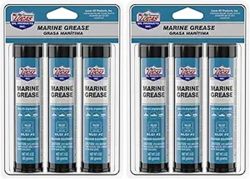
Marine Grease – Small Tubes That Keep Boats Running Smoothly

Introducing Maria, our meticulous planner and talented visual storyteller. She has a knack for discovering those hidden gems, chic boutique spots, and charming little cafes that add a touch of elegance to every journey. With her keen eye for photography and her passion for travel, Maria will transport you to the most enchanting corners of the world, inspiring you to explore new places, one picture-perfect destination at a time.
If you keep your boat running smooth, choosing the right marine grease matters. The Lucas Oil 10682 3‑oz pack delivers a water‑resistant formula that fits grease guns and shields bearings in salt water. For duty, the 3‑pack Green Grease offers 80‑lb load support and 80 % water resistance. Quicksilver’s 8‑oz Teflon line adds PTFE for cable work, while JAOJAO’s 50‑g tube covers single‑use gears without washout. Discover these choices to keep every shaft smooth for adventure.
Key Takeaways
- 3 oz Lucas Oil Marine Grease sheets maintain friction and pressure up to 550 °F, ideal for small marine components and mini‑grease guns.
- Quicksilver or 50 g JAOJAO packets resist washout and remain effective from freezing to high heat, protecting bearings and steering cables.
- 3‑Pack mini marine grease tubes (blue lithium NLGI #2) meet ASTM D4950, offering waterproof, non‑washout performance for trailer wheels and prop shafts.
- YOTEBLE 50 g metal shells hold 1.76 oz, are zero‑dilution, and can be applied hot or warm without heating, reducing downtime.
- Yamaha 14.1 oz OEM cartridges are lightweight yet hold a high‑temperature rating, suitable for propeller housings but may need frequent top‑ups.
Lucas Oil 10682 Marine Grease 3 Ounce Combo Pack

If you’re towing a boat into salt‑water or keeping a marine gear system running at high temperatures, the Lucas Oil 10682 Marine Grease is the right choice. This 3‑ounce combo pack delivers nine ounces of grease in three tubes. Each 3‑oz cartridge fits only mini or midget grease guns, ideal for marine use. The OBCS formula blends anti‑wear agents, tackifiers, and unique polymers, locking grease under stress. It resists rust, corrosion, and remains waterproof after prolonged salt‑water exposure. With a 30‑day voluntary return policy, you can shop confidently. The product is available on Amazon, fitting your rig’s demanding environments.
Best For: boat owners needing reliable marine‑grade grease for salt‑water or high‑heat gear, mini/midget grease gun users, or extreme marine equipment applications.
Pros:
- 9 oz total volume from three 3‑oz tubes, ideal for extended use
- OBCS formula offers high friction reduction (drop point 550 °) and strong anti‑wear protection
- Proven water‑resistant, anti‑rust performance for continuous salt‑water exposure
Cons:
- Limited to mini or midget grease guns only
- No manufacturer warranty beyond Amazon’s 30‑day return policy
- Not suitable for large external grease packs or high‑volume applications
https://www.amazon.com/dp/B00O7CLV1O
JAOJAO Marine 50g Grease Tube

Because you’ll be operating in salt‑water conditions, this 50‑g tube delivers a marine‑grade, waterproof grease that resists washout under extreme pressure, making it the top choice for high‑load bearings and gears on boats, jet skis, trailers, and other marine setups. You’ll keep steering cables, throttle and shift cables, universal joints, U‑joints, and suspension systems protected, while the 75 W‑90 viscosity thins at low temperatures and thickens when hot, reducing friction and wear. After cleaning the component, fill the bearing, gear, or joint entirely and seal the nozzle. Check regularly, reapply as needed, and store in a cool, dry spot away.
Best For: Marine vehicle operators and mechanics needing durable, salt‑water‑resistant grease for bearings, gears, and steering cables.
Pros:
- Waterproof, marine‑grade formula resists washout under extreme pressure.
- SAE J300 75 W‑90 viscosity thins at low temperatures and thicken on heat, reducing friction and wear.
- Easy‑to‑use 50 g tube supplies enough grease for multiple high‑load applications.
Cons:
- Not designed for non‑marine industrial equipment.
- Requires thorough cleaning and full filling each time; incorrect application can cause damage.
- Must be stored in a cool, dry area; heat or sunlight can degrade performance.
https://www.amazon.com/dp/B0FL2MG389
Quicksilver 2-4-C Teflon Marine Grease 8oz

When you’re looking for a grease that can keep steering cables and heavy‑load components running smoothly in salt‑filled water, Quicksilver’s 2‑4‑C Teflon Marine Grease delivers the right blend of viscosity, PTFE‑based water resistance, and extreme‑pressure additives—making it the top choice for boat owners and marine mechanics who demand reliable lubrication on every hull. The 8‑oz tube delivers a lithium base with PTFE that shields against salt corrosion. Its NLGI 2 consistency stays slick on steering cables, throttle lines, and prop shafts, while extreme‑pressure additives tackle heavy‑load pivots. Quicksilver’s 65‑year legacy and Mercury endorsement cement its status as a marine lubricant.
Best For: Boat owners and marine mechanics who require durable, salt‑resistant lubrication for steering cables, throttle lines, and high‑load components.
Pros:
- Excellent water resistance thanks to PTFE (Teflon) additives.
- Strong high‑pressure performance for heavy‑load marine parts.
- Long oxidation life keeping equipment protected over extended periods.
Cons:
- Premium price point compared to generic greases.
- Requires proper storage to preserve shelf life and performance.
- NLGI 2 viscosity may not suit very high‑temperature or specialized applications.
https://www.amazon.com/dp/B002V3KD2O
Quicksilver NLGI 2 Marine Grease 8 Oz

With the salt‑laden seas and relentless vibration that gnaw on marine steering cables, Quicksilver’s NLGI 2 Marine Grease stands out as the high‑viscosity, calcium sulfonate solution that stays put under extreme temperature and load. It comes in a handy eight‑ounce squeeze tube that lets you apply grease exactly where you need it—steering cables, throttle links, or even gimbal bearings on your boat. The NLGI 2 grade makes it thick enough to stay in place on slick metal, while the calcium sulfonate base keeps it free of glycerin and resistant to oxidation. Choose this grease for marine performance and off‑road reliability alike.
Best For: marine enthusiasts, off‑road vehicle operators, and anyone who needs reliable, high‑temperature grease that stays put on steering cables, throttle links, and gimbal bearings.
Pros:
- High‑viscosity NLGI 2 grade provides firm greasing, keeping the lubricant in place on slick metal surfaces.
- Calcium sulfonate base is glycerin‑free and highly oxidation‑resistant, ideal for salt‑laden marine environments.
- Convenient 8 oz squeeze tube allows precise, mess‑free application even in tight spaces.
Cons:
- Small 8 oz size requires frequent replenishment for large‑scale or heavy‑load applications.
- Specialty formulation can be pricier than generic greases, potentially impacting budget‑conscious buyers.
- Limited shelf life if exposed to extreme temperatures before first use, so storage conditions matter.
https://www.amazon.com/dp/B00BO8A6P6
Ultra Heavy Duty Green Grease Tube, 3 Pack

You need grease that stays on metal even when submerged, and the Ultra Heavy Duty Green Grease tube delivers a marine‑grade, 3‑oz, NLGI 2 formula that keeps water inside the bearing while wiping out less than 2 % of oil under saltwater conditions. Packaged in a 3‑pack, each 3‑oz tube fits standard 14‑oz grease guns—ideal for your wheel bearings, CV joints, or marine gear. With a 350 °F upper‑temp rating, 554 °F drop point, and an 80 lb Timken load, it outlasts typical greases eightfold. It’s lithium‑based, synthetic base stays waterproof, prevents rust, and protects against high‑pressure wear, ideal for on‑board maintenance for all.
Best For: truck, marine, and off‑road operators who need a long‑lasting, waterproof grease that stays on metal even when submerged.
Pros:
- 8× longer lifespan than average greases.
- 350 °F upper‑temp rating and 554 °F drop point for high‑heat, high‑load work.
- Marine‑grade performance with < 2 % water wash‑out in salt‑water conditions.
Cons:
- Sized only in 3‑oz tubes, limiting volume per application.
- Requires a standard 14‑oz grease gun for use.
- Three‑pack packaging may be excessive for small‑scale jobs.
https://www.amazon.com/dp/B004Y0788O
3-Pack Mini Marine Grease Tubes

If you’re the owner of a boat trailer, you’ll appreciate our 3‑pack of 3‑oz mini marine grease tubes—it gives unbeatable protection in harsh marine conditions.
Your fleet will benefit from each 3‑oz cartridge’s 3‑fl ounce capacity, fitting snugly into 6 × 1 × 1.4‑inch housings. The blue, lithium‑based NLGI #2 formula meets ASTM D4950, with a freeze‑to‑extreme‑heat range and waterproof, non‑washout performance.
It delivers marine‑grade corrosion resistance, keeping wheel bearings, hitch balls, and marine machinery safe. The 12‑oz package is lightweight yet robust—perfect for boat trailers, bikes, ATVs, and more.
Your maintenance routine gets simpler, saving time and costs while boosting reliability in salty environments.
Best For: boat trailer owners and marine hobbyists who need reliable, waterproof grease for wheels, bearings, hitch balls, and marine machinery in salty, harsh environments.
Pros:
- Lightweight 3-pack (12 oz total) fits easily into standard trailer housings, saving space.
- Blue lithium‑based NLGI #2 formula meets ASTM D4950, offering freeze‑to‑extreme‑heat performance.
- Waterproof and non‑washout protects against corrosion, keeping gear operational longer.
Cons:
- 3 oz per tube may require frequent refills for larger or more intensive applications.
- Limited to small sizes; not ideal for large vessels or heavy-duty industrial use.
- First available only from September 20 2024, so immediate acquisition may be delayed.
https://www.amazon.com/dp/B0CYCQ7NMC
Marine Wheel Bearing Grease Tube 50g

The 50 g YOTEBLE Marine Wheel Bearing Grease Tube delivers a zero‑dilution, 0 W synthetic formula that keeps your bearings tight and sound even after prolonged salt‑water exposure. Use the tube with impatient precision—its 7.4 × 4.65 × 1.18‑inch metal shell holds 1.76 oz, preventing leaks even on wet decks. The synthetic grease resists water wash‑out and extreme pressure, safeguarding U‑joints, steering cables, wheel bearings, and deck hinges across freezing winters and scorching summers. It adheres instantly, no heat needed, and maintains viscosity, so you avoid slip‑offs and squeaks. The eco‑friendly formula stays safe for marine life while keeping gear surfaces pristine in low‑light conditions today.
Best For: boat owners and marine mechanics who need reliable wheel bearing protection in harsh salt‑water environments and variable temperatures.
Pros:
- Zero‑dilution synthetic formula that maintains viscosity after prolonged exposure to water and extreme pressure.
- 7.4 × 4.65 × 1.18‑inch metal tube prevents leaks and spillage, keeping wet decks clean.
- Wide operating temperature range, functioning effectively in freezing winters and scorching summers.
Cons:
- The 50 g tube is small; for large vessels or extensive work it may require frequent refills.
- Designed specifically for marine use; not intended for heavy industrial or non‑marine machinery.
- Over‑application can lead to excess grease buildup, potentially affecting bearing performance.
https://www.amazon.com/dp/B0FZV2D924
Yamaha New OEM YAMALUBE Marine Grease 14.1OZ Tube Cartridge ACC-GREAS-14-CT

Our Yamaha New OEM YAMALUBE Marine Grease, a 14.1 oz tube cartridge, is the go‑to choice for boat owners who demand salt‑water‑resistant lubrication that stays stable under vibration. You’ll appreciate its lithium base, 0W‑40 viscosity, and drop point of 475 °F, which lets it perform from deep‑sea dives to high‑temp humming. The flash point sits at 476 °F, keeping the grease safe under engine heat. Packaged as a 14.1‑oz tube cartridge (9 × 2 × 2 in), it’s lightweight—just 0.01 oz—and fits most propeller and pressure‑gun housings. Crews rely on it in salt‑water rigs without noticing any breakdown or corrosion. Keep your boat running smoother every season.
Best For: boat owners operating salt‑water vessels who need a reliable, vibration‑resistant marine grease that stays stable under high temperatures and prevents corrosion.
Pros:
- Long‑lasting lubrication in harsh saltwater environments
- High drop point (475 °F) and flash point (476 °F) ensure performance across broad temperature ranges
- Convenient tube cartridge design simplifies application and reduces mess
Cons:
- Limited to 14.1 oz; may require frequent replacements on heavy‑traffic gear
- Only available in OEM package; aftermarket options may be cheaper
- Not suitable for non‑marine, cold‑climate applications
https://www.amazon.com/dp/B004K9FT8K
Lucas Oil 11148 Marine Grease – 1 Pound Tub

Designed for severe marine conditions, this 1‑lb tub of Lucas Oil 11148 Marine Grease delivers extreme‑pressure protection and superior adhesion.
You’ll benefit from a grease that tolerates up to 560 °F, thanks to its 570 °F flash point and formula, keeping engines safe.
It stays tacky, so it adheres to trailer wheel bearings, chassis bearings, and outboard gear even under vibration, ensuring excellent reliability.
A 16‑ounce, 1.14‑lb tub offers the right balance of volume and weight for quick, on‑the‑spot application on any boat or trailer, keeping kits small.
The 65‑lb Timken‑OK load rating ensures it won’t slip when the load climbs.
Best For: marine mechanics and boat owners needing a high‑temperature, extreme‑pressure grease that stays put on trailer wheel bearings, chassis bearings, and outboard gear.
Pros:
- Extreme‑pressure protection with a 65‑lb Timken‑OK load rating.
- High‑temperature tolerance up to 560 °F thanks to a 570 °F flash point.
- Strong adhesive tack keeps the grease from flinging off under vibration.
Cons:
- Relatively high unit cost for a single 1‑lb tub.
- Limited to a 1‑lb volume—may not be economical for large‑scale or ship‑wide use.
- Designed specifically for marine applications; less suitable for non‑marine machinery.
https://www.amazon.com/dp/B09GS6ZQQ9
Lucas Oil 10318 Red N Tacky Grease 3 Ounce Combo Pack

If you’re moving gear in a wet, salty setting, Lucas Oil’s 10318 Red N Tacky Grease keeps rust at bay while slapping a slick grin on your deck or drivetrain. This 3‑ounce combo pack fits right into your boat’s maintenance kit, offering both grease and oil in one plastic container. The 88‑ml grease delivers quick‑acting tackiness that grips shafts, bearings, and hydraulic pistons, sealing them against saltwater corroding the metal. At the same time, the 3‑ounce oil keeps chain drives and belt pulleys sliding smoothly, preventing wear and drag. Dimensionally, the 5.25‑by‑1.5‑by‑8.75‑inch tube is easy to store and handle, so you never run short of protection during a day on the water. Lucas Oil backs it with a 30‑day return policy, giving you peace of mind on the water anytime.
Best For: seasoned boaters and marine mechanics who need a compact, dual‑purpose grease that resists corrosion and keeps moving parts running smoothly in wet, salty environments.
Pros:
- Quick‑acting tacky grease protects shafts, bearings, and hydraulic pistons from saltwater corrosion.
- Dual‑function container saves space by combining grease and oil in a single compact tube.
- 30‑day return policy provides peace of mind for marine use.
Cons:
- 3‑ounce volume may be insufficient for larger boats or heavy machinery after prolonged use.
- Only one product per pack; refills require a separate purchase.
- Plastic container may not be as durable in extreme heat or impact compared to metal alternatives.
https://www.amazon.com/dp/B08YJ3J221
OEM BRP Johnson Evinrude Triple-Guard Marine Grease 8 oz Tube 0508298

When you’re power‑boating in saltwater, you’ll need a grease that resists corrosion, vibration, and cold temperatures—Triple‑Guard Marine Grease delivers exactly that. This OEM BRP Johnson Evinrude 8‑oz tube (model 0508298) packs 0.24 L of tough SAE J300 grade 20 formula. Its flash point hits 214 °C, so it stays solid under heat while remaining fully waterproof. The grease never expands, so seals and O‑rings stay tight. Its lightweight (0.01 oz) tube fits easily on any boat; you can swap it with similar greases if needed. With a 30‑day Amazon return policy, you can try it risk‑free. Just pull it, apply, and enjoy smooth power all season.
Best For: Small to medium-sized marine engines that operate in saltwater environments, where a non‑expanding, high‑temperature tolerant grease is needed for seals and bearing protection.
Pros:
- Resists vibration, salt, and cold temperatures for long‑lasting performance.
- Non‑expanding formula keeps seals, packing, and O‑rings tight.
- Fully waterproof with a high flash point (214 °C) for safe operation near heat sources.
Cons:
- Limited to 8‑oz (0.24 L) tube; larger applications require multiple tubes.
- Not specifically formulated for extreme high‑speed or industrial gearboxes.
- Availability depends on distributor; replacement may need a dedicated ordering step.
https://www.amazon.com/dp/B001KYH6AW
Magnalube-G All-Purpose PTFE Grease (0.75oz Tube)

Need a grease that keeps bearings and reels running smoothly from arctic cold to industrial heat? Magnalube‑G delivers that promise. This 0.75‑oz tube packs a 3.2 ml PTFE‑enhanced formula that stays slick from ‑40 °F to 530 °F. Its paraffinic base resists oxidation, while the lithium core keeps compression gears crisp under vibration and temperature swings. You’ll spot weight loss of only 0.634 oz during a decade of use, saving you downtime. Whether you’re mending a fishing reel, sealing a marine shaft, or lugging a hot‑tool engine, Magnalube‑G stays sound, rust‑free, and ready for any job and keep your crew confident for trips.
Best For: users who need durable, all‑climate lubrication for bearings, reels, and machinery from Arctic cold to industrial heat.
Pros:
- Wide temperature tolerance from –40 °F to +530 °F ensures reliable performance in extreme environments.
- PTFE‑enriched formula and lithium base provide long‑term lubrication with minimal wear and rust protection.
- 10‑plus‑year service life reduces downtime and replacement costs.
Cons:
- The 0.75‑oz tube is small, requiring frequent refills for large or continuous‑use applications.
- Price point is higher than standard paraffinic greases, potentially deterring budget‑conscious buyers.
- Limited retail availability may necessitate ordering through specialized distributors.
https://www.amazon.com/dp/B0FFJP5QJD
1oz LubeTube Synthetic Grease – PFAS‑Free Food‑Grade

Marine maintenance crews who demand flawless seals will find 1 oz LubeTube Synthetic Grease the perfect companion, because its PFAS‑free, food‑grade formula combined with ceramic microfines guarantees a waterproof, non‑staining seal that can withstand up to 500 °F. You’ll see it thrive on O‑rings, valves, and salt‑cell gaskets in pools and spas, on faucet stems and water‑filter seals in plumbing, and on RV toilet seals or prop‑shaft bearings in marine gear. Its non‑sticky, odorless nature means no drips, while its biodegradable, non‑flammable makeup keeps your vessel safe and eco‑friendly.
Your maintenance routine stays, your components last longer, and you avoid costly repairs.
Best For: marine crews, pool and spa technicians, and plumbing professionals who need durable, food‑grade, PFAS‑free seals for high‑temperature, water‑exposed components.
Pros:
- Creates long‑lasting, waterproof seals that resist corrosion and leaks up to 500 °F.
- Non‑sticky, odorless, and biodegradable—safe for both operators and the environment.
- Easy to apply with a convenient single‑use tube; prevents drips and overspray.
Cons:
- Small 1 oz tube may require frequent replacements on large‑scale projects.
- More expensive per unit than some aerosol greases.
- Requires proper storage in a cool, dry place to maintain viscosity.
https://www.amazon.com/dp/B004VTGLCC
Triple Guard Marine Lithium Grease 10.5g Tube

If you’re running a compact outboard or any marine gear that demands reliable lubrication, the Triple Guard Marine Lithium Grease 10.5 g Tube is the perfect choice. This Johnson Evinrude OMC grease comes in a 10.5‑gram tube—0.37 oz—and is formulated with a lithium base for excellent marine performance. The tube is 5 × 2 × 1 in., making it easy to pipe into moving parts and directories alike. It protects against corrosion and keeps your gear running smoothly. With a manufacturer warranty and an Amazon 30‑day return guarantee, you’ll feel confident in this high‑quality marine lubricant, perfect for tight, vulnerable gear, ensuring longevity and performance every time.
Best For: sailors or marine operators running compact outboards and other small gear that need reliable, corrosion‑protecting lubrication.
Pros:
- Lithium‑based formulation offers excellent performance in salty, high‑drag environments.
- Compact 10.5 g tube is easy to apply with a small pipe; convenient for tight or hard‑to‑reach moving parts.
- Comes with a manufacturer warranty and Amazon’s 30‑day return guarantee for peace of mind.
Cons:
- Small 10.5 g quantity may require frequent refilling on larger projects.
- Tube format can be awkward to use on very large or heavily loaded marine components.
- No special color‑coding or dispenser compatibility details are provided.
https://www.amazon.com/dp/B00R56XQ1C
LubriMatic 30-190 Mini Grease Gun & Marine

For boat owners and marine technicians who demand reliable lubrication in tight, hard‑to‑reach spaces, the LubriMatic 30‑190 Mini Grease Gun delivers a winning combo: a lightweight, all‑metal design that pumps out 4,400 PSI through a 5‑1/2″ steel pipe, plus a 3‑oz cartridge loaded with corrosion‑control grease to keep bearings, seals, and prop shafts protected against salt‑water intrusion. Compact at 11.65 × 5.79 × 1.73 in and 0.72 kg, it slips into gearboxes, hoses, or winch housings with ease. Dual‑way loading switches the 3‑oz cartridge for suction‑loaded grease, giving you on‑site freedom. A 90‑day limited warranty covers stainless‑steel build, assuring durability in salt water to keep seals intact.
Best For: Marine technicians and boat owners who need a compact, high‑pressure grease gun for tight, hard‑to‑reach marine applications that protects against salt‑water corrosion.
Pros:
- All‑metal construction with 4,400 PSI output and an extended 5‑1/2″ steel pipe for deep reach.
- Dual‑way loading—3 oz cartridge plus suction‑load option—to keep lubrication convenient on site.
- Lightweight body (0.72 kg) that fits easily into gearboxes, hoses, and winch housings.
Cons:
- Only a 3 oz grease cartridge per use, limiting continuous operation time.
- 90‑day limited warranty may be short for heavy‑use marine environments.
- The 16 oz tool body, while robust, can feel heavy for delicate or precision work.
https://www.amazon.com/dp/B0000CBIG1
Factors to Consider When Choosing Marine Grease (Small Tube)
You need to pick a grease with the right viscosity rating so it can handle your equipment’s speed and load. Make sure it resists water so seals stay dry and it tolerates the cold and hot temps your vessel faces. Finally, choose one with pressure‑enhancing additives and a long shelf life so you can rely on its performance over time.
Viscosity Rating
When selecting a marine grease, the NLGI rating sets the baseline for viscosity. For most small‑tube applications, a grade 2 balances lubrication and retention, staying solid under continuous water exposure while still flowing enough to fill tight gaps. If you need quick cold‑start spread, look for SAE J300 numbers like 75 W‑90 or 30; these indicate fluidity at low temperatures. High‑force gearboxes or steering cables often call for NLGI 2–3 greases, which keep volume steady from –20 °F to 300 °F and resist washout. Low‑viscosity greases (NLGI 0–1) suit cable ends or partial lubrication; they cover surfaces 15–50 °F wider than higher grades. Finally, match the grease’s drop point and Timken rating to the expected temperature range and load level. Proper viscosity selection extends bearing life, keeping your voyage smooth and safe.
Water‑Resistant Formulation
A small‑tube marine grease that incorporates PTFE or calcium sulfonate bases forms a hydrophobic film, keeping the grease semi‑solid at about 550 °F and resisting washout even after thousands of hours submerged in saltwater. You’ll notice that a PTFE‑enhanced greaser forms a thin, water‑repellent shield over moving parts. Because the grease hardens around 550 °F, it stays semi‑solid even when immersed in brine. When you apply greases like SAE J300 75W‑90 or 0 W, you get a film that holds up from Arctic cold to tropical heat while blocking water from seeping in. NLGI 2 lime‑sulfonate greases have been proven to stand up to prolonged submersion at 200 °C with no wash‑out. With an 80‑lb load rating and polymer enrichment, the grease can carry heavy shear forces without sacrificing its water‑resistance.
Temperature Tolerance Range
Because marine conditions can swing from brutal winter nights to oven‑hot engine decks, knowing where a small‑tube grease stalls is key. You’ll want a grease whose drop point sits around 500 to 600 °F, so it stays fluid even on exhaust‑heated parts. Its flash point—typically 420 to 470 °F—lets you gauge when vapors could ignite. If you face icy seas, pick a blend that remains viscous down to –20 °F, preventing solidification at low temperatures. In warm, humid seascapes up to 100 °F, an NLGI 2 grease keeps friction low and resists wash‑out, unlike lower‑grade rates that run off. Overall, most marine greases cover –20 °F to 500 °F, covering the full spectrum your boat might encounter. When operating near extreme salinity or heavy loads, higher consistency keeps performance steady today.
Pressure‑Enhancing Additives
Even though EP additives typically sit at 1–5 wt %, they dramatically raise a grease’s pressure rating, letting you handle up to 80 lb of bearing load and 800 kg of weld‑level stresses with confidence. When you opt for 2 wt % ZDDP, you hit a sweet spot—enough protection without hurting the viscosity index for operations between –40 °F and 200 °F. These additives react with high‑temperature oxides to lay down a thin, adherent tribofilm that tolerates drop points above 550 °F, keeping lubrication intact under continuous vibration or shock. Pairing them with lithium or calcium sulfonate bases locks in pressure stability in both fresh and salt water, preventing wash‑out. Spectroscopy confirms a 20–30 % friction drop, boosting efficiency in bearings, shafts, and pivots that endure 10–30 psi load to extend service life and reliability.
Longevity and Shelf Life
When you lock a small tube of marine grease into an airtight foil container with a vented cap, you’ll guard against moisture that would otherwise slash its shelf life to just one or two years. In a dry setting at 15–25°C, synthetic‑polymer greases with high‑temperature stabilizers stay stable for 3–5 years. However, humidity or temperature swings speed oxidation, shrinking longevity to 1–2 years for formulations lacking solid corrosion‑protectors. Foil‑sealed tubs with vented lids prevent air and water vapor, keeping the drop point and penetration high over time. Greases rich in long‑chain ester or fluorinated additives can hold a drop point above 500 °F beyond four years when stored. Watch for light grey discoloration, sour smell, or thickening; those red flags mean replacement is due.
Equipment Compatibility Check
In addition to packing your grease in foil to extend its shelf life, you’ll also need to match it to your gear’s specs. Check the grease gun bore or cartridge feed size—make sure the tube’s inner diameter lines up with your 3‑oz “mini” or “midget” cartridges. Verify the tube’s outer dimensions fit inside the storage or pump housing of your equipment. Match the viscosity class (NLGI 1‑3 or SAE J300 grade) to the labeled value to avoid cross‑compatibility problems. Confirm that seals or plastics won’t swell when exposed to lithium‑based, calcium sulfonate, or PTFE‑enhanced greases. Finally, weigh the tube’s mass and total volume against your application’s load and replacement schedule to stay properly lubricated. Keep this checklist handy on every maintenance trip to avoid surprises.
Package Size Alignment
Because the tube size you pick must match the grease gun’s bore and your application’s demands, you’ll need to weigh a handful of key factors. First, confirm the tube’s wall thickness and snap‑fit line up with the gun’s internal barrel—mismatched tubes leak or detach during use. Next, think about your project’s grease volume. A 3‑oz tube works well with 14‑oz guns, letting you top off several times before replacing. On the other hand, a 1‑oz bottle fits 3‑oz keg systems and precise, low‑volume jobs. Take pack volume into account: a 9‑oz triple‑pack covering 4 oz of grease gives you a 75 % safety margin. High‑viscosity greases fill the tube more quickly; a 50 g tube may suffice for assemblies, while an 8‑oz tube keeps grease ready for applications.
Brand Reputation Score
You can gauge quality by looking at a brand’s reputation score for small‑tube marine greases, which blends consumer ratings, industry reviews, and compliance certifications into a weighted average that usually falls between 4.0 and 4.8. A score above 4.4 means about 93 % of users report satisfaction, so you’re likely to get consistent performance. Compliance with ASTM D4950 and ISO 4923 boosts the score, proving resistance to wash‑out and corrosion. Brands scoring above 4.6 keep positive reviews for at least three years across retailers. Tiered models add up to 10 points each for inventory reliability, after‑sale support, and longevity, turning a composite over 85 out of 100 into an elite status. Choosing a brand with top‑tier score saves you headaches and keeps your vessel’s components protected longer.
Frequently Asked Questions
How Often Should I Reapply Marine Grease on My Boat’s Propeller Shaft?
you should reapply marine grease to your propeller shaft roughly every 150 nautical miles or every month, whichever comes first. After every long haul, run the engine, then open the grease tube and squeeze a generous bead onto the shaft. Let the grease sit for a few minutes, then wipe away excess. If conditions are harsh—salt spray, heat—boost to weekly for consistent performance and protection. Remember to check the seal.
Can I Use Automotive Grease for Marine Applications?
Sure, you could try, but irony aside, automotive grease simply won’t cut it in saltwater. It corrodes seals, lets water in, and eventually fails. You want marine‑specific grease that resists salt, temperature swings, and keeps bearings dry. So, unless you enjoy a racing car drifting in the ocean, stick to proper marine grease. Your boat will thank you, and you’ll avoid costly repairs—and a splash of disappointment and more today.
What Are Signs That My Marine Grease Needs Replacement?
Notice when your marine greases become discolored, thin, or crumbly—those are clear signals that replacement is due. If you hear increased noise at gear joints or notice slipping bearings, it’s a sign the grease has degraded. Feel for excessive heat or a sticky residue around seals. Skipping regular checks can lead to premature wear, so timely replacements keep your boats running smoothly, and extend component life for safer voyages always.
Does Marine Grease Protect Components From Salt Water Corrosion?
Yes—marine grease shields, seals, and steadies your equipment, safeguarding against saline attack and wear. It builds a protective barrier that blocks water, reduces friction, and prevents rust, so you’ll keep moving without fear. Apply it to bearings, gears, and housings; watch the grease climb, stay, stay, and stays. Your boat will run smoother, last longer, and look cleaner, turning salt into just another day in the water always again today.
How to Choose Between PTFE and Ceramic Greases for High-Speed Bearings?
Choose the grease that matches your speed and load. For moderate speeds, PTFE greases give great film strength and low friction. When you’ll need the lowest coefficient of friction and extreme temperatures, go ceramic—its particles shield the surface and keep heat from building. Look at silica or alumina content, check the micro‑particle size, and confirm the rating meets your speed and pressure specs before buying to guarantee runtime success each.
Conclusion
You’re steady the seas with a humble tube of grease, bearing the weight of every joint as a quiet harbor does the tide. Like a seasoned captain guiding anchors, you spread it, and the boat hums to life, its hull unfurls like sails in calm wind. Each little vial teaches that balance, care, and foresight propel not only metal but sails beyond the horizon, assuring your vessel journeys smooth. You venture unseen seas, bold, boundless.
boat lubrication, marine grease, sailing maintenance