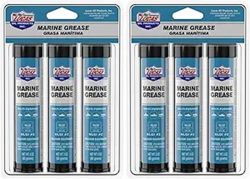
Marine grease (small tube) That’s Essential for Every Sailor

Introducing Maria, our meticulous planner and talented visual storyteller. She has a knack for discovering those hidden gems, chic boutique spots, and charming little cafes that add a touch of elegance to every journey. With her keen eye for photography and her passion for travel, Maria will transport you to the most enchanting corners of the world, inspiring you to explore new places, one picture-perfect destination at a time.
Because you need a reliable, salt‑resistant grease that can handle heat and heavy loads, every sailor relies on a small‑tube formula. The Lucas Oil 10682, a 3‑ounce combo pack, offers a 560°F rating and high‑pressure protection for winches and outboards. JAOJAO’s 50‑g cartridge delivers instant adhesion and extreme‑pressure performance right on the wheel or steering cable. Quicksilver’s 8‑ounce, Teflon‑enhanced grease keeps bearings dry even in spray‑prone conditions. If you’re looking for more options and tips…
Key Takeaways
- 3‑oz and 50‑g marine greases deliver high heat tolerance and salt‑water resistance, ideal for rigorous sailing conditions.
- They’re compact and easy to apply with a grease gun or squeeze tube, requiring no heating or special tools.
- Most brands retain up to a 36‑month shelf life when stored cool and dry, ensuring reliable performance.
- With NLGI #2 consistency, they provide extreme‑pressure protection up to 65 lb, perfect for winches and bearings.
- Essential for sailors, they safeguard steering cables, U‑joints, winch gears, inboard connections, and trailer bearings against corrosion.
Lucas Oil 10682 Marine Grease 3 Ounce Combo Pack

The Lucas Oil 10682 Marine Grease 3‑ounce combo pack is ideal for boat owners who need reliable, high‑pressure protection on a tight budget.
You’ll get three 3‑ounce tubes, each 3.2 oz, packaged in a compact 6 × 4 × 2‑inch case that keeps the grease from spilling and lets you replace units on the go.
Your sailing rig will feel the low friction it delivers, dropping the grease’s melt point to 550 °F for smooth operation under extreme pressure.
Polymers, anti‑wear agents, and tackifiers lock each tube’s grease in place, plus it resists rust, corrosion, and oxidation—even in salty or fresh water. right here.
Best For: boat owners and marine mechanics needing reliable, high‑pressure grease that resists friction and corrosion in both fresh and salt‑water environments.
Pros:
- High‑pressure, low‑friction performance with a 550 °F melt point
- Excellent corrosion and oxidation resistance for marine and freshwater use
- Three 3‑ounce tubes provide convenient on‑the‑go replacement
Cons:
- Only fits mini/midget grease guns; not compatible with standard cartridges
- Limited volume—only 9 oz total, which may be insufficient for large‑scale projects
- No electric or self‑dispensing feature, requiring manual application tactics
https://www.amazon.com/dp/B00O7CLV1O
JAOJAO Marine Grease 50g, Extreme Pressure Protection

When you need a grease that stays put in salt‑water, JAOJAO’s 50‑g Marine Grease delivers the extreme‑pressure protection that keeps wheel bearings, U‑joints, and gear systems running smooth—ideal for jet skis, RV trailers, and any marine vessel that faces heavy loads and harsh conditions. Packed in a 1.76‑oz tube, this waterproof formula resists washout in harsh marine environments. It works from sub‑freezing to high summer temperatures, cutting friction and wear on bearings, gears, pivots, and U‑joints. Clean the surface, fill fully, seal the nozzle properly, and reapply daily. Keep the tube cool, dry, out of light, and wear gloves.
Best For: marine operators, RV trailer owners, and heavy‑load equipment users needing a reliable, waterproof grease that resists washout in salt‑water environments.
Pros:
- Waterproof, salt‑water resistant formula prevents washout for prolonged protection.
- Extreme pressure SAE J300 grade reduces friction and wear on bearings, gears, and U‑joints.
- Wide operating temperature range ensures year‑round reliability from sub‑freezing to high summer heat.
Cons:
- 50 g tube limits run‑time; frequent reapplication may be required for larger equipment.
- Industrial/mechanical usage only—not suitable for general household or cosmetic applications.
- Requires protective gloves; skin or eye contact can irritate, and proper handling/storage is essential.
https://www.amazon.com/dp/B0FL2MG389
Quicksilver 802859Q1 Marine Grease with Teflon

If you’re a boat owner who keeps heavy metal‑to‑metal contacts running through saltwater, Quicksilver 802859Q1’s PTFE‑enhanced, water‑resistant lithium grease gives these parts the low‑friction, high‑temperature protection they need—especially handy for steering cables, throttle shafts, and other marine controls. The 8‑ounce tube weighs a pound, fitting comfortably into galley drawers or drawer bays. Its NLGI 2 consistency delivers a firm yet adaptable film that resists water intrusion while sustaining temperatures up to four hundred degrees Fahrenheit. PTFE flakes minimize wear on steel‑steel joints, extending life for throttle operatives, rudder linkages, and propeller thrust bearings. Perfect for winter maintenance and high‑speed racing sessions.
Best For: boat owners and marine mechanics that need durable, water‑resistant lubrication for steering cables, throttle assemblies, and other high‑traffic marine controls.
Pros:
- Excellent water‑resistance that keeps marine parts dry even in saltwater environments.
- PTFE additives lower wear and extend the life of metal‑to‑metal contacts.
- NLGI 2 consistency provides a firm yet adaptable film that handles high temperatures and heavy load.
Cons:
- 8‑ounce tube is small, so frequent re‑topping is required for larger operators.
- The premium formulation can be pricier than generic greases.
- Not intended for extensive industrial or non‑marine heavy‑equipment applications.
https://www.amazon.com/dp/B002V3KD2O
200ml Marine Grease, 2 Pack, High-temp

For boat owners who need reliable protection against high temperatures and salt spray, this 200 ml two‑pack marine grease delivers an unbeatable washer‑grade performance.
Avenuebool’s formula blends premium synthetic oils, giving you a temperature range from ‑18 °C up to 260 °C—perfect when the engine room heats up. Its water‑resistant compound stops salt spray from corroding propellers, rudders, and trailer rollers. You’ll enjoy a 36‑month shelf life, as long as you store it cool and dry. Each 100 ml tube fits your deck gear or wheel bearings without a grease gun, delivering a clean, precision application that thins pores and seals easily today.
Best For: boat owners needing reliable high‑temperature, salt‑spray protection for marine gear, trailer bearings, and outdoor power equipment.
Pros:
- Wide temperature range (–18 °C → 260 °C) for engine rooms and hot environments.
- Water‑resistant, salt‑water tolerant formula prevents corrosion on propellers and rudders.
- Compact 100 ml tubes allow precision, mess‑free application without a grease gun.
Cons:
- Limited shelf life of 36 months requires timely use or proper storage.
- Only two tubes per pack; may need replenishment for frequent maintenance jobs.
- Not suitable for oil‑type lubrication in high‑pressure bearings or heavy‑haul industrial equipment.
https://www.amazon.com/dp/B0FKGKN34J
Quicksilver High-Performance NLGI 2 Marine Grease, 8 Oz

Because its 236‑ml tube packs NLGI 2 consistency into a compact 8 oz package, Quicksilver’s high‑performance marine grease is the go‑to solution for operators who need reliable, high‑temperature protection in tight spaces.
You’ll notice its calcium sulfonate base delivers heat resistance up to 250°F, keeping steering cables, throttle and shift rails, U‑joints, and even trailer wheel bearings running smoothly.
Quicksilver’s viscosity grips under heavy loads, preventing galling when you push a camper, ATV, or snowmobile to extremes.
The 236‑ml squeeze tube fits 9½ × 6.5 × 4.75 inches, so it mounts effortlessly beside a compact steering lock.
A 30‑day return guarantee backs your purchase today.
Best For: operators who need compact, high‑temperature marine grease for steering cables, throttle systems, and high‑load bearings in tight spaces.
Pros:
- Delivers heat resistance up to 250 °F for reliable performance.
- 8 oz squeeze tube is easy to store and apply in confined areas.
- Certified OEM replacement for Mercury Marine outboard, Mariner, and MerCruiser sterndrives.
Cons:
- Higher viscosity may be overkill for low‑load or non‑marine applications.
- Slightly more expensive than standard synthetics.
- Requires careful handling to avoid leaks from the squeeze tube.
https://www.amazon.com/dp/B00BO8A6P6
50g Marine Wheel Bearing Grease, Extreme Pressure Waterproof

Boat owners who work in saltwater need a grease that won’t dilute after long exposure—this 50 g tube delivers exactly that. The YOTEBLE tube boasts a waterproof synthetic base that repels salt and fresh water, keeping consistency even after prolonged wet exposure. Instant adhesion spreads without heat, so you can apply it on steering cables, U‑joints, and winch gears. Its polymer coating clamps strongly, resisting sling‑off and washout. With extreme‑pressure defense, it protects bearings and hinges through heavy vibration and shock, while remaining stable from freezing winters to scorching summers. Eco‑advanced, it’s harmless to environment and prevents leaking on deck.
Best For: dedicated boat owners who need a reliable, zero‑dilution grease for steering cables, U‑joints, and winch gears that can withstand saltwater, temperature extremes, and heavy vibration.
Pros:
- Waterproof synthetic base repels salt and water, preserving consistency after prolonged exposure.
- Instant adhesion spreads without heat, making application quick and hassle‑free.
- Extreme‑pressure formula protects bearings and hinges under heavy vibration and shock.
Cons:
- Small 50 g package may require frequent replacement for larger vessels or extensive projects.
- Limited to marine and marine‑adjacent applications; not formulated for heavy industrial machinery.
- No additional additives for extreme cold protection beyond the standard 0 W viscosity.
https://www.amazon.com/dp/B0FZV2D924
3-Pack Marine Grease Tubes, 3 oz, NLGI 2

If you need a reliable grease that won’t wash out in wet conditions, these 3‑oz marine grease tubes are the perfect fit. You’ll find each cartridge easy to load into your grease gun, thanks to its NLGI #2 consistency. The product meets ASTM D4950 standards and stays solid from –40 °F to 400 °F, so it performs reliably regardless of weather. You’ll use them on trailers, wheel bearings, hitch balls, boats, bikes, ATVs—any gear that needs a waterproof, corrosion‑resistant lubricant. The blue lithium base signals premium performance, and the 3‑pack format saves you hassle and spare cartridges. Get yours today and save.
Best For: anyone who needs a durable, waterproof grease for trailers, wheel bearings, hitch balls, marine gear, or bicycles—especially boat owners, fleet operators, or hobbyists tackling wet and harsh conditions.
Pros:
- NLGI #2 consistency for easy, squeeze‑able application in grease guns.
- ASTM D4950 certified, operating in a wide temperature range (–40 °F to 400 °F).
- Blue lithium base delivers strong corrosion‑resistance and reliable performance in marine environments.
Cons:
- 3‑oz cartridges may run out quickly for heavy‑use applications.
- Limited to motorized or static friction, not suitable for high‑speed metal–metal contact.
- Requires correct dispensing equipment; improper loading can cause waste.
https://www.amazon.com/dp/B0CYCQ7NMC
STAR BRITE NLG#2 Rust-Proof System

When you’re tackling your trailer’s wheel‑bearing system, you’ll find the STAR Brite NLG‑2 the ideal rust‑proof solution. This 14‑ounce grease fits snugly into 2.25‑by‑2.25‑inch housings and sits on a 9.25‑inch long stalk, delivering consistent protection no matter the temperature. It meets ASTM D4950 criteria and can run from 0 °F up to 325 °F. With a medium‑upper viscosity, it lubricates bearings, winches, pumps, and anchor‑chain reels while blocking salt, chemicals, and atmospheric attack. Lightweight at just under a pound, its compact size makes stocking it in your marine kit effortless while offering unmatched, long‑lasting corrosion resistance. Having whispered it into every grommet and joint, you’ll notice less squeak, smoother motion, and fewer maintenance calls on your next voyage today.
Best For: sailors, marine hobbyists, and professional trailer operators who need durable rust protection for wheel bearings, winches, and anchor chains in harsh marine environments.
Pros:
- Wide operating temperature range (0 °F to 325 °F) for year‑round use.
- Resistant to salt, chemicals, and atmospheric corrosion for long‑lasting protection.
- Lightweight, compact 14‑ounce package fits standard 2.25‑by‑2.25‑inch housings for easy stocking.
Cons:
- Primarily designed for marine trailer systems, not for automotive or high‑speed industrial bearings.
- Requires careful application to grommets and joints; improper use reduces effectiveness.
- Limited volume may necessitate frequent refills for larger or heavily used setups.
https://www.amazon.com/dp/B000XBHAV8
Lucas Oil 11148 Marine Grease – 1 Pound Tub

This 1‑lb tub of Lucas Oil 11148 Marine Grease is the top choice for trailer wheel bearings that must endure heavy, high‑pressure loads—its SAE J300, Viscosity Grade 30 compound can sustain a 65‑lb Timken‑OK load while keeping a 560 °F upper temperature rating. You’ll find 16 fl oz of thick, adhesive polymer grease that resists separation even during rough, salty voyages. The formula’s anti‑wear agents and tackifiers lock metal surfaces, prevent rust, and withstand 570 °F flash points. It fits 1 × 1 × 1 in containers, weighs 1.14 lb, and ships from Lucas Oil’s 30‑day no‑questions‑asked return policy. Sailors trust it for trailers, chassises, and outboards to protect each job.
Best For: heavy‑duty marine trailer wheel bearings, chassis, and outboard units that require high‑pressure, high‑temperature grease protection.
Pros:
- Extremely high load and heat tolerance (65 lb Timken‑OK rating, 560 °F max temp).
- Superior adhesion that resists separation in rough, salty conditions.
- 30‑day hassle‑free return policy ensuring buyer confidence.
Cons:
- Limited to a 1‑lb tub—quantity may be insufficient for large projects.
- Price point is higher than some generic alternatives.
- Requires careful application to avoid over‑filling and potential slippage.
https://www.amazon.com/dp/B09GS6ZQQ9
Yamaha New OEM Yamalube 10 oz Marine Grease, ACC-GREAS-10-CT

For boat owners looking for reliable corrosion protection, the Yamaha New OEM Yamalube 10 oz Marine Grease comes with a silicon‑carbide base that keeps moving parts lubricated and rust‑free even in the toughest, salt‑laden waters.
You’ll find it in a compact 11×5×5‑inch tube, weighing 0.01 oz, and it ships as a single unit. This paste, engineered by Yamaha, meets “grease A” standards in marine service manuals, protecting hinges, pins, and control rods. Its silicon‑carbide base resists salt spray, while the 10‑fluid‑ounce volume lets you apply precise amounts without waste. Still in production, it remains available for purchase, underscoring Yamaha’s commitment to quality.
Best For: boat owners who need reliable, salt‑water‑resistant grease for Yamaha marine engines or equipment.
Pros:
- Silicon‑carbide base resists salt spray and corrosion for long‑term protection.
- 10‑fluid‑ounce tube offers precise, waste‑free application of grease‑A grade for marine service manuals.
- OEM quality from Yamaha guarantees compatibility and durability for marine components.
Cons:
- The small 10‑oz volume may require frequent replenishment for larger vessels.
- Specialty marine grease may be pricier than generic aftermarket options.
- Availability is limited to stand‑alone retail, so it cannot be bundled with other parts or tools.
https://www.amazon.com/dp/B008N3K3IU
Better Boat 2-Pack Waterproof Marine Grease (14oz)

Modified Text
You’ll appreciate that each 14‑oz tube of Better Boat’s blue lithium marine grease stays sealed under extreme temperatures while keeping bearings wet‑proof—making it the top pick for boaters and trailer owners who need long‑lasting protection in salty, wet environments. Because it meets ASTM D4950, it handles freezing and heat without breaking down, keeping your bearings lubricated year‑round. Packaged as two 14‑oz tubes, the grease guarantees you never run out during a long voyage or trailer trip. It’s waterproof nature stops washout and corrosion, so you can rely on solid protection for wheel bearings, hitch balls, and marine gear.
Best For: boaters and trailer owners who need long‑lasting, waterproof lubrication for bearings, hitch balls, and marine gear in harsh, salty environments.
Pros:
- Waterproof formulation prevents washout, corrosion, and wear in wet settings.
- Meets ASTM D4950, withstanding freezing temperatures to high heat for year‑round use.
- 14‑oz tubes fit standard NLGI #2 grease guns, simplifying application and supply.
Cons:
- The blue color may require extra cleanup or may be less discreet.
- Only available in 14‑oz tubes, so it cannot be used with smaller 3‑oz cartridges without mixing.
- Slightly higher cost compared to generic marine greases.
https://www.amazon.com/dp/B0CY32WRVV
Ultra Heavy Duty Green Grease – 3 Pack

If you’re looking for a grease that can keep up with the toughest marine or off‑road jobs, the Ultra Heavy Duty Green Grease 3‑Pack delivers. It comes in three 3‑oz tubes, a lithium base rated NLGI 2, and fits standard 14‑oz grease gun kits—though the tubes work only with 3‑oz guns. Designed for wheels, bearings, axles, gears, CV joints, and suspension, you handle high temperatures up to 350 °F, a drop point of 554 °F, and an 80‑lb Timken rating. Water‑washout stays below 2 %, additives give waterproof, salt‑resistant barrier that keeps metal clean, preventing rust and extending life eight times for rigs.
Best For: professionals and hobbyists who tackle rugged marine, off‑road, or heavy‑equipment maintenance and need a durable, high‑temperature grease that protects wheels, bearings, and suspension components.
Pros:
- Wide compatibility with standard 14‑oz grease guns (3‑oz tubes fit 3‑oz guns)
- High‑temperature tolerance up to 350 °F and low water‑washout (< 2 %)
- 8× longer life than typical greases, keeping metal clean and rust‑free
Cons:
- Requires separate 3‑oz grease guns for use with the tubes
- Not suitable for applications requiring larger capacity grease guns
- Only available in a 3‑pack, limiting bulk purchasing options.
https://www.amazon.com/dp/B004Y0788O
Yamaha New OEM YAMALUBE Marine Grease 14.1OZ Tube Cartridge ACC-GREAS-14-CT

Designed as an OEM part for Yamaha engines, this 14‑oz cartridge delivers a potent lithium‑based 0 W‑40 formula that resists salt‑water corrosion and stays stable from –40 °F to 475 °F.
Because you rely on Yamaha’s precision, this tube fits systems, hinges, shafts exposed to spray. It guards metal from rust and galling, keeping gears and bearings smooth under vibration. The 415 mL volume covers dozens of pounds of parts, simplifying inventory. Packaging is a sealed tube, 9 in long and 2 in wide, lightweight to fit toolbox. Its –40 °F to 475 °F range lets you trust indeed it through winter ice and hot summer decks.
Best For: Operators of Yamaha marine engines who need a salt‑water‑resistant grease that performs reliably across extreme temperatures and vibration.
Pros:
- Proven OEM 0 W‑40 lithium base delivers strong viscosity and corrosion protection.
- Wide operating range (–40 °F to 475 °F) suitable for seasonal and high‑heat marine conditions.
- Sealed tube cartridge simplifies application and minimizes spillage in maintenance or storage.
Cons:
- Limited volume (14.1 oz / 415 mL) may necessitate frequent refills on larger vessels.
- Tube packaging can be cumbersome to handle in tight spaces.
- No aftermarket or lower‑cost alternatives available.
https://www.amazon.com/dp/B004K9FT8K
1 oz Dielectric Grease for Automotive, Marine

As a marine operator or small‑scale automotive builder, you need a dielectric grease that can survive salt‑spray, extreme temperatures, and tight spaces—this 1‑oz BTAS XG800 / JD‑1 fits the bill. Its 29 mL tube offers plenty for battery terminals, spark plug boots, or marine wiring panels. The 10 kVA dielectric strength blocks arcing, while the –40 °C to +224 °C range handles chill‑ed docks and scorching engines. Clean contacts with isopropyl, dry well, then apply a thin 0.1–0.3 mm coat. Avoid mixing with conductive greases, store cool, and let it cure five minutes before energizing. The result: solid isolation, zero corrosion, and reliable performance for all operations.
Best For: marine operators, automotive builders, and EV technicians needing reliable dielectric protection in harsh environments.
Pros:
- Excellent 10 kVA dielectric strength to block arcing in high‑energy electrical contacts.
- Broad operating range (–40 °C to +224 °C) and 224 °C upper temperature rating for cold or hot service conditions.
- Compact 1 oz tube offers precise, easy application in tight spaces without excess waste.
Cons:
- Small volume may require frequent replacements for large or numerous applications.
- Silicone only; not compatible with conductive greases or electrically conductive applications.
- Needs thorough drying and a 5‑minute cure before energizing, adding a brief pause to the assembly process.
https://www.amazon.com/dp/B0D6R543V2
Traxxas Marine Grease

This 30 cc tube of Traxxas Marine Grease keeps your RC boat’s propeller shafts running smoothly on every ride. You’ll find the 30 mL tube—a compact 3 × 8.5 × 1‑inch package—ideal for quick, on‑board maintenance. The grease, marked Model 5748, replaces Traxxas hardware and pairs best with stock or hop‑up parts for peak performance. Weighing just 0.04 kg, the tube is lightweight and holds the right amount of lubricant without bulk. Warranty covers typical defects; you can claim through Traxxas’ support portal. Though discontinued, it remains a trusted choice among RC enthusiasts. The brand’s 14‑year history guarantees quality you can rely on each launch every day.
Best For: RC enthusiasts who need reliable, lightweight grease for marine propeller shafts on Traxxas boats or similar remote‑control vessels.
Pros:
- Compact 30 cc tube offers easy on‑board maintenance without bulk.
- Weighted 0.04 kg keeps the package lightweight for quick application.
- Compatible with Traxxas stock and hop‑up parts for optimal performance.
Cons:
- Discontinued product may be hard to find in new retail stores.
- Limited volume may require frequent refills for extensive boat use.
- Warranty information is not fully detailed, requiring online lookup for claims.
https://www.amazon.com/dp/B009OY5SMS
Factors to Consider When Choosing Marine Grease (Small Tube)
First, you should verify that the grease tube meets your equipment’s packaging needs. Next, you should evaluate how it will resist salt, debris, and temperature swings, ensuring the proper viscosity for the forces it will bear. Finally, you should confirm that its load capacity matches your equipment’s mechanical demands.
Package Size Compatibility
Because matching tube size to your grease gun determines how easy and waste‑free the application will be, you should first check the gun’s capacity. When you have a 3‑oz gun, grab a 3‑oz tube; a 14‑oz gun needs a larger tube to avoid over‑squeeze. The NLGI rating guides you too—an NLGI 2 grease fits a 3‑oz tube nicely, but an NLGI 3 might leak if forced through a small gun. Check the opening diameter too. A 12‑mm opening works with a matching 12‑mm nozzle; mismatched tips cause dripping or product loss. For precision tasks, a 1‑oz tube is great—but many guns only accept 2‑oz cartridges. In that case, use a syringe or a smaller gun to keep waste low. Pack choices affect storage and shipping costs.
Environmental Resistance
Your choice of marine grease hinges on its ability to resist harsh chemicals and heat.
When you sail from tropical bays to icy fjords, you need grease that stays put from –18 °C up to 260 °C. A salt‑water‑ready mix keeps its film intact even under salt spray, preventing corrosion and wash‑out. Adding extreme‑pressure agents like PTFE or calcium sulfonate boosts the drop‑point to 554 °F (290 °C), so high loads and heat won’t rip the grease away. NLGI 2 consistency with synthetic base oils seals water effectively, so continuous immersion or high‑velocity spray won’t erode the barrier. A grease rated at 560 °F (290 °C) will endure long runs without degrading.
Therefore, you guarantee propulsion reliability, reduce maintenance downtime, and protect your hull’s finish for years everywhere now.
Viscosity Selection
When selecting a marine grease, matching its viscosity to the operating temperature range is the first priority; a lower‑grade oil like 0W‑40 flows better in cold weather, while a high‑grade such as 75W‑90 keeps a thick film when temperatures climb. You must also weigh NLGI ratings: a 3–4 grease offers stronger film and better load‑bearing, but it can slow fuel economy. Pick a drop point above your peak service temp—ideally 450 °F for salt‑water gear—to avoid melting. For components that endure quick torque spikes, a 0W‑30 runs faster, healing the film faster; static parts can use a heavier mix for durability. Finally decide if a synthetic base (polyalphaolefin) or mineral base suits your setup; synthetics grant lower viscosity with robust low‑and high‑temp performance in operation.
Temperature Range
The grease’s temperature range tells you how far beyond the operating temperatures your gear can handle without the film breaking down. It spans from well below freezing—–40 °F—to over 400 °F, so you’ll stay protected in winter raids and summer out‑back rides. Drop‑point temperatures tell you how long the grease resists burning; light‑grade greases start around 115 °F, whereas heavy‑duty, salt‑water‑resistant types can tolerate 260 °C and beyond. If you bump past about 200 °C, the grease starts to run and loses its barrier. Most small tubes meet ASTM D4950 GC‑LB, guaranteeing a –40 °F to 400 °F tolerance, which balances cold‑start viscosity with hot‑service stability. So when you pick a grease, match its rating to your vessel’s typical temperature window—worst‑case low and high—to avoid early failure, cracks, or loss of lubrication.
Load Capacity
How does a grease’s load capacity shape your marine gear’s performance?
Your gear’s static and dynamic pressures dictate which grease you pick. If a bearing expects 60 lb TIMKEN, choose a grease that matches or surpasses that rating. A higher load rating ties to a strong viscosity index, so the grease stays thick from ‑10 °C up to 200 °C, preventing sagging under sky‑high forces. Greases with EP additives lay a protective film that handles shocks, halting galling when loads exceed nominal values. Notice the drop point—greases for heavy loads typically stay above 450 °F, keeping viscosity when the engine heats up. By matching weight‑load ratings, you lock in resistance, reduce wear, and keep your vessel running smooth even under worst‑case conditions through storms, calm beacons, and endless horizons.
Salt‑Water Proofness
Because seawater’s corrosive nature can strip lubricants in minutes, you need greases that genuinely resist wash‑out and keep viscosity in salty environments. Look for ASTM D4950 SA‑Ⅱ or GC‑LB certification; these standards confirm 100 % wetness after 72 h in a 10 % NaCl bath, proving hydrostatic stability. Formulations with anti‑wear agents and tackifiers build a barrier against salt crystal penetration, preserving load‑bearing capacity even at drop‑points over 500 °F. Salts choose greases that run up to 200 °C and stay pH‑neutral or slightly alkaline, countering galvanic corrosion in chloride water. They maintain structural integrity under cyclic loading, ensuring performance in harsh marine conditions. Long‑term tests show salt‑water greases lose less than 15 % load after one year at 15 °C, whereas non‑salt grades can drop 40 % or more.
Grease Gun Fit
Choosing the right grease gun for your marine grease is essential, since a 3‑oz cartridge needs a mini gun with a 3‑inch opening, while a 14‑oz tube calls for a larger 4.6‑inch‑wide gun. You then match the gun’s cartridge opening to the grease’s internal diameter— a 3‑oz tube fits a 1/4‑inch nozzle, whereas a 14‑oz tube works with a 3/4‑inch or larger feed. Pay attention to NLGI rating; an NLGI #2 grease flows cleanly through standard nozzles, but a thicker NLGI #3 may need a needle or big barrel gun. Finally, confirm cartridge type, oil drop point, and pressure rating align with the grease specifications so you avoid slippage or wasted product. This practice keeps your deck fasteners staying secure, saving costly repairs later every time.
Warranty Period
In the first weeks after buying a marine grease tube, you’ll want to check the warranty, which typically covers manufacturing defects for 90 to 180 days. A longer warranty signals the manufacturer’s confidence that the grease will survive harsh ocean conditions. It also means you may be protected for a longer stint before a problem surfaces. However, most warranties exclude wear from improper storage, misuse, or neglecting recommended reapplying intervals, so read the fine print. Commercial or OEM buyers can sometimes secure multi‑year coverage if performance criteria are met. Compare guarantee dates on the package or manual to match the grease’s expected life with your equipment’s service life. A well‑documented warranty also simplifies troubleshooting and reassures you that the product’s reliability remains strong day.
Frequently Asked Questions
How Often Should Marine Grease Be Refreshed on a Sailing Vessel?
You should refresh marine grease every six to twelve months, or after about 200 sailing hours, whichever comes first. Rough sailing conditions, salt spray, and heavy use can demand more frequent changes. Inspect bolts, bearings, and fittings regularly, reapplying grease when you notice wear or buildup. Following this schedule keeps moving parts smooth, protects against corrosion, and extends engine life. You’ll feel improvement in performance and peace of mind aboard.
Can Automobile Grease Be Used as a Substitute for Marine Grease?
Sure, you might be tempted to use automobile grease, but it’s not ideal. Vehicle greases lack the saltwater resistance, corrosion protection, and marine‑friendly additives that specialized marine greases include. Using automobile grease can lead to quick breakdown, rust, and seal failure in salty environments. Stick with marine grease for reliable performance and longevity on your boat in all weather conditions, ensuring your equipment stays durable and functional throughout your adventures.
What Temperature Range Is Optimal for Applying Marine Grease?
When you’re prepping your gear for the sea, treating it kindly guarantees lasting performance. The sweet spot for applying marine grease lies between 0 °C and 35 °C (32 °F–95 °F). Below that, the grease may thicken, and above, it could thin, reducing protection. Staying within this hugging zone keeps seals snug, speeds up installation, and safeguards your equipment. We’ll note extreme cold or heat can hamper seal integrity, so pick calm weather today.
Does Marine Grease Need to Be Uv-Resistant for Cockpit Use?
Yes, marine grease should be UV‑resistant for cockpit use. The cockpit’s constant sun exposure can degrade non‑UV‑protected grease, causing it to thin, flake, or lose its lubricating properties. By selecting a UV‑stable formulation, you guarantee your fittings stay sealed, metal stays protected, and you reduce the need for frequent re‑application. Trusting the right grease keeps your rig reliable in bright conditions. And it also saves you time over long voyages.
Are There Eco-Friendly Marine Grease Options for Green Sailing?
You’ll discover eco‑friendly greases that outshine the stars, offering biodegradable, non‑toxic blends that protect hulls while respecting marine life. Many brands now produce low‑VOC, petroleum‑free alternatives, incorporating castor oil or soybean‑based fluids. These greases resist saltwater erosion, maintain viscosity, and flush out easily—so you keep your rig slick without harming ecosystems. Switch now, and sail your conscience to greener horizons for every voyager on the blue wave today and tomorrow.
Conclusion
You’ve seen slick modern greases that promise unmatched protection; now you’ve also felt the simplicity of a small tube: lightweight, portable, and low‑maintenance. In the same breath, you’ll notice that a single ounce can outlast, by far, bulkier alternatives when you’re on the move. So, next time you’re at sea, trust both the convenience and the love for your rig’s hidden heart. Keep that tube handy—it’s always your silent partner in adventure, all the time.
marine grease, Sailor gear, Tube lubricant