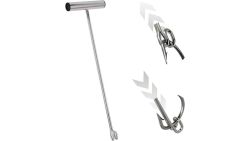
Hook Remover/Dehooker Tool That Repairs Jewelry Overnight

Introducing Maria, our meticulous planner and talented visual storyteller. She has a knack for discovering those hidden gems, chic boutique spots, and charming little cafes that add a touch of elegance to every journey. With her keen eye for photography and her passion for travel, Maria will transport you to the most enchanting corners of the world, inspiring you to explore new places, one picture-perfect destination at a time.
You’re looking for a tool that can yank a hook out and finish a necklace in the night. The gear I know of is built for fishing – sturdy stainless‑steel remover with a single‑hand push‑pull action. It doesn’t double as a jewelry fix kit, though. If you mostly tackle saltwater hooks and need a quick, one‑hand solution, those models could help. Stay tuned for the best options and tweaks that keep your gear ready overnight.
Key Takeaways
- Fishing hook removers are engineered to extract barbed hooks, not to mend or polish delicate jewelry.
- Their stainless‑steel tips are too rigid, risking deformation or chipping of jewelry surfaces.
- Overnight jewelry repair demands precise pliers, polishing disks, or micro‑soldering tools—none of which a hook extractor offers.
- Using a hook remover on jewelry may worsen damage, creating new defects instead of quick fixes.
- For fast, reliable results, employ a dedicated jeweler’s kit or professional service, not a fishing hook‑removing tool.
Stainless Steel Saltwater Hook Remover

If you’re hauling big saltwater fish—sharks, barracudas, swordfish, and other heavy‑bodied species—this stainless‑steel Hook Remover/Dehooker Tool is your best bet. The 12‑inch tool fits easily in any tackle box and lets you remove hooks with a smooth push‑pull motion. Its dual‑curve handle, shaped like a T, lets you grip it single‑handed, freeing your other arm for chores. Made from high‑strength stainless steel, it resists corrosion even after days on a salty deck. Its compact T‑handle folds neatly so it never takes up space in your bag. Carry it on any trip, and you’ll thank for the effortless, humane dehooking.
Best For: Best For: anglers tackling large saltwater species such as sharks, barracudas, and swordfish who need a lightweight, single‑hand dehooker that resists corrosion and cuts handling time.
Pros:
- Durable, high‑strength stainless steel construction resists salt‑water corrosion.
- T‑shaped, dual‑curve handle allows smooth push/pull action with one hand.
- Compact 12‑inch length and folding handle keep it snag‑free in a tackle box.
Cons:
- Limited to hook removal; not useful for other fishing tasks.
- 12‑inch size may feel bulky for some users with smaller hands.
- Does not address potential harm to the fish when already jack hook‑attached.
https://www.amazon.com/dp/B0CN6M91H9
Ambidextrous Ergonomic Fish Hook Removal Tool

The ambidextrous, ergonomic design lets you pull any fish hook out quickly and safely—no matter which hand you’re using. You’ll grip the 8.5‑inch, 3.9‑ounce handle, its resin shell with a thumb rest and index‑finger trigger. The ribbed, non‑slip grip keeps your fingers steady, while the safety lanyard hole lets you tether it to your tackle. The stainless‑steel stem fits hooks sized 1 to 9/0; just slide the tool’s throat around the hook’s curve, align the split head, tilt downward to disengage the barb, and pull straight back. Users praise its compact profile, durability, and finish, earning a 4.6‑star rating.
Best For: anglers who need a quick, safe, and ambidextrous tool for removing hooks from their skin without compromising grip.
Pros:
- Compact 8.5‑inch design fits easily in pockets or tackle boxes.
- Ergonomic resin handle with thumb rest and index‑finger trigger enhances comfort and reduces hand fatigue.
- Durable stainless‑steel stem works on hooks 1 to 9/0, keeping it versatile for most fishing situations.
Cons:
- The resin handle may feel slightly less rugged than metal alternatives for heavy‑use users.
- Limited to hook removal only – does not remove ingested hook debris or perform first‑aid beyond extraction.
- The safety lanyard hole does not include a built‑in tether, requiring a separate component for secure attachment.
https://www.amazon.com/dp/B0F3QY7SL5
Ergonomic Ambidextrous Fish Hook Removal Tool

For anglers looking for a swift, hassle‑free way to retrieve every hook, this ambidextrous tool keeps you in control.
It’s the DHUKR Human Fish Hook Removal Tool, Azul Blue, designed for anyone—male or female. The 8.5‑inch handle is made from solid resin, ribbed for a non‑slip grip that hugs your thumb and index finger. A convenient lanyard hole lets you keep it. Inside, a stainless‑steel stem, engineered for hooks from size 1 up to 9/0, grips the hook’s throat and releases its barb when you tilt the split head down. Just pull straight back, and the hook slides away clean.
Best For: anglers who need a quick, reliable way to remove hooks safely and comfortably.
Pros:
- Ergonomic, ribbed resin handle improves grip and reduces hand fatigue.
- Dual‑hand ambidextrous design works for both left‑ and right‑handed users.
- Precise split‑head mechanism efficiently disengages barbs from hook sizes 1–9/0.
Cons:
- No detachable or collapsible design, limiting portability in tight gear packs.
- Limited to hook sizes up to 9/0; larger industrial hooks not accommodated.
- Dependence on single material (resin, steel) may not appeal to users seeking more premium components.
https://www.amazon.com/dp/B0F3QPS517
Stainless Steel Fishing Hook Remover

When you’re deep‑water fishing, you’ll need a reliable way to remove tough hooks. The stainless‑steel TGQ‑PRO from PHLKJL offers durability, weighing just 0.06 kg. Its 12‑inch, dual‑curve tool grips the line with a T‑shaped handle, letting you pull out hooks one‑handedly. Its push‑pull mechanism reduces contact, lowering injury risk even on shark or swordfish. The silvery finish resists corrosion, making it ideal for saltwater conditions. It measures 12×5×1 inches, fitting neatly in a 12.68×5.35×1.26‑inch pack. You’ll find it handy across species like barracuda, catfish, and shark, really. Pack it in your tackle box, and your catches will stay whole day.
Best For: anglers who target large saltwater species such as sharks, swordfish, and barracudas and need a quick, one‑hand hook removal tool that keeps the catch intact.
Pros:
- Durable stainless‑steel construction resists corrosion for long‑term use
- T‑shaped handle and dual‑curve design enable fast, minimal‑contact hook removal with a single hand
- Lightweight (0.06 kg) and compact dimensions fit easily in any tackle box
Cons:
- Size may be less effective on the largest hooks or thickest lines
- Decorative silvery finish can dull under heavy, repeated use
- Not intended for ultra‑heavy commercial fishing operations, better suited to sport anglers
https://www.amazon.com/dp/B0D2DL285G
Stainless Steel Saltwater Hook Remover

Any saltwater angler tackling big game will appreciate this stainless‑steel hook remover—its corrosion‑resistant build and dual‑curve extractor let you release even the toughest shark hooks with one hand, saving time and protecting the fish. This PHLKJL TGQ‑PRO tool weighs a mere 0.06 kg but offers durability in waters. The 12‑inch length gives you leverage, while the T‑shaped handle lets you use it one‑handed. Its silver finish resists rust, and the dual curves glide smooth over hooks of sharks, barracudas, or swordfish. With a push‑or‑pull action you free the catch without injuring it. Ideal for any angler who values quick releases.
Best For: local fishermen who need a quick, one‑hand hook‑removal tool for large‑bite saltwater species.
Pros:
- Durable stainless‑steel construction resists corrosion in salt water.
- Dual‑curve extractor releases hooks safely without harming fish.
- Lightweight (0.06 kg) and ergonomic T‑shaped handle allows single‑hand operation.
Cons:
- No adjustable depth setting for highly recessed hooks.
- Limited to one‑hand use, which can be challenging with very heavy fish.
- Price may be higher than generic plastic alternatives.
https://www.amazon.com/dp/B0F59JH7MD
Ambidextrous Ergonomic Human Fish Hook Removal Tool

If you’re an angler who’s tired of juggling tools, this ambidextrous hook remover, with its ribbed resin handle and thumb rest, lets you dehook with just one hand—so you can focus on catching more fish. Glide your thumb into the rest, then press the index‑finger trigger to hold the split‑head. Position the 8.5‑inch stem around a hook throat, from size 1 to 9/0, tilt the head and pull straight. The resin grip stays firm in hands, while the lanyard hole secures the tool at sea. Weighing 3.9 oz, the 2‑inch‑wide, 2‑inch‑high gadget fits tackle bag, for each catch, letting you work safely, comfortably.
Best For: anglers who need a single‑hand, ambidextrous hook remover for quick, comfortable de‑hooking.
Pros:
- Ergonomic ribbed resin handle for a firm, non‑slip grip
- One‑hand operation with thumb rest and index‑finger trigger
- Lanyard hole keeps the tool secure and within reach on the water
Cons:
- Limited to hook sizes 1 through 9/0
- Smaller than some multi‑tool set‑ups
- Requires practice to master the tilt‑and‑pull motion for first‑time users
https://www.amazon.com/dp/B0DTP76XQP
Aluminum 9.5″ Fish Hook Remover

On the front lines of your tackle box, the CdbC 9.5‑inch Aluminum Hook Remover is the clear choice for solo anglers who demand quick, one‑handed hook removal with no risk to their fingers. It balances a lightweight aluminum alloy body with a thickened ABS grip, so you stay comfortable even on icy dives or late‑night beach trips. The spring‑loaded handle delivers a single, controlled pull, cutting hook‑handling time by half without compromising torque on large or small fish. Packaged in a compact 8.74 × 2.91 × 1.14‑inch case, you’ll keep it on your belt, ready for any edge‑cold challenge and guarantee smooth operation.
Best For: anglers who need a quick, single‑hand hook removal tool that keeps fingers safe and cuts handling time in half.
Pros:
- Lightweight aluminum alloy body reduces fatigue on long fishing trips.
- Thickened ABS non‑slip grip ensures a secure hold even in wet conditions.
- Spring‑loaded mechanism provides powerful, controlled pull for both small and large fish.
Cons:
- Compact size may make it difficult to handle in very cold environments where gloved fingers are used.
- The aluminum body, while lightweight, may retain heat when exposed to direct sunlight for extended periods.
- 30‑day warranty might be insufficient for users who field‑test the tool heavily.
https://www.amazon.com/dp/B0DK17NBGC
Pristis UTA III Heavy-Duty Hook Remover Tool

You’ll find the Pristis UTA III, engineered with a stainless‑steel hook and tube and a spring‑loaded ergonomic handle, to be the best choice for saltwater anglers who need a one‑hand pull on deep‑swallowed hooks—perfect for heavy‑duty fishing. Your gear measures 13 inches long, 3.94 inches wide, and over an inch tall, staying powerful. Stainless‑steel resists corrosion, keeping hooks sharp after repeated pulls. An aluminum handle with embossed grips lets you squeeze safely, while the spring‑loaded tension adapts to hooks of various sizes. Fish stay unharmed; you release them without damage. Pristis backs it with a six‑month warranty, giving you confidence in its durability.
Best For: Best For: saltwater anglers who need a one‑hand, heavy‑duty hook remover that protects fish and resists corrosion.
Pros:
- Durable stainless‑steel construction withstands heavy loads and saltwater corrosion.
- Ergonomic aluminum handle with embossed anti‑slip grips allows one‑hand operation.
- Spring‑loaded tension adapts to hooks of various sizes, minimizing fish injury.
Cons:
- Relatively short length (13 in.) may limit use with larger fishing rigs.
- Six‑month warranty may feel short for high‑end gear expectations.
- Orange finish, while eye‑catching, may not blend with all fishing gear aesthetics.
https://www.amazon.com/dp/B0FCRXLHX4
Snail Trail 4-Pcs Fish Hook Remover Tool

As an angler, you’ll value the Snail Trail 4‑Piece Hook Remover Kit’s long, serrated jaws – they let you yank a snagged lure out in a single, clean motion.
Each tool ranges 11.5, 6.1, 6.5, and 5.1 inches, matching every lure. A single‑hand grip and dual‑ended jaws let you target the hook instead of your hands, while serrated edges snatch even deeply embedded hooks. Made from marine‑grade stainless steel and PP handles, the kit resists corrosion in fresh and salt water. With a 30‑day warranty and a 4.6‑star rating, it’s a reliable choice for casual and pro anglers alike.
Best For: anglers who need a quick, one‑hand hook‑removal solution that works reliably in both fresh‑ and salt‑water environments, from beginners to advanced fishers.
Pros:
- Long, marine‑grade stainless steel jaws that grip hooks securely and resist corrosion.
- Serrated edges that cut through deeply embedded hooks in a single clean pull.
- Dual‑ended, single‑hand design that keeps fingers out of the fish’s mouth for safer, faster operation.
Cons:
- Small handle may feel cramped for users with larger hands or weaker grip.
- Focused only on hook removal; not versatile for other fishing tasks.
- No built‑in storage or multi‑tool feature—requires separate case for transport.
https://www.amazon.com/dp/B0F93CVVVK
2-Pack Stainless Steel Fishing Hook Remover

The dual‑curve design of the PHLKJL PRO‑2 lets you yank hooks out in a single, smooth action, making it the ideal tool for anglers who bring in large species such as sharks, barracudas, and catfish. You’ll get a 2‑pack of 12‑inch, 5‑inch wide, 1‑inch thick stainless‑steel removers that weigh 0.38 kg each. Their T‑shaped handle lets you pull a hook with one hand, keeping your other free for casting or bagging. The stainless-steel build resists corrosion, so it stays sharp no matter how late you finish. You can maneuver around catfish jaws or swordfish jaws without injury or spill today.
Best For: experienced anglers who regularly catch large fish—such as sharks, barracudas, swordfish, or big catfish—that require a quick and safe single‑hand hook removal tool.
Pros:
- Dual‑curve design enables smooth, single‑pull hook extraction without slipping.
- T‑shaped handle allows one‑hand operation, freeing the other hand for casting or bagging.
- Stainless‑steel construction resists corrosion, keeping the tool sharp even after prolonged use.
Cons:
- Not ideal for tiny or delicate hooks used in light‑weight fishing setups.
- Slightly heavier and bulkier than simple plastic hook‑remover alternatives.
- Primarily designed for long‑hook species; may be overkill for everyday small‑fish fishing.
https://www.amazon.com/dp/B0DC6M7ZVN
7″ Fish Hook Remover 304 Stainless Steel

For the experienced angler who demands a tool that keeps fish unharmed and hands safe, the 7‑inch 304 Stainless Steel Hook Remover offers a razor‑thin, forked tip that slides smoothly into tiny hook openings without snagging or rusting.
You’ll appreciate the design built from premium 304 stainless steel, giving you lasting corrosion resistance. Its ergonomic, non‑slip handle stays firm even when your hands are wet, while the slim profile keeps it lightweight—just 0.07 kg—and fits seamlessly into tackle box. Though no official warranty, the manufacturer will replace or refund if the tool falls short. Reach out to customer service for help.
Best For: the experienced angler who demands a reliable, rust‑resistant tool that keeps fish unharmed and hands safe.
Pros:
- Premium 304 stainless steel construction offers superior corrosion resistance for both saltwater and freshwater use.
- Ergonomic, non‑slip handle stays firm even with wet hands, allowing precise hook extraction.
- Lightweight (0.07 kg) and compact design fits easily into any tackle box.
Cons:
- No official warranty, so users rely on manufacturer’s replacement or refund policy.
- The narrow, single‑piece tip may struggle with larger or severely bent hooks.
- Limited to hook removal only; lacks additional functionality that multi‑tool tackle sets offer.
https://www.amazon.com/dp/B0FKYX2RRJ
10-inch Aluminum Hook Remover Pliers with Lanyard

If you’re a kayak angler chasing largemouth bass or northern pike, the 10‑inch aluminum hook remover pliers with a built‑in lanyard will yank stubborn hooks out in half the time of ordinary needle‑nose pliers—because the needle‑point design extracts even the deepest hooks without harming your catch.
Because the shaft is only ten inches, it stays lightweight, and premium aluminum alloy resists corrosion in both freshwater and saltwater. You’ll enjoy two needle tips that grip hooks and slide over barbs without snagging. The lanyard knits out accidents, keeping tools where you drop them for every catching session during each trip.
Best For: kayak anglers targeting largemouth bass, catfish, and northern pike who need a quick, corrosion‑resistant hook‑removing tool.
Pros:
- Twin needle tips extract hooks up to 10× faster than standard needle‑nose pliers.
- 10‑inch lightweight shaft keeps fatigue low on long trips.
- Built‑in lanyard prevents tool loss during multi‑session outings.
Cons:
- Designed primarily for fish under 15 lb; less effective on larger species.
- Fixed needle length limits use in very deep or heavily barbed hooks.
- Price per unit not publicly disclosed, potentially limiting budget‑conscious buyers.
https://www.amazon.com/dp/B0D2LRBV81
Steel Fish Hook Remover Pliers 11.5 Inch

When deep, narrow hooks keep you frustrated, the Cracrab 11.5‑inch hook remover lets you pull them out with a single, spring‑loaded grasp—no extra tools or a second hand needed. Your gear stays clean: a slender 4.5‑×‑0.4‑×‑11.5‑inch stainless‑steel arm pulls hooks in one motion, jointed serrated jaws grip any size. The 11‑½‑inch reach reaches radii your thumb can’t, while the 0.12‑kg weight lets you carry it on trips. The coiled lanyard keeps it handy, and the 4‑inch grip fits right‑hand users. Made in the U.S., this model works in fresh and salt water, backed by bold six‑month warranty and satisfaction.
Best For: Best For: anglers who frequently face deep, narrow hooks and need a lightweight, one‑hand tool for quick removal in both freshwater and saltwater environments.
Pros:
- Lightweight and compact (0.12 kg) for easy carry on long trips.
- Spring‑loaded, single‑hand operation with strong serrated jaws for efficient hook extraction.
- Stainless‑steel construction offers rust‑resistant durability in fresh and saltwater.
Cons:
- Designed for right‑hand users, limiting use for left‑handed anglers.
- 11‑½″ reach is not the longest available, so extremely deep hooks may still be challenging.
- Basic tool with no additional features beyond hook removal and narrow‑space picking.
https://www.amazon.com/dp/B0CPPS3JPB
Booms R2 Hook Remover – Squeeze-Out Hook Tool

Every angler dealing with gut‑level hooks will find the Booms R2 Hook Remover a game‑changer, thanks to its single‑hand squeeze‑out design that lets you twist the ergonomic plastic handle and yank the hook cleanly without fumbling. Because it’s only 10 inches long and barely 0.19 lb, you can fit it between the jaws of bass or trout with ease. Its anodized aluminum resists salt‑water corrosion, while the ABS handle secures a firm grip even after a long day. The stainless‑steel tip pulls hooks clean while sparing fish mouths, keeping releases healthy and your gear fresh, every catch, every time, softly.
Best For: seasoned anglers who release fish regularly and need a quick, fish‑friendly hook removal tool.
Pros:
- Light, 10‑inch design fits snugly between tight fish jaws.
- Ergonomic ABS handle allows smooth, single‑hand squeezing for fast hook extraction.
- Anodized aluminum and stainless‑steel tip resist corrosion and keep hook points clean.
Cons:
- Only available in three limited colors, restricting personal style options.
- Requires a steady hand; may be cumbersome for beginners.
- No built‑in safety guard, so cautious use is needed to avoid accidental cuts.
https://www.amazon.com/dp/B01M7U93Y9
Booms 2-Pack Portable Saltwater Hook Remover

These two 7‑inch steel tools—one U‑shaped and one O‑shaped—are a no‑frills, must‑have for saltwater anglers who need quick, reliable and indispensable de‑hooking. With a sleek blue‑grey finish and a weight of just 0.07 kg, the XW21 2‑pack fits comfortably in your pocket or tackle box. The U‑shaped extractor pulls the line to release hooks on small‑to‑medium fish, while the O‑shaped spiral slides onto any angle, including blind spots. Both feature stainless‑steel blades, slip‑resistant handles, and anti‑lost lanyards, ensuring durability and safety even in wet conditions. Booms guarantees a two‑year warranty, so you’re protected and confident on every outing daily.
Best For: saltwater anglers who need a lightweight, pocket‑ready, and durable quick‑hook‑remover for small‑to‑medium fish.
Pros:
- Ultra‑light (0.07 kg) and compact 7‑inch design fits easily in a pocket or tackle box.
- Stainless‑steel blades and slip‑resistant handles ensure long‑lasting performance even in salty conditions.
- Anti‑lost lanyards, wrist straps, and a 2‑year warranty give peace of mind on every outing.
Cons:
- Only two tools are included, which may be insufficient for large‑scale or multi‑finishing tasks.
- The design is geared toward small‑to‑medium fish; heavy or particularly tough hooks may be harder to remove.
- No adjustability in length or handle ergonomics—users must adapt to the fixed dimensions.
https://www.amazon.com/dp/B0FD3JKWLX
Factors to Consider When Choosing a Hook Remover/Dehooker Tool
You should first check that the tool’s material is strong and durable, as it must withstand the pressure of pulling stubborn hooks.
Make sure it has an ergonomic handle that lets you work smoothly with one hand, so you stay comfortable and efficient.
Finally, confirm that it fits the hook sizes you use and resists corrosion, ensuring long‑term reliability.
Material Strength & Durability
How do you decide which material will keep your hook remover reliable in the toughest fishing conditions?
If you need a tool that stays solid after months in saltwater, pick stainless 304 or 316 steel. Its yield strength (~200 MPa) fights corrosion, while a 12‑inch dehooker weighs just 0.06 kg and remains durable. For lighter jobs, an aluminum alloy 6061 gives you a 0.09‑kg instrument that flexes with 300 psi compressive strength, perfect for delicate snags. Hardened steel heads with HRC ≥ 50 keep edges sharp during repeated pull‑push actions, extending life. Passivation or anodized coatings curb oxidation, preserving strength over years. A 0.5‑inch stem of 400 MPa steel can handle 5 Nm torque without bending, ensuring consistent performance.
Ergonomic Handle Design
While stainless steel guarantees durability, the real advantage of a hook remover shows up in its handle design. A T‑shaped grip that measures about 8½ inches long and 2 inches wide gives you a sweet spot for leverage, letting you push and pull with a single hand without twisting your wrist too much. Ribbed or solid‑resin grips stay slick‑resistant even when wet, so you don’t drop the tool. The integrated thumb rest and index‑finger trigger keep your fingers in place, lowering the force needed to disengage a hooked barb. A lanyard or wrist‑strap hole keeps the device from falling, while low‑profile dual curves reduce wrist strain during heavy‑tackles. Plus, its lightweight construction lets you bring multiple tools without adding bulk to your tackle box.
One‑Hand Operation
Need a tool that lets you work single‑handedly? A T‑shaped or U‑shaped handle keeps your grip steady while your other hand stays free, letting you push or pull with the same hand. Dual‑curve extractor geometry locks onto the hook’s throat, and your wrist delivers the necessary release motion. Push‑pull mechanisms with 8‑12‑inch levers give enough leverage to disengage even the toughest barbs, all while you hold the tool with one hand. Lightweight construction—roughly 0.1 to 0.4 kilograms—keeps it manageable for long periods. By reducing animal stress, cutting processing time, and limiting accidental injury, one‑hand operation streamlines your workflow and protects both fish and operator. You’ll notice faster setup, fewer mishaps, and greater confidence in delicate recovery, making every session smoother and safer and today.
Compatibility With Hook Sizes
Because a dehooker’s stem must accommodate the hook’s shank, the tool’s width directly dictates which hook sizes you can handle. You’ll want a jaw that spans at least the largest shank you anticipate. Most models cover sizes 1 through 9/0, where shank diameters range from about 0.08 in (size 1) to 0.34 in (size 9/0). A tip 0.20 in wide usually manages hooks 1 to 9/0, leaving smaller hooks unharmed. If your tool tops out at 0.30 in, it won’t safely handle the giant hooks needed for large‑mouth fish. Some sharp‑curve designs expand to about 0.45 in, opening the door to shark or swordfish locks. Read the compatibility table for minimum and maximum diameters before you buy. Don’t compromise on size; choosing the right jig lets you dehook safely and effortlessly each time today.
Corrosion Resistance
If your hook remover will face salty water, choosing the right alloy matters. A marine‑grade 316L stainless‑steel tool resists chloride‑induced pitting and stays structurally sound for 10–15 years, even with frequent salt exposure. In contrast, 304 stainless can pitted in saline unless you add a protective coating. Applying a sacrificial zinc layer or a small anode cuts corrosion rates by up to 80 % on salt‑sprayed surfaces. Aluminum 5083, though lightweight, can suffer galvanic corrosion next to steel unless properly isolated. Protective PTFE or nickel electroplating can double or triple lifespan in moist, salty storage, but the coating needs periodic re‑application to keep its barrier effective. If you store it wet overnight, PTFE coating outlasts plain steel. Avoid metal‑to‑metal contact; use a dielectric gap or sacrificial anode. Check the coating each use and re‑apply before you continue work.
Weight & Portability
When selecting a hook remover, you’ll quickly notice that weight and portability drive usability in the field. A lighter device, around 50–80 g, fits into a tackle pocket or lanyard, cutting fatigue during long sessions. Since weight influences maneuverability, a 0.1 kg tool pulls smoother than a 0.4 kg model, especially on hefty hooks. Compact sizes—roughly 12–15 in by 5 in by 1 in—enable one‑handed operation while reaching deep‑swallowed hooks. Even weight distribution improves one‑handed safety, keeping the tool steady and reducing slips. However, lighter designs often lack thick material, so reinforcing them with high‑grade stainless steel or alloy is essential to resist denting under stress. If you often tackle large catches, choose a slightly heavier, reinforced tool to balance strength and ease of handling while keeping portability in practice.
Safety Features
A well‑designed hook remover starts with safety, ensuring every feature protects both you and the fish. You’ll appreciate the ergonomic, T‑shaped handle that lets you work single‑hand, keeping your fingers clear of a slipping hook. The thumb‑rest and index‑finger trigger rest give you solid control, preventing accidental jabs. Dual‑curve extractor geometry and a small, smooth throat circle snugly cradle the hook, cutting the chance of further injury or skin tear. A built‑in safety lanyard hole means you can tie a short cord, reducing drop risk in fast‑paced fishing. All parts finish in corrosion‑resistant stainless‑steel or high‑strength aluminum, so sharp edges won’t develop. The push/pull lever delivers a smooth, controlled release, avoiding jarring motions that could hurt either you or the fish. For every task.
Frequently Asked Questions
How Often Should I Clean My Hook Remover?
You should clean your hook remover each time you finish a repair session, at least once a week. That keeps tools free of metal shavings and prevents rust. If you handle heavy‑duty jewelry, give it a quick rinse after each use. For long‑term care, soak it in warm soapy water 10 minutes monthly, then dry it vigorously. A clean tool lasts longer and works better every time you use it.
Can Hook Removers Be Used for Jewelry Repair?
Absolutely, you can use your hook remover to smooth out a stuck clasp or free a snagged chain—think of it as a delicate whisper that nudges the pieces apart without a hard pull. You’ll rustle the metal gently, slide the clasp, and restore the jewelry’s dance. Just wear gloves, use a light tap, and you’ll see the repair unfold quietly, and then, after a pause, you will reattach the chain.
Are Hook Removers Safe for Delicate Fish Scales?
No, hook removers aren’t safe for delicate fish scales. You’ll risk damaging those fine, fragile skins and harming the fish. Instead, use gentle, fish‑safe cleaners or consult a fish‑care expert before touching scales. If you must, test a small area first and take great care not to scrub aggressively. Remember, slow, careful handling keeps scales healthy and avoids stress. And makes them rebalance. Keep them free from danger now.
What Materials Affect Hook Remover Longevity?
Silicone, nylon, and stainless steel each influence how long your hook remover lasts. Picture a fisherman who swapped a cheap silicone remover for a premium stainless‑steel model; after a year of frequent use, the steel tool remained intact, while the silicone cracked after just a few months. Each material’s durability depends on flex, corrosion resistance, and heat exposure, so choose wisely based on usage and keep them clean for life.
Can I Travel With Hook Remover Tools?
Yes, you can travel with hook remover tools, but be sure to pack them in checked luggage if they’re not considered weapons. Most airlines allow them in carry‑on, but check your carrier’s policy first. Store them in a hard case to prevent damage, and keep any metal parts small so they’re easy to scan. Finally, double‑check local laws at your destination. Before you board, and tell security a bulky case.
Conclusion
You grab the stainless steel pliers, your tool of choice for turning tangled hooks into gleaming threads. As you squeeze, it feels like the tide pulling a sailor’s weightless promise back to shore. Each tug reflects a jeweler’s patience, turning chaos into order, and the it’s night turning to bright dawn–a symbol of repairs stitched for tomorrow’s sparkle. When the day closes, the jewelry shines renewed, a quiet testimony to your steady hand with care.
Hook removal, Jewelry repair, Nighttime fix