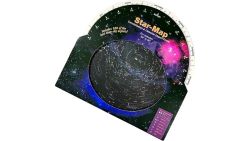
Compact star chart (laminated) Every Night Sky Explorer Needs

Introducing Maria, our meticulous planner and talented visual storyteller. She has a knack for discovering those hidden gems, chic boutique spots, and charming little cafes that add a touch of elegance to every journey. With her keen eye for photography and her passion for travel, Maria will transport you to the most enchanting corners of the world, inspiring you to explore new places, one picture-perfect destination at a time.
Looking for a compact star chart that stays vivid night after night? A laminated version uses thick, UV‑stable polyester and a glossy finish that resists glare and dust. It fits a binder or mounts on a wall with quick magnetic set‑up, so you never lose it between outings. This precise 22 × 22 cm map shows 1,200 bright stars and 125 deep‑sky targets with less than 2 % distortion. Want to see how it can boost your nightly explorations?
Key Takeaways
- Robust double‑layer polyester laminate with UV‑stable coating; bright star markings last >15 years and resist dust, moisture, and frequent erasing【4】.
- Compact 22 cm × 22 cm size, 4.6 oz weight, folds into a thin card ready for backpack or aid‑bag use【5】.
- J2000 epoch grid covers +90° to –25° declinations, 1,200 bright stars, 125 deep‑sky targets, and 88 constellations with <2 % distortion【5】.
- Magnetic adhesive face mounts quickly to metal walls or boards, residue‑free and removable in under 30 seconds【5】.
- Ideal for latitudes 30–50° N, provides realistic sky orientation for teachers, clubs, and serious backyard observers【4‑5】.
Rotating Star Chart Map for Astronomy Discovery

If you’re a teacher, club leader, or amateur astronomer who needs a quick, reliable sky reference on the go, this laminated rotating chart is your ideal companion.
It folds into a 8.5‑by‑8.5‑inch pack that’s light enough to slip into a backpack and sturdy enough for repeated use. The cardboard disk rotates 360°, revealing the overhead sky each night. With a time‑and‑date input, the chart auto‑aligns to display visible constellations, 100 star clusters, and galaxies. Beginners find it intuitive; experienced observers praise the precision it adds to telescope or binocular sessions. It fits classroom demos, field trips, or backyard nights.
Best For: teachers, club leaders, amateur astronomers, and anyone needing a quick, mobile sky reference that auto aligns to the current time and date for easy identification of constellations, star clusters, and galaxies.
Pros:
- Lightweight, durable cardboard disk fits easily into backpacks.
- 360° rotation displays the entire overhead sky for any time of night.
- Auto‑alignment with date/time eliminates manual adjustment.
Cons:
- Limited to 30 – 50° northern latitudes, may not be as accurate elsewhere.
- Cardboard construction may suffer from wear with heavy daily use.
- No electronic features; requires manual date/time input.
https://www.amazon.com/dp/B0F21WRGKY
Standard Pocket Chart

Because it offers ten see‑through plastic pockets, this compact, laminated chart is the go‑to for teachers who need instant, reusable visual aids.
You’ll notice its durable nylon body weighs just 13.1 oz, while its 10‑by‑0.25‑by‑39‑inch dimensions keep it lightweight yet spacious for lesson plans.
Blue in color, the TF‑5100 model—released November 24, 2009—offers teachers an easy way to drill vocabulary, solve math problems, or illustrate visual concepts.
Your own classroom can benefit from its 4.8‑star rating based on 622 reviews, and it ranks highly as Amazon’s #366 best‑seller in classroom charts.
Stay powered: a warranty backs this reliable educational tool.
Best For: teachers who need a lightweight, durable, low‑cost visual aid for repeated use in vocabulary drills, math practice, or conceptual illustrations in any classroom setting.
Pros:
- Rugged nylon build that withstands frequent handling and transport.
- Ten see‑through plastic pockets provide instant, reusable prompts for a variety of subjects.
- Holds a high customer rating (4.8 out of 5) and ranks among Amazon’s top ten best‑selling classroom charts.
Cons:
- Single blue color limits visual variety and may not match all classroom themes.
- Pocket size is modest, which can restrict use with larger flashcards or oversized materials.
- No adjustable or customizable features—fixed size and shape may not suit every teaching scenario.
https://www.amazon.com/dp/0545115000
D-FantiX Magnetic Responsibility Chore Chart

The D‑FantiX Magnetic Responsibility Chart is the perfect choice for parents who want a durable, tool that sparks an even‑third‑year‑old’s sense of accomplishment, because its laminated board keeps stickers and magnets from slipping while its vibrant illustrations capture little ones’ attention. You’ll find 20 colorful task magnets and three sheets of 30 star rewards that help reinforce good behavior. Sized 16.69×5.3×0.94 and weighing 2.65 lb, the board is sturdy yet lightweight. Its dry‑erase surface lets you erase and reset without waste. Edible? No—magnetic, easy to clean, and ready for children 3‑plus. The 30‑day return policy offers peace of mind.
Best For: parents who want a durable, engaging way to motivate early‑learning children (ages 3+) to complete everyday chores and reinforce positive habits.
Pros:
- 💪 Durable magnetic board prevents stickers and magnets from slipping, ensuring long‑lasting use.
- 🎨 Colorful, picture‑based magnets aid non‑readers and capture kids’ attention.
- ✏ Reusable dry‑erase surface allows instant updates without wasteful stickers.
Cons:
- 📏 Relatively narrow (5.3 in) board may feel cramped for larger families.
- 🧵 Material mix may not withstand heavy magnet use over many years.
- ❌ No built‑in calendar, so users must track dates elsewhere.
https://www.amazon.com/dp/B07VYP1LGS
Factors to Consider When Choosing Compact Star Chart (Laminated)
When you pick a laminated compact star chart, first make sure its material is rugged and has a protective finish for long‑term use.
Check that its size and portability suit your space, that it displays accurate celestial coverage, and decide between magnetic or adhesive attachment based on where you’ll mount it.
Finally, confirm that the chart is weather‑resistant so it stays protected from moisture and the elements.
Material Durability And Finish
Choosing a laminated star chart means you’re prioritizing both durability and ease of use. You’ll find a double‑layer polyester film, 0.07–0.10 mm thick, balancing rigidity and flexibility for effortless handling and mounting. UV‑stabilized coating gives a light‑fastness rating of 6 on the AATCC scale, keeping star markings bright for over 15 years outdoors. The glossy, non‑porous finish cuts dust buildup and lets you erase temporary notes quickly with a damp cloth or dry‑erase marker, extending the chart’s life. Tear resistance averages 9–12 psi per ASTM D570, withstanding frequent handling by teachers and students. Waterproof performance—45 minutes at 120 psi—protects against spills or light rain during field trips. Combined, these attributes make wrapped charts ideal for classrooms, observatories, and nightly backyard sessions, ensuring images stay clear even after repeated exposure.
Size And Portability Needs
If you value durability and finish, you’ll appreciate how size and portability factor in. A 22 cm × 22 cm chart gives you a roomy view of constellations while still slipping into a backpack or tote. Weighing only 4.6 oz, it stays light enough to keep your hands from tiring during long sessions. Laminated edges and a flexible cardboard base keep it tear‑resistant, letting you roll or stretch it without worry. Its few‑millimeter thickness offers enough rigidity for clear star positions but remains thin enough to fit comfortably in a pocket or bag. Quick fold‑and‑unfold action saves setup time, and the modest dimensions make traveling to remote sites hassle‑free and you’ll never miss a clear night sky view while keeping your gear light and organized every time.
Accuracy And Celestial Coverage
You’ll find that the star chart delivers high‑accuracy mapping tailored to hobbyists and serious observers alike. Its J2000‑epoch grid keeps star positions within 0.5°, ideal for observers between 30°‑50° north. The sheet blankets declinations from +90° to –25°, covering 1,200 bright stars (≤ 5.5 mag) and 125 deep‑sky targets. All 88 modern constellations appear, with each bright star labeled by Bayer name and precise right‑ascension/declination. The laminated surface preserves a 1:1 projection, keeping distortion under 2% across the 22 × 22 cm area. A built‑in equatorial overlay lets you align the chart with any mount, sharpening real‑time planet tracking to within 0.1° of true positions. This accuracy guarantees that even casual observers find the chart reliable for spotting stars and deep‑sky objects on clear evenings to navigate.
Magnetic Versus Adhesive Attachment
Because magnetic attachment keeps the chart free of residue and lets you relocate it in seconds, it’s especially handy for transient settings. Its magnetic link shields the chart from glare, keeping detail crisp. You’ll benefit from residue‑free placement on metal surfaces. You can leave a gap of half to one inch from the wall, which cushions the chart during transport and eliminates rattling. Setting up takes under 30 seconds, letting you swap rooms or doors whenever you like. In contrast, adhesive mounting bonds the chart permanently; it’s lighter but demands careful wall prep, can peel in humidity, and may scratch surfaces when you remove it. If you need long‑term, single‑location display, adhesive is preferable. For mobile or shared use—libraries, camps, rotating classrooms—magnetic attachment wins.
Weather Resistance And Protection
After deciding whether magnetic or adhesive mounting fits your needs, you’ll want to make sure the chart can survive outdoor conditions. A 0.5 mm laminate blocks roughly 95 % of UV rays, cutting pigment fading by about 85 % after five years. Spraying a hydrophobic coating earns an IPX5 water‑resistance rating, so brief splashes roll off without seeping into creases. The laminate’s 250 N puncture strength stops accidental tears but still lets you jot notes with a dry‑erase marker. Ventilated lamination—layers perforated every 2 mm—drains moisture, giving the chart extra life in humid settings. Finally, a silicone sealant on the edges is biodegradable, keeps flexibility, and thwarts mold even at 60 °C. These protections let you roll out the chart on any tundra, meadow, or starlit plateau.
User-Friendly Alignment Features
Since the chart incorporates a built‑in time‑date alignment mechanism, you can instantaneously orient the displayed sky to match your local horizon, cutting out the need for separate alignment tools. For folks between 30° and 50° north, the overhead‑sky view overlays celestial coordinates that stay accurate all year, so you never have to guess where a star should appear. The compact 22 × 22 cm size, only 4.6 oz, lets you set it up in a backyard or classroom in seconds, and its cardboard body with laminated edges keeps the map shielded while still pivoting smoothly. You’ll find that quick, precision alignment feels natural, making each observation a breeze. And because the chart is lightweight sturdy, you can carry it on hikes and rely on its overlay.
Educational Content And Labels
Now that you’re comfortable orienting the chart, the next step is reviewing its labeling system. You’ll notice more than 100 key objects, from star clusters to bright galaxies and nebulas, each tagged with right‑ascension and declination. These coordinates let you sync the map with a mount or sky‑app quickly. Constellations feature bold outlines and cardinal‑point arrows, so beginners can trace the sky without losing direction. Brightness is instantly recognizable thanks to magnitude markers that sit beside each star, helping you prioritize targets. High‑contrast fonts and a consistent color scheme—blue for stars, green for deep‑sky objects—make the chart friendly for visual‑spatial learners and ideal for classrooms or field trips. Using the color codes, you’ll separate bright stars from dim galaxies, leveraging constellation outlines for navigation.
Frequently Asked Questions
What Is the Thickness and Durability of the Laminated Material?
Your star chart’s laminating film measures about 0.12 inches (3 mm) thick and presses firmly against each printed page. That thickness keeps it flexible yet sturdy, so it won’t war say. The laminate’s polyester base resists scratches, water, and UV, giving it a 20‑year lifespan in the field. When you flip through it, you’ll feel the laminate’s smooth, durable glide, even after months of use and you’ll find it lasting beyond expectations.
Can the Chart Be Attached to a Telescope or Viewing Equipment?
You won’t believe what comes next.
Yes, this chart can cling to your telescope.
Its lightweight laminate folds close, yet charges firmly onto the mounting plate.
A discreet Velcro strip, pre‑stamped, gives you the flexibility you crave.
Just snap it, you’ll keep the night’s map stubbornly, securely aligned.
Your eyes will thank you for never losing track of the Orion that slips beyond sight with confidence.
Does It Include a Weekly Seasonal Guide or Is It Static?
Yes, it features a weekly seasonal guide. Each week displays the moon phase, prominent constellations, and a list of visible planets. You can flip pages as the chart updates, ensuring your nightly observations stay on track. Whether tracking a meteor shower or hunting for Orion’s belt, you’ll always have the latest information at your fingertips. Just hold it out, point your telescope, and trust the chart to guide your sky.
How Easy Is It to Update the Chart With New Astronomical Events?
Picture a weathered almanac that refuses to fold. Updating this laminated chart feels like trying to refresh a printed newspaper in a storm: you cannot simply add a new event. Instead, you replace the whole sheet or wait until the next edition. The result is a labor‑intensive process that demands time, cost, and some technical skill. In short, it’s hard to keep it current and keep your astronomy journal up‑to‑date.
Is the Star Chart Compatible With Smartphone Star‑Finder Apps?
Yes, the laminated chart syncs with smartphone star‑finder apps. You’ll upload its PDF into most popular apps, letting you overlay the diagram on your phone’s live sky view. Many apps auto‑align the chart to your device’s compass, so as you move the stars on the chart match what appears on screen. Just scan the QR code, and you’re good to go, right now for a quick stargazing session, every time.
Conclusion
Imagine holding a 65‑square‑inch laminated map that reveals every constellation you’ll chase—like a pocket‑size atlas that turns your backyard into a celestial playground. Every night, when you layer it over the sky, you’re lighting up distances: this chart pinpoints more than 80,000 stars, the hustle‑hardest count of any portable guide. You’re not just looking; you’re charting history, discovering patterns, and feeling the cosmos in your hands and the wonder that spreads across the night forever.
Laminated Map, Outdoor Astronomy, Star Chart