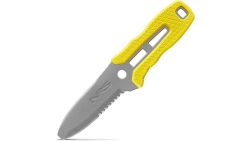
Best Boat Safety Knife (Blunt Tip) Worth Knowing

Introducing Maria, our meticulous planner and talented visual storyteller. She has a knack for discovering those hidden gems, chic boutique spots, and charming little cafes that add a touch of elegance to every journey. With her keen eye for photography and her passion for travel, Maria will transport you to the most enchanting corners of the world, inspiring you to explore new places, one picture-perfect destination at a time.
If you’re after a reliable blunt‑tip safety knife for your boat, the NRS 2024 Pilot is a top pick. Its 3.6‑inch 420 HC blade sits on a rust‑proof, glass‑reinforced handle with a central valve wrench, and a thumb‑released sheath locks to your PFD lash or lanyard. The lighter NRS 2024 Co‑Pilot offers the same safety, just 2.8 inches and lighter. Gerber’s E‑Z Out serves seat‑belt/air‑bag cuts but has no sheath. Choose a knife that balances blade length, grip, lanyard hook—details await exploring.
Key Takeaways
- Choose a blunt‑tip design: minimizes accidental cuts while still offering efficient cutting for cockpit chores.
- Seek a 3.5‑ to 3.6‑inch blade: the ideal compromise between reach and control in a cramped boat environment.
- Opt for a rubber‑covered, asymmetrical handle: provides a wet‑grip and allows ambidextrous use without slippage.
- Ensure a built‑in oxygen‑tank wrench: critical for quick water‑lock valve adjustments or emergency repairs.
- Select a safety‑in‑conduit sheath with thumb‑release: keeps the knife visible on the deck and prevents accidental falls.
NRS 2024 Pilot Knife | Safety Knife

If you’re out on the water and need a reliable, life‑saving tool, the NRS 2024 Pilot Knife is the perfect fit. Crafted from 420 HC stainless steel, the 3.6‑inch blade rests in a glass‑reinforced polypropylene handle topped with rubber for grip. Its safety‑yellow hue signals purpose, while the blunt tip and asymmetrical shape keep it non‑lethal. A built‑in oxygen‑tank valve wrench sits in the center, letting you fix leaks quickly. Thumb‑released sheaths lock to your PFD lash tab, and a lanyard hook on the tip prevents loss. Packaged with a reusable case, it’s ambidextrous and hand‑washable—ready for any freshwater adventure.
Best For: freshwater boaters, sailors, and rescue teams in need of a compact, preflight‑ready safety knife with an integrated valve wrench.
Pros:
- Durable 420 HC stainless steel blade with a glass‑reinforced polypropylene handle for long‑term reliability.
- Thumb‑released sheath that locks to a PFD lash tab, plus a lanyard hook on the tip to prevent loss.
- Built‑in oxygen‑tank valve wrench and blunt, asymmetrical tip for safe, non‑lethal operation.
Cons:
- Not ideal for saltwater use; a titanium version is recommended for marine environments.
- Fixed blade placement may slow deployment in fast‑response scenarios.
- 4.4 oz weight can feel bulky for very lightweight, handheld tasks.
https://www.amazon.com/dp/B0CYDHW1JZ
NRS 2024 Pilot Knife | Safety Knife

The NRS 2024 Pilot Knife’s safety‑oriented design makes it the go‑to tool for freshwater rescuers and hunters alike.
You’ll appreciate the 3.6‑inch, 420 HC stainless steel blade with reverse scallop serrations that slice fiber cleanly—yet its blunt tip keeps accidental cuts to a minimum.
The glass‑reinforced polypropylene handle sports a rubber overlay, an asymmetrical shape, and a jimped edge that locks your thumb in place, preventing slips.
A built‑in central valve wrench lets you tighten oxygen tank valves instantly, while the partially serrated edge stays versatile for cutting rope and more.
Sheath slides onto PFD lash tab, ensuring blade stays secure.
Best For: freshwater boaters, first‑responder teams, and outdoor hunters who need a reliable yet safety‑oriented cutting tool on or near water.
Pros:
- Blunt, jimped edge and asymmetrical handle dramatically lower accidental‑cut risk.
- 3.6‑inch 420 HC blade with reverse scallop serrations offers both clean fiber cuts and versatile rope/rope handling.
- Quick‑release thumbs‑up sheath and built‑in lanyard attachment tie the knife to a PFD lash tab—no loose blade in rough water.
Cons:
- Its 6.4‑oz weight can feel bulky compared to lightweight folding knives.
- The partial serration pattern may struggle with very thick or heavily reinforced rope.
- The design is focused on freshwater use; the stainless steel may corrode faster in salt‑water environments.
https://www.amazon.com/dp/B0CYDD4J2V
NRS 2024 Pilot Knife | Safety Knife

Engineered with a blunt, reverse‑scallop blade and a “Thumbs Up” sheath, the NRS 2024 Pilot Knife is the safety tool for freshwater boaters needing a reliable cutting device during rescue ops. Its 7.25‑inch length balances heft and maneuverability, while 420 HC steel delivers strength without sharpness. The handle, made of polypropylene with rubber overlay, grips even when wet; the design lets operator use it. Jimping along the edge prevents slippage, and the serrated surface tackles fibers. A lanyard lock and lash‑tab sheath keep blade secure and always within reach. This knife cleans—wipe after use, keep dry, and you’re ready for emergency.
Best For: freshwater boaters and rescue crews who need a reliable, low‑risk cutting tool that stays safely in hand during operations.
Pros:
- Blunt, reverse‑scallop blade delivers safety while still cutting tough fibers with serrations.
- Quick‑release “Thumbs Up” sheath and lanyard lock keep the knife within easy reach and secured.
- Lightweight (4.4 oz) and ambidextrous handle with rubber overlay ensures a comfortable grip even when wet.
Cons:
- Limited sharpness makes it unsuitable for cutting very hard or knife‑cutting tasks.
- Designed only for freshwater; saltwater use requires a different model.
- Small blade may struggle with deep cuts or hard materials compared to larger knives.
https://www.amazon.com/dp/B0CYDBXXCL
Gerber E-Z Out Rescue Knife

Because your boat’s safety kit needs a tool that can quickly slice through seat belts and airbags without compromising safety, the Gerber E‑Z Out Rescue Knife gives you a 3.5‑inch 400‑series stainless‑steel blade that’s both clip‑point and serrated, yet ends in a blunt tip to keep you from injury. Its nylon handle, dyed bright yellow for visibility, feels mineral‑filled rubber grips. A thumb hole lets you pull the blade out single‑handed, while a lanyard hole keeps it on your belt. The blade locks automatically for safety, and the entire knife weighs only about 3 oz, easy to carry now in your galley.
Best For: emergency responders, safety crew, and armed forces needing a quick, one‑hand seat‑belt and air‑bag cutter.
Pros:
- Serrated, clip‑point blade with blunt tip ensures safe, efficient cutting.
- Bright yellow mineral‑filled nylon handle provides high visibility and a firm grip in wet conditions.
- Thumb‑hole opening and auto‑locking mechanism allow one‑hand operation with added safety.
Cons:
- Designed only for seat‑belt/air‑bag use, not general cutting tasks.
- 3.5‑inch blade may be too short for heavy‑duty or thick material cutting.
- No protective sheath included, requiring separate storage.
https://www.amazon.com/dp/B000JJNAAY
NRS 2024 Co-Pilot Knife | Safety Knife

Perfect for freshwater boaters who need a tool that stays safe and ready, the NRS 2024 Co‑Pilot Knife gives you a thumb‑up quick‑release sheath that lets you deploy the blade in a single, one‑hand flick.
Your blade hangs on the PFD lash tab, and a lanyard keeps it from drifting. The asymmetrical handle and blunt tip secure the blade, preventing accidental cuts. A 2.8‑inch, 420 HC leaf has partial serrations that slice tough fibers, plus a central oxygen‑tank valve wrench for quick access. Weighing only 2.56 oz, it stays light and balanced. It’s released with that thumb‑up flick, ships with an NRS warranty.
Best For: freshwater boaters who need a quick‑release, secure cutting tool that stays on their PFD.
Pros:
- Simple thumb‑up quick‑release sheath for one‑hand deployment.
- Built‑in oxygen‑tank valve wrench saves carrying extra gear.
- Lightweight 2.56 oz blade keeps the knife balanced on a boat.
Cons:
- Partial serrations may not slice extremely tough fibers or thick ropes.
- Blunt, safety tip limits cutting power for heavy‑duty tasks.
- Designed for freshwater; saltwater corrosion resistance is limited.
https://www.amazon.com/dp/B0CYDNSTMY
Factors to Consider When Choosing Boat Safety Knife (Blunt Tip)
Pick a blunt‑tip safety knife whose blade length gives you enough reach to cut lines but stays short enough to limit accidental cuts.
You’ll also want an ergonomic handle made from corrosion‑resistant material that comfortably grips your hand and includes a safety lock.
Finally, make sure it has a built‑in lanyard hook so it stays within reach no matter how wet the deck gets.
Blade Length Matters
When you choose a safety knife, the blade length is its most critical feature. A 3.6‑inch blade delivers enough leverage to slice seat‑belt fibers, leather tarps, and moderate‑thickness rope, while staying light enough for deployment. Shorter than about 3 inches, the cutting edge shrinks, but the blade fits more easily into tight storage spots like a PFD lash‑tab, lowering accidental exposure risk. Over 4 inches, the knife feels harder to control single‑handed and the weight shifts far from the handle, compromising stability in rough water. Matching the blade to a sheath that opens only slightly larger keeps the knife compact reduces mis‑sheathing during high‑stress moments. With a 7.25‑inch overall length, that 3.6‑inch blade centers the knife’s mass near the handle, balancing control cutting comfort.
Handle Ergonomics
What makes a blunt‑tip safety knife feel naturally controllable is the way its handle is shaped and built. When you grip, you want a molded polymer core with a rubber overlay to keep your thumb dry, even on wet decks. A six‑inch length gives you a full‑extended reach so you can pivot the blade comfortably. A subtle groove or jimp‑like ridge on the upper edge guides thumb placement and stops accidental release. The lanyard hook sits at the tip, so you can clip it to a PFD or belt without re‑gripping. Shaping the knife toward your dominant side with a slightly weighted asymmetry cuts injury risk by keeping control in mind. It gives you confidence for quick action today, right away. Keep it handy always.
Material Durability
Because a boat safety knife must keep cutting edges sharp even in harsh marine environments, picking the right materials is critical.
You’ll want the blade made from 420 HC stainless steel, which balances high hardness—around 56 to 61 HRC—with outstanding corrosion resistance. That means the edge stays sharp through freshwater splashes and occasional salt spray.
For the handle, opt for glass‑reinforced polypropylene backed with mineral or glass filler. Its impact resistance ranges from 18 to 25 J, ensuring the grip survives repetitive shocks during rescue operations.
A partially serrated, reverse‑scalloped edge spreads cutting forces, reducing wear compared to a straight edge when cutting heavy fibers. This design keeps the blade in shape longer.
The valve‑wrench, molded from the same polypropylene, eliminates weak joints, extending cycle life today.
Safety Features
Even as you pull a rope free during a rescue, a blunt‑tipped blade cuts cleanly without risking self‑injury. You’ll appreciate the asymmetrical edge—about 3.6 inches long—that slices rope while preventing accidental gouges. A thumb‑release sheath snaps onto the PFD’s lash tab; a single‑hand flick releases the blade, keeping it secure until you need it. A raised jimp line on the handle locks your thumb in place, so the knife won’t slip when you’re under pressure. The built‑in lanyard hook ties the blade to your harness or belt, ensuring you never lose it mid‑water. Plus, a central valve wrench lets you adjust fire‑hydrant or oxygen‑tank valves quickly, without pulling the knife off your sidearm. You know it’s reliable, and its safety guarantees keep you focused through rescue.
Lanyard Integration
When you’re on a boat, the lanyard attachment point—usually a loop or hook at the handle tip—lets you tie the strap right to the knife or a secondary retention device. The standard length hovers around 12 to 18 inches, giving you enough slack to keep the knife within reach while preventing accidental drops. Use nylon or polyester straps for abrasion resistance; pair them with a 3‑mm stainless‑steel carabiner that can handle at least 50 pounds of dynamic load. When the knife’s sheath includes a thumb‑released quick‑release, you can hook or unhook the lanyard with one hand, cutting deployment time during a crisis. Integrating the lanyard with the sheath keeps the blade on the PFD lash tab if the sheath fails, adding a backup layer.
Storage Mechanism
If you need quick access yet safe storage, a thumb‑released sheath that stays closed until you’re ready to pull the blade is essential. When you attach the knife to a PFD lash tab, it stays within arm’s reach without dangling. A built‑in lanyard loop on the handle tip or interior gives a secondary anchor, letting you keep it attached even in rough water. Storing the blade in a fixed, angled position on the sheath cuts the chance of accidental slippage or cuts. Finally, a locking or latching closure keeps the sheath shut against unintended opening during emergencies, so you can deploy the blade instantly when you need it. This design keeps your safety tool ready and safe, providing confidence in any sea adventure daily.
Maintenance Requirements
Having secured the blade within a thumb‑released sheath and lanyard anchor, you can focus on keeping the tool active through routine care. After every use, wipe the 420 HC blade with a damp cloth, then dry with a lint‑free towel to stop water‑borne corrosion. Don’t let it sit in water or damp places; instead, stash it in a dry, sealed container or pouch. Inspect the edge, handle, and lanyard hook after each deployment. Replace any cracked or rusty part before the next spin. Avoid abrasive cleaners or steel wool; mild soap and water or a non‑abrasive pad will keep grime off without pitting. Keep the sheath closed and the blade secured on the PFD lash tab to reduce accidental contact and extend lifespan today.
Price vs Quality
As you compare prices, remember that a $10–$30 blunt‑tip knife can still feature 420 HC stainless steel and glass‑reinforced polypropylene handles, making it adequate for most freshwater rescues, but it doesn’t match the longevity of higher‑priced models. Every extra dollar above $30 adds options—thicker blades, serrated edges, built‑in valve wrenches, and firmer lanyard or sheath locks—boosting functional lifespan by roughly 20‑30 %. Premium models over $80 usually feature dual‑layer composite handles, riveted construction, and factory‑tested safety pins, giving an additional 10‑15 % resistance to accidental release while also often coming with a 3–5‑year warranty instead of the 12‑month coverage typical of budget knives. If weight matters less, a 4‑ounce blade in the $30–$50 range can match $60+ knives, letting you save money without sacrificing safety. Choose wisely.
Frequently Asked Questions
How Often Should a Blunt‑Tip Safety Knife Be Inspected?
You’ll inspect your blunt‑tip safety knife at least once a month. And after every trip, wipe it clean, check the blade, and tighten screws. If you notice rust, dullness, or loose components, replace or service immediately. Also, when you store it, keep it in a dry, ventilated area away from heat. That routine keeps the knife safe, sharp, and reliable whenever you need it daily. Every time you use it.
Can a Disposable Safety Blade Be Reused for Water Rescues?
Only if you’re willing to risk contamination, you’d avoid re‑using a disposable safety blade. Measure twice, cut once—reuse compromises hygiene and sharpness, so you lose reliability in water rescues. Instead, use a fresh blade every time; it saves time, guarantees cutting power, and keeps you compliant with safety regs. While a single blade lasts, don’t gamble on a second use. Remember, a new blade keeps life and safety in balance.
What Is the Best Cleaning Solution for a Safety Knife Handle?
The best cleaning solution for a safety knife handle is a mild, alcohol‑based formula combined with a touch of vinegar. Mix 70% isopropyl alcohol with 30% distilled water, then add a drizzle of white vinegar. Swish your handle in the mix for 30 seconds, rinse, and dry with a lint‑free cloth. This combo kills germs, removes salt, and preserves the handle’s finish. Every time, you’ll feel cleaner and safer today.
Are Safety Knives Permitted on All Commercial Vessels?
You’re allowed to keep safety knives on most commercial vessels, but you need to follow specific regulations. The Coast Guard requires them to be smooth‑blade or 5‑inch or less. International maritime rules also set blade‑length limits and safe storage. Check your vessel’s class and local law before installing one. Compliance guarantees no legal headaches while keeping you prepared for emergencies and avoid fines. Stay compliant, and your crew stays safe.
Which Materials Resist Corrosion Longest in Saltwater Environments?
Out of the ocean’s relentless tide, stainless steel—especially 316L—stands tallest, outlasting the rest against saltwater corrosion. Titanium follows close, shrugging away brine’s bite with a gleaming grin. Zirconium and certain high‑purity nickel alloys also hold their ground, but usually in niche, heavy‑loaded rigs. You’ll find that using a protective polymer coating or a salt‑water‑resistant anodize can push any blade’s lifespan further, keeping it razor‑sharp to keep cutting where it matters.
Conclusion
You’re now equipped to navigate the seas with confidence; your new safety knife becomes trusty compass that guides every adventure. Whether you’re chopping rope, slicing a sail, or easing tight‑knotted tam‑tarring, this knife boasts a resilient, blunted edge that keeps you and your crew safe. Its versatile design blends NRS pilot blade strength with Gerber’s hydraulic‑cutting finesse. Compare features, test the feel, and choose the one that feels like the pocket‑sized oracle of marine safety.
blunt tip, boat safety knife, maritime gear