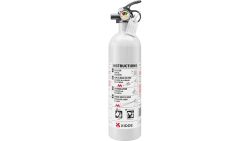
Top Boat Fire Extinguisher (Marine‑Rated) Yachtsmen Must Have

Introducing Maria, our meticulous planner and talented visual storyteller. She has a knack for discovering those hidden gems, chic boutique spots, and charming little cafes that add a touch of elegance to every journey. With her keen eye for photography and her passion for travel, Maria will transport you to the most enchanting corners of the world, inspiring you to explore new places, one picture-perfect destination at a time.
You must equip every yacht with a single‑use, 5‑lb marine‑rated extinguisher like Kidde 5BC or Mariner 5 for reliable performance in saltwater. Add a compact First Alert Marine White 14 for small cabin spots, and consider the versatile First Alert AUTOMAR10 with dual marine‑auto use. These units are UL‑approved, 12‑year‑life, and corrosion‑resistant. If you want to boost safety further, we’ll explore rare options and installation tips. Stay tuned for deeper insights, expert recommendations, and every yacht crew safety enhancement.
Key Takeaways
- Kidde 5BC and Mariner 5: 100 PSI, 6‑8 ft coverage, 12‑yr UL/USCG warranty—ideal for deck, engine, cabin fire suppression.
- First Alert AUTOMAR10: dual‑mode marine/vehicle, rechargeable, 6‑8 ft coverage, UL 10‑B C approved—versatile for cabins, spare rooms, and future vehicle use.
- MaxOut ABC Marine Extinguisher: 15 ft coverage, 5 lb weight, UL/USCG approved—provides large reach for engine rooms and walk‑ups, meeting NFPA 10.
- Ougist 2.5 lb ABC: rugged carbon‑steel shell, EPA‑qualified for A,B,C, –22 °F tolerance, quick‑release lever—reliable in extreme marine environments.
- Impact‑resistant metal housings, single‑use discharges, 12‑year expiry guarantee—key features every yachtsman should standardize into their fire‑safety plan.
Kidde Fire Extinguisher for Boats, Single-Use 5BC

Looking for a fire‑extinguisher that you can trust on a small motorboat or a light commercial vessel? Kidde’s 5BC single‑use extinguisher is built for that job. Its all‑metal housing—aluminum body, stainless‑steel valve and lever—resists saltwater corrosion, while the decorative powder‑coat adds durability. The safety pin and impact‑resistant lever let you deploy instantly. Use the PASS method—Pull, Aim, Squeeze, Sweep—to cover a 6‑to‑8‑foot zone in just 8‑12 seconds. The 2‑lb dry chemical sealapverts flammable liquids and electrical fires, and it’s UL‑listed, USCG‑approved, with a 12‑year warranty for peace of mind. Toss it into a plastic strap bracket; no batteries needed.
Best For: boat owners and light commercial mariners needing a concise, corrosion-resistant fire suppression solution for fuel, oil, and electrical fires.
Pros:
- Durable all‑metal construction resists saltwater corrosion.
- Quick‑deploy safety pin and impact‑resistant lever for rapid response.
- 12‑year warranty and UL/USCG approvals provide confidence and reliability.
Cons:
- Single‑use limits long‑term cost effectiveness compared to reusable types.
- Firefighting agent is a dry chemical that can be a skin irritant; requires proper handling.
- Expiration after 12 years means periodic replacement must be planned.
https://www.amazon.com/dp/B07YYXP3G9
Kidde Mariner 5 Fire Extinguisher for Boats, Single-Use 5BC

If you own a recreational boat over 26 ft, the Kidde Mariner 5 is the go‑to choice for quick, corrosion‑resistant fire suppression.
When you trigger its rapid 8‑ to 12‑second discharge, 100 PSI pressure spans a 4‑ to 6‑foot range—enough to beat Class B and C blazes. Its dry‑chemical, sodium‑bicarbonate agent won’t corrode metal and feels easy on skin.
At 3.2 lb and 3.25×3.25×11.3 in., it’s easy to carry and install with plastic straps. A 12‑year UL warranty and corrosion‑resistant 12X finish keep it.
Use the Pass method—Pull, Aim, Squeeze, Sweep—to activate quickly. Replace it after use or when its 12‑year lifespan expires and stay compliant.
Best For: Boat owners of recreational vessels over 26 ft looking for a quick‑discharge, corrosion‑resistant fire extinguisher that meets USCG and UL standards.
Pros:
- 12‑year UL-listed warranty and limited manufacturer coverage for long‑term peace of mind.
- Rapid 8–12 s discharge at 100 PSI with 4–6 ft effective range for Class B & C fires.
- All‑metal, impact‑resistant construction with a corrosion‑resistant 12X finish suits marine environments.
Cons:
- Single‑use design requires replacement after discharge, adding ongoing maintenance cost.
- Weight of 3.2 lb and size may make mounting more cumbersome on smaller boats.
- No disposable replacement cylinder in some retail bundles, may require additional purchase.
https://www.amazon.com/dp/B0CBCRVPC7
First Alert Marine White Fire Extinguisher 14

Need a marine‑approved fire extinguisher that covers all common fire classes? The First Alert Marine White Fire Extinguisher, 14‑inch model FE5R‑PWCNA, is built from metal and comes with a commercial‑grade valve. It weighs a hair‑thin 0.01 oz and measures 30 × 8 × 6 in, so it fits any cramped cabin. UL‑rated 1‑A, 10‑B, and C, it meets Coast Guard standards when installed in the supplied mounting bracket. Its waterproof label and color‑coded gauge give readouts, while the included strap and safety seal keep it secure. This extinguisher tackles wood, paper, trash, plastic, gasoline, oil, and electrical fires—covering A, B, and C classes for full protection.
Best For: anyone who needs a compact, marine‑approved fire extinguisher that protects against A, B, and C class fires in tight cabin spaces.
Pros:
- Stainless‑metal build with commercial‑grade valve ensures durability and reliability in harsh marine conditions.
- UL 1‑A 10‑B C and Coast Guard approved—one extinguisher satisfies all safety standards.
- Lightweight (0.01 oz) and compact (30″ × 8″ × 6″) so it fits snugly in any cabin or household setting.
Cons:
- No built‑in alarm; requires visual inspection to confirm functionality.
- More expensive than standard foam or dry‑chemical extinguishers for small fires.
- Limited to A, B, C classes—does not handle propane or fuel‑type Class D fires.
https://www.amazon.com/dp/B0045PS1DO
First Alert Marine1 White Fire Extinguisher Bundle

When you take your boat out, you’ll value the First Alert Marine1 White Fire Extinguisher Bundle, which is Coast‑Guard approved and comes with a sturdy mounting bracket that keeps the all‑metal head secured even in rough waters. You can install the bracket and strap in minutes, and the tough metal head stays upright even amid waves. The extinguisher itself weighs just under six pounds and contains a commercial‑grade valve, trigger, and a metal pull‑pin safety seal to stop accidental discharge. Its UL 1‑A:10‑B:C rating guarantees broad coverage, while waterproof labels and easy‑read instructions make handling simple. Daily safety assurance.
Best For: boat owners seeking a Coast‑Guard approved, all‑metal fire extinguisher that mounts securely and remains reliable in rough marine conditions.
Pros:
- Coast‑Guard and UL 1‑A:10‑B:C certified, ensuring wide‑spectrum fire protection.
- Comes with a durable mounting bracket and strap for quick, secure installation.
- Waterproof label and easy‑read instructions keep you prepared even in wet environments.
Cons:
- Limited to hand‑powered discharge; no electric or CO₂ backup options.
- Weighs nearly 6 lb, which may be cumbersome on very small vessels.
- No built‑in battery or automatic recharging system to keep it ready after use.
https://www.amazon.com/dp/B0D35VGT6Y
First Alert Car & Marine Fire Extinguisher

Curious about a single extinguisher that keeps both your car and boat protected? The First Alert AUTOMAR10 tackles automotive and marine fires alike, rated UL‑Class 10-B:C for flammable liquids and electrical hazards. Its sodium bicarbonate agent neutralizes spills, while the metal head and valve guarantee performance. Rechargeable via a professional, the unit sports a color‑coded gauge showing pressure, so you never worry about misreading status. A metal pull pin with safety seal prevents accidental discharge, and the included mounting bracket, strap, and waterproof label keep everything secure and visible. With a 10‑year warranty and returns, you’ve got peace of mind.
Best For: those who need a single, dual‑environment fire extinguisher that protects both automotive and marine equipment.
Pros:
- UL‑rated Class 10‑B:C for flammable liquids and electrical fires, ensuring compliance in both settings.
- Rechargeable battery‑powered with a color‑coded gauge, so you can verify pressure at a glance.
- Includes mounting bracket, strap, and waterproof label, plus a 10‑year limited warranty for peace of mind.
Cons:
- Recharging must be performed by a certified professional, which can add cost and downtime.
- The unit is rated only for B:C hazards, offering no coverage for other classes of fire.
- Its small size (1.5″ × 5″ × 3.4″) limits the extinguishing capacity compared to larger, multi‑class extinguishers.
https://www.amazon.com/dp/B000UHP9EU
Kidde Fire Extinguisher for Boats, Single-Use 10BC

If you operate a 26‑ft or longer recreational vessel, you’ll appreciate the Kidde 10BC’s compact, Coast Guard‑approved design that delivers a 2.5‑lb sodium bicarbonate charge to fight both flammable liquids (Class B) and electrical fires (Class C), all packed into a lightweight, corrosion‑resistant aluminum body. It discharges in 8–12 s, giving a 6–8 ft range at 100 PSI. A green pressure arrow confirms a full charge. After use or 12 yr, just replace it. Its powder‑coated aluminum body, stainless‑steel handle, and ceramic handguard resist corrosion 12× better than standard models. Mount with the strap bracket for Coast Guard compliance and quick reach right away for safety.
Best For: recreational boat owners looking for a compact, Coast‑Guard‑approved fire extinguisher that protects against both flammable liquid and electrical fires on vessels 26 ft or longer.
Pros:
- Ultra‑lightweight, corrosion‑resistant aluminum construction gives a long service life even in harsh marine environments.
- Quick‑release (8–12 s) and 6–8 ft effective range at 100 PSI make it highly effective for small-boat firefighting.
- Coast‑Guard‑approved strap bracket and green pressure indicator simplify compliance and readiness.
Cons:
- Single‑use design means replacement is required after every discharge or every 12 years.
- No battery or power source needed, but relies on manual deployment which may be slower in an emergency.
- Limited to Class B and C fires; not suitable for other fire types (e.g., Class A).
https://www.amazon.com/dp/B0CBCS1SPF
First Alert Personal Watercraft Fire Extinguisher

For riders who need a quick‑response, lightweight solution, the First Alert FE5R‑PWCNA fits your PWC’s standard container and weighs just one pound. It meets U.S. Coast Guard Size‑I standards while holding sodium bicarbonate, a fire‑suppressing chemical ideal for flammable liquids and electrical equipment. With UL 5‑B: “C” certification, it guarantees safe operation in marine environments and complies with ANSI/UL711 and CAN/ULC‑S508. The extinguisher’s dimensions—12.75 inches tall and roughly 3.13 by 3.88 inches wide—fit conventional holders, and the built‑in plastic bracket allows hotspot‑quick access. Press the push‑button to test pressure; the pop‑back confirms readiness, the profile design stays under spray.
Best For: emergency riders using personal watercraft who need a lightweight, Coast‑Guard‑compliant fire extinguisher.
Pros:
- Extremely light at just 1 lb, making it easy to carry and mount
- UL 5‑B “C” and ANSI/UL711 certification guarantee safety on marine flammable‑liquid and electrical fires
- Built‑in plastic bracket and push‑button pressure test provide quick access and simple readiness verification
Cons:
- Limited to standard PWC fire extinguisher containers—cannot be used on larger vehicles or non‑PWC boats
- Sodium bicarbonate is only effective on flammable liquids and electrical equipment, not solid fuel fires
- Requires manual press‑button pressure testing, which some users may forget during routine checks
https://www.amazon.com/dp/B07KK6NJNN
8-in-1 Water-Based 2-Pack Portable Home Car Boat Extinguisher

Looking for a single extinguisher that can handle fires in your car, boat, kitchen, or even a grill? The MSWJ620E 2‑pack delivers a compact 620 ml water pouch in a sturdy aluminum shell. With dimensions of just 2.55 × 2.55 × 11.42 in and 3.3 lb per unit, it fits everywhere you need. Its 8‑in‑1 rating tackles A, B, C, and K fires—wood, paper, liquid, and cooking oil—so you’re covered. The hand‑powered nozzle needs no batteries, and it performs from ‑4 °F up to 140 °F, perfect for winter docks. You can mount it on walls or store it in your vehicle, camping gear or pantry, thanks to its design.
Best For: home, vehicle, and outdoor enthusiasts who need a compact, hand‑powered extinguisher that handles A, B, C, and K fires without batteries.
Pros:
- Light and portable, fits in cars, boats, camp gear, or kitchen cabinets.
- 8‑in‑1 rating protects against wood, paper, liquid, and cooking‑oil fires.
- Works from –4 °F to 140 °F, making it reliable in cold and hot environments.
Cons:
- Limited to 620 ml per unit; large fires may require multiple units.
- No built‑in indicator for remaining water after use.
- Requires manual operation; not automatic with a pressure gauge.
https://www.amazon.com/dp/B0DWMCQ5PQ
Auto/Marine 10-B:C Fire Extinguisher, Metal Valve, White

Gear up for reliable on‑board fire safety with the Kidde 10‑B:C extinguisher, the perfect choice for boat owners who need a compact, marine‑rated solution.
You’ll appreciate its 2.9‑lb weight and 6‑inch by 6‑inch footprint, which keeps bulk to a minimum without sacrificing protection.
Its aluminum body and sturdy metal valve give you durability, while the built‑in pressure gauge lets you check status at a glance.
All accessories are already included—no batteries, no extra tools—so you can install it with zero hassle.
Secure it in a buoy‑proof box, transport it safely, and keep crew confident fire danger is under control.
Best For: boat owners and marine operators needing a compact, marine‑rated 10‑B:C fire extinguisher that’s easy to install and maintain.
Pros:
- Compact 6″ × 6″ size and 2.9‑lb weight reduce storage footprint on board.
- Heavy‑duty aluminum body and metal valve assembly withstand harsh marine conditions.
- Built‑in pressure gauge lets crew quickly verify readiness without tools.
Cons:
- Only rated for Class B & C; not suitable for Class A or high‑temperature fires.
- Requires manual recharging after use—no built‑in refill or charging system.
- As a refurbished unit some may prefer a brand new item to avoid potential wear.
https://www.amazon.com/dp/B077BT5C43
Ougist 2.5 lb ABC Dry Chemical Extinguisher

If you own a small launch or day‑cruising boat, you’ll appreciate a fire extinguisher that’s lightweight, quick‑to‑operate, and covers everything from kitchen spills to engine‑room fumes.
The Ougist 2.5‑lb ABC Dry Chemical Extinguisher gives Class A, B, C protection in a unit. Its patented quick‑release handle removes the pin, letting you act instantly. Weighing just 2.5 lb, it balances mobility with enough fire‑suppression power. A thick‑wall carbon‑steel housing tolerates temperatures from –22 °F to 140 °F, so it’s ideal for kitchen and engine‑room emergencies. The set comes with a mounting bracket and guide, so you can attach it anywhere on your vessel without hassle.
Best For: Small‑boat crews, home cooks, and anyone needing a compact, multi‑class extinguisher.
Pros:
- Lightweight 2.5‑lb design for easy transport and quick deployment
- Patented quick‑release handle eliminates the safety pin, reducing response time
- Versatile Class A B C formula covers fires from grease to electrical and fuel
Cons:
- Limited extinguishing capacity compared to larger units may require more frequent re‑fill
- Requires proper placement and bracket installation for optimal use on vessels
- Warranty and return details are not included in the product listing, necessitating inquiry for clarification
https://www.amazon.com/dp/B0CWY4Q63T
MaxOut ABC Vehicle/Marine Fire Extinguisher – UL, USCG

Because it delivers 2.5 lb of rapid‑deploy ABC dry‑chemical in a streamlined, 5‑lb package, the MaxOut ABC Vehicle/Marine Fire Extinguisher is the go‑to choice for boat owners, UTV riders, and anyone who wants UL and USCG‑approved safety without sacrificing space. You’ll appreciate its high‑gloss black finish, sleek profile, and rugged steel mounting bracket that fits seat, roll‑bar, or floor brackets. Its 2.5‑lb ABC formula crushes Class A, B, and C fires, delivering up to 15 ft of coverage while preventing bricking for long‑term reliability. UL listed and USCG approved, this extinguisher meets NFPA 10 and ANSI standards, giving you peace of mind on adventure.
Best For: adventure seekers and vehicle owners who need a compact, UL and USCG‑approved fire extinguisher that fits on boats, UTVs, or trucks without sacrificing style or space.
Pros:
- 2.5‑lb rapid‑deploy ABC formula provides effective suppression for Class A, B, and C fires.
- Sleek, high‑gloss black design and slim profile keep it unobtrusive yet visible.
- Rugged steel mounting bracket accommodates seat, roll‑bar, or floor placement for easy access.
Cons:
- Requires periodic refills, which can be inconvenient in isolated environments.
- Slightly heavier (≈5 lb total) than some single‑use, lightweight alternatives.
- Installation may need extra tools or skill to secure properly to various vehicles.
https://www.amazon.com/dp/B004BZIK66
Water-Based Car/House Fire Extinguisher with Mount

Think of the confidence this two‑unit, metal‑bracketed kit brings when a fire starts in your kitchen, car, or on a deck. You’ll own two 11.7‑inch tall, 1.59‑lb MSWJ625 extinguishers—black, compact, and ready to tackle A, B, C, or K incidents. You mount each on a bracket, keeping them out of direct heat. When flames erupt, pull the latch, aim at the core, squeeze the trigger, and let the 13‑ft spray neutralize the blaze. The 97 % negative‑ion water cleans clean, no residue, and a four‑year warranty backs your purchase. Get proactive—keep the extinguisher within 5–6.5 ft of any potential fire right now.
Best For: Homeowners, drivers, and outdoor enthusiasts seeking a lightweight, residue‑free extinguisher for kitchen, car, or deck emergencies
Pros:
- Compact, 1.59‑lb size for easy storage and quick reach
- 4‑year warranty ensures long‑term reliability
- 97 % negative‑ion water leaves no residue, simplifying cleanup
Cons:
- Requires mounting; not for free‑standing use
- Limited to small‑to‑moderate fires (maximum 13‑ft reach)
- 3 % extinguishing agent may be less effective on fully engulfed fires
https://www.amazon.com/dp/B0FK9FMFK2
Kidde Mariner 5 Fire Extinguisher 2# White

The Kidde Mariner 5 Fire Extinguisher 2# White is the go‑to marine‑rated solution for boat owners who value lightweight, residue‑free fire suppression. With just 2.99 pounds, it stays sleek in your galley or cockpit, yet its 5‑lb dry‑chemical agent tackles fuel and electric blazes with no mess behind it. Dimensions of 11.6 by 4.4 by 3.5 inches make it easy to mount, and the included bracket, pressure gauge, and test indicator let you verify readiness at a glance. White color and bilingual nameplate keep it neat and useful worldwide. The 30‑day return window and warranty help you feel secure before purchase.
Best For: boat owners who need a lightweight, residue-free fire extinguisher for marine kitchens or cockpits.
Pros:
- Compact 11.6 × 4.4 × 3.5 in size is easy to mount anywhere.
- Dry‑chemical agent handles fuel and electric fires cleanly without mess.
- Built‑in pressure gauge and test indicator let you confirm readiness at a glance.
Cons:
- Only a 5‑lb capacity, so it may need prompt replacement after use.
- No CO₂ or water‑based options for other fire types.
- 30‑day return window may feel short for some buyers.
https://www.amazon.com/dp/B07DMH8F2R
ABC Dry Chemical Fire Extinguisher, Wall-Mounted

Your boat’s fire safety gets a boost with this wall‑mounted extinguisher, which plugs tight wall cavities and delivers 1.3 lb of dry‑chemical that extinguishes flames 30 % faster than standard units.
Fit it in a cramped galley or sail‑room corner and enjoy instant, one‑step spin‑and‑shoot fire control. It covers Class A, B, C hazards, from kitchen fires to electrical sparks, using a lightweight aluminum tank that resists corrosion even in saltwater environments.
The 6‑year life and 30‑day return guarantee give you peace of mind, while the 11.93×3.27×3.19‑inch unit stays light at 1.87 lb, making it easy to swap without compromising cargo space—battery‑free, hand‑powered for safety.
Best For: boat owners, RV owners, and small households needing a compact, fast‑response wall‑mounted extinguisher.
Pros:
- 30 % faster flame extinction than standard units.
- Lightweight, corrosion‑resistant aluminum tank suitable for saltwater environments.
- Battery‑free, hand‑powered operation plus a 6‑year life and 30‑day return guarantee.
Cons:
- Small 1.3 lb capacity may not suffice for larger fires.
- Wall mounting may limit placement options in extremely cramped spaces.
- Requires periodic visual inspections for wear, like all chemical extinguishers.
https://www.amazon.com/dp/B0FLDB2P4T
MaxOut 5lb ABC Fire Extinguisher – Vehicle & Home

Boaters looking for a quick, reliable fire suppression solution will find the MaxOut 5‑lb ABC fire extinguisher compelling, thanks to its marine‑rated certification and an 18‑foot coverage radius. You can mount it on your car, RV, boat, or any vehicle with its rugged steel bracket, seat, roll‑bar, or floor options. Its 5‑lb dry chemical payload tackles Class A, B, and C fires, while the non‑caking formula keeps pressure stable. The high‑gloss red finish stands out, and UL/USCG approvals give you peace of mind. Refilling is quick, and a 6‑year warranty keeps you covered. During any onboard emergency for years today.
Best For: Boaters, RV owners and anyone who needs a quick‑response, marine‑rated fire extinguisher that can be mounted in a variety of vehicles.
Pros:
- 18‑foot coverage radius and 5‑lb dry‑chemical payload effective on Class A, B, C fires.
- Versatile mounting options (seat, roll‑bar, floor) and rugged steel bracket fit most vehicles and boats.
- UL/USCG‑approved, 6‑year warranty, and quick refillability keep it reliable for years.
Cons:
- The 8.8‑lb total weight can add bulk to small or lightweight vehicles.
- Capacity is limited to 5 lbs; larger fires may require additional suppression tools.
- Requires periodic refilling, which can be inconvenient in extended remote or onboard use.
https://www.amazon.com/dp/B00TG2BTDU
Factors to Consider When Choosing a Boat Fire Extinguisher (Marine‑Rated)
Choose an extinguisher that covers the fire classes you’ll encounter on your boat.
Make sure it carries marine‑approved certification and uses an extinguishing agent suited to engine, electrical, and deck fires.
Then pick one whose port size, weight, and tank capacity range fits the space and usage limits of your vessel.
Fire Class Coverage
A marine‑rated fire extinguisher usually carries a dual Class B/C rating, letting you tackle flammable liquids and energized electrical equipment. To cover every common hazard on a recreational vessel, seek ABC‑rated models—like 1‑A:10‑B:C—that add ordinary combustible protection. Class B fires involve gasoline, kerosene, propane; Class C tackles energized gear without risking shock. The combined rating stops the chemical chain reaction, faster than CO₂ alone. For kitchens or heavy‑duty boats, you could consider a Class K extinguisher, but most people craft or powerboats lack cooking appliances, so it’s rarely necessary. Always read the label’s code; the poundages (e.g., 1‑A:10‑B:C) show how much agent you get, ensuring you meet local safety requirements and keep your crew safe. In the end, matching the rating to your vessel’s layout guarantees firefighting.
Marine‑Approved Certification
While careful selection of class ratings lets you suppress both flammable liquids and electrical hazards, you’ve also got to make sure the extinguisher is rated for the marine environment. Look for a U.S. Coast Guard approval stamp; it guarantees corrosion resistance, pressure endurance, and shelf‑life suitable for salt‑water settings. A UL‑listed rating, such as UL 10‑B:C, confirms that performance, construction, and safety meet national standards for Class B and C fires, which are common on ships. Certification requires a 100 ΨI pressure test and a 6‑8 ft discharge range, meaning the unit can project foam quickly and directionally. Expect tamper‑proof pins, clear pressure indicators, and a corrosion‑resistant body. Always verify compliance documents—Certificate of Conformance or a QR code—so inspections confirm federal and industry safety requirements.
Extinguishing Agent Selection
When you select an extinguishing agent for a marine‑rated boat, you need to prioritize Class B and C effectiveness while minimizing corrosion. Sodium bicarbonate dry‑chemical agents rated 5BC fit that bill: they silence flammable‑liquid fires and shut down energized circuits without attacking metal or electronics. Water‑based units are a no‑go, because they splash, spread, and fail against fuel flames or live gear. A single‑use 5‑lb 5BC extinguisher balances reach and weight—you’ll get 4–6 ft of suppression while only adding about 3 lb to your deck. The powder cuts the combustion chain, leaves almost no residue, and slashes cleanup time. Choosing a non‑toxic, marine‑approved agent also keeps you compliant with USCG and UL standards. By installing the extinguisher in an accessible station, you guarantee proper response during a critical moment, reinforcing your safety.
Port Size Weight
Choosing the right size directly impacts your boat’s weight distribution and mounting options. 5‑lb single‑use 5BC extinguishers weigh about 3.2 lb and fit neatly into a 3 × 3 × 12‑inch envelope, letting you slide them through tight deck outlets or up C‑band panels without splashing or bulking out the cabin. 10‑lb units, by contrast, add roughly 5 lb to the vessel and share the same height and width, but they demand sturdier brackets and a near‑vertical orientation to keep them from toppling in waves.
Because port size dictates tilt, lighter units let you slope forward 15°–30°, ensuring quick discharge under deck bulkheads. Heavier units must sit nearly vertical (≤10° tilt) to stay upright in waves. Compact dimensions also ease placement between coolant panels or knives‑measures on the foredeck corner.
Tank Capacity Range
Three main tank capacities—2.5 lb, 5 lb, and 10 lb—cover the standard range for marine‑rated extinguishers. When you’re sizing fire‑suppression gear, read the boat’s length and hazard areas first. A 2.5‑lb unit gives you a 4–6‑ft discharge radius, perfect for kayaks, ski boats, or 12‑ft canoes. If you’ve got a recreational vessel over 15 ft, a 5‑lb extinguisher extends the reach to about 6–8 ft, allowing you to place multiple units evenly along the deck or cockpit. For boats taller than 26 ft or with engine compartment concerns, a 10‑lb tank offers a 10–12‑ft spray; it’s also the unit standard under many regulatory guidelines for boats. Always pair the capacity with the boat’s specific fire‑class requirement to stay compliant and protected. Replace it before each season to keep pressure ready.
Valve Durability Rating
Because the marine environment slips salt, moisture, and mechanical shocks, you’ll want a valve that can handle high pressure, corrosion, and wear. Most marine‑rated valves come in 316 stainless steel or corrosion‑resistant aluminum alloy, tested for 100 psi operating pressure with a 150 psi safety margin. They’re heat‑treated under ASTM A106 Grade B, ensuring high‑temperature resilience, and receive ASTM B117 salt‑spray immersion ratings (IP68) so seals stay intact after ocean spray. During durability tests, valves endure thousands of pressure cycles, drop impacts at 0.75 g, and 30‑day immersion in 3.5 % NaCl, all while monitoring leakage. NFPA 10 Class D certification covers ≥ 100 psi, 10,000 cycles, and 1,200 operational hours. A corrosion‑damage tolerance rating, like 5.5 in., lets you know how much mineral buildup the valve can survive before its integrity fails, for many full years.
Mounting Options Flexibility
When you’re preparing for a marine firefighting scenario, the placement of your extinguisher will dictate how quickly you can act. Quick‑access bulkhead brackets let you mount an extinguisher within seconds, as long as you nail it to a sturdy bulkhead or deck panel. Strap or latch mounts can snap onto any flat surface—helm, galley, or cockpit—using a nylon strap, giving you flexibility to relocate when the layout shifts. Angle‑adjustable brackets keep the extinguisher 3‑5 inches above deck level, optimizing reach while shielding the mounting edge from salt‑water erosion. Wall‑mounted panels bolt directly to the hull or interior wall, holding the unit upright and preventing accidental dislodgement when the vessel rolls or bounces. Bulkhead‑to‑bulkhead brackets span the hull’s width, distributing loads evenly in rough seas.
Warranty Lifespan Details
While quick‑access bulkhead brackets let you act swiftly, you’ll also need to understand the warranty that keeps your marine‑rated extinguisher protected. Most models come with a 12‑year limited guarantee that covers material and workmanship defects. That 12‑year clock starts on the manufacture date, not when you install it, so keep a stamped log of the build number. If the unit ever discharges, or even partially fires, the warranty lapses entirely—you’ll need new equipment, not a repair. Additionally, the extinguisher must stay sealed in a corrosion‑resistant case and stored as the manufacturer specifies, otherwise coverage ends early. Registering your extinguisher sometimes extends coverage or speeds up claims, so keep those notes handy. Keep the registration card in your boat log for quick reference during inspections.
Frequently Asked Questions
What Maintenance Schedule Is Required for Marine-Rated Fire Extinguishers?
You should keep your marine‑rated extinguisher fully charged, checking pressure gauges monthly to guarantee the gauge reads the correct pressure range. Perform a hydrostatic test every five years to verify internal integrity. Inspect the nozzle and hose annually, cleaning any debris. Replace the CO₂ canister every decade if unused. Label every inspection, maintain a log, and follow the manufacturer’s guidelines for additional maintenance. Keep the system robust, checking every year.
Can I Upgrade or Modify a Marine Fire Extinguisher’s Capacity?
Yes, you can boost a marine fire extinguisher’s capacity, but you must keep it certified. First, swap the cartridge or fill it to a higher rating, but only if the unit’s label and CE mark allow it. Then have a marine certifier re‑inspect and re‑label the extinguisher. If you’re not sure, contact the manufacturer or a marine safety officer to avoid voiding the warranty and ensuring compliance and safety guarantee.
How Do I Interpret the Pressure Gauge on a Marine Extinguisher?
Think of the gauge as a lighthouse—its needle is a beacon. When it points above the band, it’s fully charged, ready to blow. A blue zone means the charge is good to use, while anything below yellow signals a low pressure that warns of a clamping loss. If the needle slumps into red, the unit needs repair before you trust it. Check the manual for proper specific thresholds before heaving.
What Legal Certifications Must a Yacht Carry for Fire Extinguishers?
Your yacht must display each extinguisher’s certification label, such as NFPA 10 or ISO 15088 for marine‑rated units. It also requires an inspection certificate, valid for 12 months, issued by a certified marine fire safety inspector, and a record of annual maintenance. The Coast Guard or national maritime authority mandates these labels, certificates, and a documented training log for crew. Consequently, you’ll maintain compliance with SOLAS and local regulations and beyond internationally.
What Happens if a Marine Extinguisher Runs Out of Water?
You’ll find yourself suddenly stranded on the water, watching your trusty extinguisher politely inhale its last droplet and sigh, “No more water!” — like a disgruntled bartender at a dry bar. The extinguisher will then refuse to pop, slow the sprinkler’s rhythm, and leave you scrambling for a spare bottle or a manual fire‑fighting tactic. You’ll have to admit, your firefighting skills have now upgraded from basic to panic‑proficient right now.
Conclusion
You stand on the deck, wind in your hair, knowing that your vessel is armed with a fire extinguisher so powerful it could quell a blaze before it even sprouted. In choosing the right marine‑rated extinguisher, you embody vigilance and preparedness. With each strategic factor considered, you’re not just protecting your boat—you’re safeguarding the legacy of every adventure that awaits. Embrace that confidence, and let fire fear back in defeat into the horizon, forever and always today.
Boat Extinguisher, Marine Fire Safety, Yacht Protection