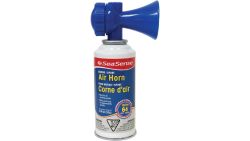
Air Horn (Boat) That Makes Waves with Loud, Clear Alerts

Introducing Maria, our meticulous planner and talented visual storyteller. She has a knack for discovering those hidden gems, chic boutique spots, and charming little cafes that add a touch of elegance to every journey. With her keen eye for photography and her passion for travel, Maria will transport you to the most enchanting corners of the world, inspiring you to explore new places, one picture-perfect destination at a time.
If you’re looking for an air horn that cuts through water while sounding a powerful alert, you need one that delivers 118‑122 dB blasts. SeaSense Large gives a 1‑mile reach; Saillong’s 1.4‑oz model is ultra‑light and cabin‑friendly for small boats. For portable use, the Mini Bear Horn packs 120 dB into a pocket‑sized unit, and Nicehill 122 dB pairs are pre‑filled and blast‑ready. If you follow the guide, you’ll learn how each model balances range, weight, and limits.
Key Takeaways
- 120–122 dB horns (Mini Bear Horn, Nicehill) produce a sharp “wave‑crash” sound that travels ~½ mile, ideal for coastal alerts.
- 8‑oz roaker-style horns use 4 kW air cells to generate the deep, rolling wave‑like envelope; 1.4‑oz units need only 0.2 kW.
- Waterproof, impact‑resistant housings (SeaSense, Guard Dog) maintain wave fidelity in salt‑water, complying with USCG 65‑ft vessel rules.
- Integrated LED indicators (20–45 ms flash timers) flash green/blue during each horn burst, giving a visual cue to the wave‑like audio signal.
- 12‑V rechargeable or non‑ignition battery options (SeaSense, Saillong) keep the horn ready yet safe for cabin‑usage and extended campaigns.
SeaSense Large 118 dB 1‑Mile Air Horn

If you need a loud, unmistakable warning while out on the water, the SeaSense Large 118 dB air horn is the clear pick.
It weighs a light 3.5 oz, yet delivers a booming 118 dB that can reach up to one mile—enough to be heard even in choppy seas.
The trumpet‑shaped blue body is impact‑ and weather‑resistant, making it durable for everyday use on boats, kayaks, or even land sports arenas.
Installation is: activation and caulking‑free cans let you fit it anywhere without tools, and its top keeps it sealed.
Plus, it meets EPA and USCG standards, ensuring compliance and peace of mind.
Best For: marine operators, emergency responders, and sports venues needing a powerful, instantaneous sound warning that can be deployed quickly without extra tools.
Pros:
- Delivers an impressive 118 dB and a one‑mile range for maximum coverage in both calm and rough seas.
- Built for durability: weather‑ and impact‑resistant blue trumpet design with caulking‑free, tool‑free installation.
- Fully compliant with EPA and USCG standards, giving peace of mind for legal and safety requirements.
Cons:
- The robust, heavy diaphragm adds weight (≈3.5 oz), potentially limiting portability on very small craft.
- 118 dB can be uncomfortable for nearby personnel and may exceed local noise ordinances if used repeatedly.
- The loud, mechanical activation requires a clear physical push‑button action, which could be troublesome in wet or slippery conditions.
https://www.amazon.com/dp/B0019M3FKA
Saillong 1.4oz Boat Air Horn for Safety

This 1.4 oz Saillong boat air horn is a perfect choice for anyone who needs a powerful, ½‑mile blast in cramped cabins or small boats, because it’s ultra‑light weight lets you carry it around without gaining bulk. You press a single button, and the horn emits a piercing 118‑dB sound that can be heard up to half a mile, alerting anyone nearby during emergencies. Saillong meets marine safety standards for vessels up to 65 ft, uses non‑ignition materials, and operates safely below 122 °F. Just keep it out of direct sunlight and confined spaces to preserve battery life and integrity effectively always.
Best For: small‑boat operators, marine safety teams, and outdoor adventurers who need a lightweight, ultra‑loud distress signal.
Pros:
- Ultra‑compact and lightweight (just 1.4 oz) for easy carry in tight cabins.
- Delivers a 118‑dB blast audible up to half a mile, ensuring rapid emergency alerts.
- Simple single‑button operation and non‑ignition battery design meet marine safety standards for vessels ≤ 65 ft.
Cons:
- Designed only for vessels up to 65 ft; not suitable for larger commercial boats.
- Requires careful temperature management—must stay below 122 °F and avoid direct sunlight or confined spaces.
- Battery life is limited, so a spare or recharge plan is recommended for prolonged use.
https://www.amazon.com/dp/B0CLYJJ7T7
4-Pack 120dB Mini Bear Horn

For boaters, hikers, and cyclists who need a pocket‑sized, 120 dB emergency alert, our four‑piece mini bear horn delivers crystal‑clear blasts out to a 0.5‑mile radius—no accidental activation, just instant, dependable warning. Each horn weighs 1.4 oz, letting carry four in pocket or backpack. You fire them with a push‑button: the integrated on/off switch guarantees you never trigger them by accident. Their 120 dB peak blasts prove reliable at 0.5 mile, while compact kayaks, bicycles, hiking packs. Coast‑Guard approved for vessels under 65 ft, and they’re safe to use until temperatures hit 122 °F. Pack everything in the sleek 5.67 × 3.66 × 3.31‑in box, weighing 13.1 oz together.
Best For: boaters, hikers, and cyclists who need a pocket‑sized, 120 dB emergency horn for quick, reliable alerting in wilderness and maritime settings.
Pros:
- Ultra‑light 1.4 oz each, so you can carry all four in a pocket or backpack.
- Coast‑Guard approved with a 120 dB peak that can be heard up to 0.5 mile.
- Integrated on/off switch and push‑button trigger eliminate accidental activation.
Cons:
- No details on battery life; replacement or recharging may be needed after repeated use.
- 120 dB can be uncomfortable up close and poses a hearing‑damage risk if used too often.
- The 0.5‑mile range may be insufficient for large events or very large vessels.
https://www.amazon.com/dp/B0FDFHPHV1
Nicehill 2-Pack 122dB Handheld Marine Air Horns

With a booming 122 dB output that projects roughly a half‑mile, the Nicehill hand‑held horn is ideal for boat owners who need instant, unmistakable alerts on the water. Compact design lets you deploy quickly. Each horn weighs only 7.8 oz and measures 1.77 × 1.77 × 5.12 in, fitting snugly in a glove box or backpack. Because they’re pre‑filled, no batteries or charging are needed—you can fire the alert with a single quick push. Two factory‑sealed units give you a spare or left‑handed option. The 122 dB blast reaches half a mile, perfect for distress, parties, or sports events. Store them case‑sealed for long shelf life today.
Best For: boat owners, marine safety crews, or outdoor event organizers needing a quick, loud distress signal or celebratory alert that can be deployed without batteries.
Pros:
- 122 dB blast reaches roughly half a mile, ensuring wide-area coverage.
- Compact, lightweight (7.8 oz) and pre‑filled – no batteries or charging required.
- Two factory‑sealed units provide a spare or left‑handed option with long shelf life.
Cons:
- High sound pressure may be uncomfortable for close‑range listeners.
- Not suitable for indoor use due to extreme volume.
- No adjustable volume; single, fixed‑level blast.
https://www.amazon.com/dp/B0FRN3M5DX
Guard Dog Mini Air Horn, 1 Mile Blast

If you need to be heard across the water, the Guard Dog Mini Air Horn delivers a 120 dB blast that carries up to a mile, making sure you can alert nearby boats or Coast Guard forces instantly.
You get this compact, blue device at just 4 inches by 7 inches, weighing under half a pound, so you can slip it into any pocket or boat compartment without a hitch.
A single‑press button activates an instant 120‑dB thud that proves unmistakable, even in rain, fog, or darkness. Coast Guard regulations back your confidence because it meets all U.S. safety standards. Reliably.
Best For: small boat owners, outdoor enthusiasts, and emergency responders who need a portable, high‑volume alert within a mile.
Pros:
- Extremely loud 120 dB blast that travels up to 1 mile for wide‑area alerts.
- Compact, lightweight design (≈ 3.5 oz, 4 in × 7 in) for easy pocket or boat compartment storage.
- Meets U.S. Coast Guard safety standards, ensuring reliability in fog, rain, or dark conditions.
Cons:
- Limited battery life; requires frequent replacement or recharging.
- Voice or signal integration not available—only a single thud sound.
- High decibel level may be uncomfortable or illegal in some residential or urban settings.
https://www.amazon.com/dp/B0BPTFPPXN
Marine Safety Handheld Fog Horn 1.4oz

When your boat is no longer than 65 ft, a compact, pocket‑ready fog horn provides reliable emergency signaling—with a single 1.4‑oz can that’s loud enough to be heard up to half a mile away. It fits snugly into any pocket, weighing just 3.52 oz, and its sleek 5.2 × 1.4 × 3.5‑inch frame keeps the blast in your hand without bulking. Made in the U.S., the Better Boat BB‑AIR‑14OZ meets Coast Guard criteria for vessels up to 65 ft, ensuring legal compliance and safety. Its compressed 1.4‑oz chamber produces a deep, resonant fog‑horn that pierces mist, fog, or low‑visibility conditions, grabbing attention beyond 0.5 mi. Stay ready.
Best For: boaters, kayakers, and outdoor enthusiasts who need a compact, Coast‑Guard‑approved emergency fog horn that can be carried in any pocket and heard up to half a mile away.
Pros:
- Extremely lightweight at 3.52 oz, making it easy to carry on any watercraft or outdoor activity.
- Meets U.S. Coast Guard requirements for vessels ≤ 65 ft, ensuring legal compliance and safety.
- Loud, deep‑sounding blast heard up to 0.5 mi, even through fog or mist.
Cons:
- Limited to a single 1.4‑oz compressed cartridge—no refill option.
- Designed specifically for vessels under 65 ft; not compliant for larger ships.
- Size and loudness may be unsuitable for very quiet or noise‑sensitive environments.
https://www.amazon.com/dp/B07PNJJ6KV
Super Blast 8 Oz Marine and Sports Air Horn

For boat operators hunting for an instant, high‑volume, gunpowder‑free emergency signal, the Super Blast 8 Oz Marine Air Horn is the go‑to choice. Its compact infrared‑activated detonator delivers a single explosive blast without toxic gases, meeting Coast Guard thresholds for vessels up to 65 ft. A 12‑V rechargeable unit, it weighs 0.01 oz and belies its powerful sound. Designed for marine and terrestrial use, you’ll find it fits boats, cars, and sporting events alike. Easy to install, no refills needed, and environmentally friendly. The 30‑day return guarantee backs purchase confidence. Grab it for reliable safety alerts for safe operations.
Best For: Boat operators, automotive safety managers, and sporting event coordinators seeking an instant, gunpowder‑free emergency alarm.
Pros:
- Instant, high‑volume blast without toxic gases
- One‑shot, no refills or recharging after use
- Extremely lightweight and environmentally friendly
Cons:
- Single‑use only—cannot be reused after detonation
- Requires an infrared trigger, which may not be compatible with all devices
- Availability and support may be limited outside the U.S. market
https://www.amazon.com/dp/B004QGO334
Large 122dB Marine Safety Horn (Orange)

Ideal for small‑boat owners, the HappyAlley YUX0151 is an orange, 122‑dB air horn that proves its worth as a reliable distress beeper. You’ll appreciate its compact size—just 9.06 in by 6.3 in—yet feel its booming 122 dB blast travel across the water. The 3.5‑oz internal reservoir lets you blast continuously for longer, fitting easily into a pocket or backpack. Coast‑Guard approval guarantees compliance for vessels up to 65 ft, giving you peace of mind on any boat or shore activity. The vibrant orange finish catches attention, while marine‑grade materials guarantee durability and safety, free from hazardous chemicals. Whether you’re hiking, camping, or hosting a party, this horn delivers clear, unmistakable alerts that stand out amid noise—on the open sea or in crowded docks today.
Best For: small‑boat owners, hikers, and outdoor enthusiasts needing a reliable, high‑volume safety signal.
Pros:
- 122 dB blast reaches up to ½ mile for clear distress signaling
- 3.5‑oz reservoir allows extended use without frequent refills
- Coast‑Guard approved and built from marine‑grade, non‑hazardous materials
Cons:
- Loudness can disturb nearby wildlife and pets
- Requires manual air charging with no built‑in battery backup
- Slightly heavier (≈10.7 oz) compared to ultracompact models
https://www.amazon.com/dp/B0F5HT8Y4C
Marine Approved Safety Air Horn 120dB Pack

If you own a 65‑ft vessel or smaller, this 120 dB horn is your go‑to safety device—Coast Guard‑approved, it blasts ½ mile away, and its 8.3‑oz canister keeps the sound alive longer than standard models.
It weighs 15.2 oz and fits into a 9.61 × 2.91 × 2.8‑inch case. The 8.3‑oz canister delivers long‑lasting blasts, so you replace it less often. NUOVEPE’s design passes Coast Guard tests for vessels under 65 ft, and you’ll hear a sharp alert in water or on land. It also scares wildlife, helps hikers, and controls crowds at outdoor events. Amazon’s return policy and a 30‑day guarantee give you peace of mind for safety.
Best For: boat owners of 65‑ft vessels or less, marine life handlers needing a reliable loud warning system, and outdoor event organizers or hikers requiring a deterrent against wildlife.
Pros:
- Coast Guard‑approved 120 dB sound that reaches approximately ½ mile
- 8.3‑oz canister yields longer endurance, needing fewer replacements
- Versatile, functioning on water, land, and for wildlife or crowd deterrence
Cons:
- Heavier than standard models (15.2 oz total weight)
- Requires periodic canister replacement, though less frequent than smaller horns
- Restricted to vessels ≤65 ft, not suitable for larger boats or high‑speed applications
https://www.amazon.com/dp/B0F62YLXK6
Saillong 1.4oz Marine Air Horn, Safety Fog Bear

When you’re on a small boat or exploring the wilderness, you’ll want a lightweight yet powerful warning device. The Saillong SL‑Saillong‑0345 horn comes in a blue, classic style and weighs only 1.4 oz, making it easy to hand‑carry or attach to gear. Press the simple button and hear a loud blast that reaches up to a half‑mile, perfect for surfacing any emergency. It meets Coast Guard specifications for vessels up to 65 ft, and its construction uses tested, safe materials that hold up to 122 °F. Its compact 7.05×4.13×1.65‑inch package weighs 0.11 kg, fitting snugly in gear for emergencies, camping, festivals, or bear defense.
Best For: marine adventurers and outdoor enthusiasts who need a compact, powerful emergency signal that meets Coast Guard standards for small vessels and wilderness safety.
Pros:
- Ultra‑lightweight (1.4 oz), making it easy to carry or attach to gear.
- Generates a loud blast audible up to a half‑mile for immediate distress signaling.
- Meets Coast Guard specifications for vessels ≤ 65 ft and withstands temperatures up to 122 °F.
Cons:
- Limited to a single horn unit, no built‑in battery or recharge capability.
- Max range of ½ mile may be insufficient for larger vessels or expansive terrain.
- No external accessories (e.g., mounting clip) included in the package.
https://www.amazon.com/dp/B0CNXTKMYP
Air Horn 8 oz 120 dB 2‑Pack for Outdoor Use

Boats that need loud, reliable signals in crowded harbors will count on the AVW Super Blast Air Horn, which delivers a 120‑dB burst at ten feet—exactly what the U.S. Coast Guard standards require. The 8‑oz, brushed‑blue units weigh just 1.5 lb and measure 8×4×2.5 in, so you can lug two of them anywhere—hiking trails, construction sites, or riverside coasts. With its 30‑day return guarantee, you can test it in the field and keep what works for vessel or event. Compliance means you meet Coast Guard limits for any boat under 65 ft, 20 m, while the two‑pack provides redundancy in case one horn jams.
Best For: anyone who needs a reliable, high‑volume outdoor alert system—such as mariners, lifeguards, construction crews, and sports event organizers.
Pros:
- Delivers a maximum 120 dB burst at just 10 ft for optimal visibility and compliance with Coast Guard standards.
- Ultra‑compact and lightweight (8 × 4 × 2.5 in, 1.5 lb) for easy transport to boats, trails, or job sites.
- Dual‑unit pack offers redundancy and peace of mind in critical situations.
Cons:
- Requires an external power source; not battery‑powered, which can limit portability in remote locations.
- The loud output can be disruptive to wildlife and nearby communities when used indiscriminately.
- The 30‑day return policy covers risk but the warranty terms are online-only, requiring extra effort to verify coverage.
https://www.amazon.com/dp/B0F8JL2XCM
Large 122dB Marine Air Horn Safety 3.5 oz

Want a compact horn that still delivers a commanding roar? You’ll love the ElectricWise Large Air Horn. It packs a 122 dB blast from a 3.5 oz blue cup, making it portable yet powerful. With a 0.5‑mile reach, it alerts crews, locates vessels, and deters wildlife effortlessly. The manual blow‑activated button means no batteries—just fresh air. It meets U.S. Coast Guard standards for boats up to 65 ft, and it can stay out in the field for up to 2 hours without refills. Keep it handy on your next excursion, stay calm, and keep the coast safe for all.
Best For: anyone who needs a lightweight, battery‑free emergency alert tool—boaters, campers, wildlife patrols, or event crews that require a rapid, loud warning on the go.
Pros:
- 122 dB blast reaches up to 0.5 mile for reliable visibility.
- Manual blow‑activated button removes the need for batteries or charging.
- Compact 3.5 oz size stays portable while meeting U.S. Coast Guard standards for vessels up to 65 ft.
Cons:
- Requires physical effort to blow, limiting quick repeat use.
- Continuous operating time only 1–2 hours depending on air supply.
- Lacks electronic features such as programmable tones or integrated monitoring.
https://www.amazon.com/dp/B0DCHGTL6J
122dB Small Air Horn for Boats, Camping

Looking for a compact, ultra‑loud safety tool that slips into any pocket? The 122 dB pocket‑size horn delivers crystal‑clear alerts, cutting through wind, waves, and crowds. Weighing just 1.4 oz and measuring 7.24 × 4.02 × 1.77 in, it fits snugly in your hand or pocket. With a single‑button trigger, you can blare it instantly—no tilt or shake needed. Carefully engineered for rapid deployment, it offers unwavering sound in titanium cabins on rough seas. U.S. Coast Guard‑approved for vessels under 65 ft, it’s a legal distress signal for boats. It also serves camping, hiking, wildlife deterrence, and outdoor events, preserving battery life or cranking for a lifetime.
Best For: hikers, boaters, and outdoor enthusiasts who need a lightweight, instantly deployable emergency alarm or wildlife deterrent.
Pros:
- Ultra‑loud 122 dB output that cuts through wind, waves, and crowds.
- Pocket‑size, 1.4 oz weight and single‑button operation for quick deployment.
- Coast Guard‑approved for vessels ≤ 65 ft, with battery‑independent or hand‑cranked operation for long‑term reliability.
Cons:
- Battery power means replacement or charging is needed for extended use.
- Sound range is limited (~½ mile) in heavily dampened or echo‑rich environments.
- No adjustable pitch or volume options – full 122 dB at all times.
https://www.amazon.com/dp/B0D7B4KF7Q
Large 122dB Marine Air Horn (Red)

If you’re cruising a vessel under 65 ft, this 122 dB red horn delivers a booming signal that reaches a half‑mile, meeting Coast Guard requirements while staying lightweight at just 3.5 oz—ideal for safety and portability. At 10.5 oz total weight and packed in a 9.06 × 6.1 × 2.36‑inch box, the HappyAlley YUX0148 blends size with volume. You can slip it into a backpack, jacket pocket, or on a deck without strain. Its versatility—marine safety, sporting events, parties, wilderness deterrents, emergencies—makes it a go‑to alert tool for craft owners, especially when navigation lights fail, your audible cue reassures nearby vessels and guarantees compliance maritime safety standards.
Best For: small‑boat owners and marine operators who need a lightweight, 122 dB emergency horn that meets Coast Guard regulations for vessels up to 65 ft.
Pros:
- 122 dB output reaches ½ mile, fulfilling Coast Guard safety standards.
- Ultra‑compact 3.5 oz design fits backpacks, pockets, or deck gear with ease.
- Versatile usage: marine safety, sporting events, parties, wilderness deterrence, and general emergencies.
Cons:
- Limited to vessels ≤65 ft; not applicable to larger ships or commercial vessels.
- Requires a portable air pump or compressed‑air supply—no built‑in battery.
- Smaller size may result in a shorter or less sustained tone compared to larger horns.
https://www.amazon.com/dp/B0F5HR7FQ9
115dB Air Horn for Safety & Defense

Because it can be heard up to 0.5 miles away, you’ll find the 115‑dB boat air horn indispensable for anyone kayaking, hiking, or backpacking who needs a warning against wildlife and emergency threats. It outputs 115 dB and emits ¼‑second bursts every 60 seconds, spreading through 805 m of terrain. A button activates it, so you can react without fumbling key. If no sound, cool down, re‑install horn head to restore pressure. Its dimensions—1.57″ × 1.38″ × 5.31″—and 1.4 oz weight let you strap it to any kayak without bulk. The horn meets Coast Guard safety resistance criteria, delivering reliability in environments while remaining lightweight and pocket‑friendly outdoor escapades.
Best For: hikers, kayakers, and backpackers who need a lightweight alert system against wildlife and emergencies.
Pros:
- Ultra‑compact and lightweight (1.4 oz) for easy attachment to gear.
- 115 dB output reaches up to 0.5 mile, providing rapid area coverage.
- One‑hand button operation for immediate response in critical moments.
Cons:
- Requires periodic cool‑down if pressure drops, complicating continuous use.
- Short 0.25‑second bursts may not sustain prolonged deterrence over extended periods.
- Extremely loud sound may be disruptive in quiet natural settings or near wildlife.
https://www.amazon.com/dp/B0D6VYJ95D
Factors to Consider When Choosing an Air Horn (Boat)
You’ll want to compare the sound level range, ensuring the horn meets the minimum decibels required for alarms while staying within crew comfort limits. Check that it complies with maritime safety regulations, that the weight and finish let you carry it easily, and that it remains weather‑proof. Finally, choose a model whose activation mechanism—battery‑powered, switch‑mounted, or foot‑pedal—fits your deck layout and lets you operate it quickly.
Sound Level Range
A key factor when picking a boat air horn is its 10‑ft sound level, which determines how far its warning will carry. Next, you’ll want to check the decibel rating. Most marine horns run between 110 dB and 122 dB at 10 ft. A higher rating means the call reaches farther. For example, a 120 dB horn can be heard roughly 0.5 mile (≈ 800 m) in conditions, while a 118 dB horn can travel up to a mile (≈ 1.6 km). Regulations often mandate at least 110 dB so you’re safe from noise. Keep in mind wind, humidity, and spray can cut your range by up to 20 %. If you need alerts, a 115 dB model works; pick 122 dB for distress calls. Your safety starts with the right horn. Choose wisely to suit your vessel.
Compliance Standards
Meeting compliance standards lets you rely on a horn that meets U.S.
Your vessel’s size dictates the necessary certification: boats under 65 ft must carry a horn meeting U.S. Coast Guard‑approved specs, guaranteeing reliable operation in fog, rain, and dark.
EPA certification confirms the canisters are non‑combustible and emit no hazardous gases, protecting crew safety.
A compliant horn must deliver at least a half‑mile reach at 120 dB or higher, so it cuts through marine noise.
Temperature testing guarantees the unit stays safe below 122 °F; this guards against overheating in hot climates.
Finally, keep the horn’s part number and serial handy, as registration may be required during inspections.
Portability Weight
Weight takes center stage when choosing a boat air horn, because the mass of the unit dictates how quickly you can deploy it and where it fits aboard. If you’re skimming a small dinghy, a sub‑2‑oz horn is king; it slides onto a tackle box or shoulder strap without hassle. A typical light model hits about 1.0–1.5 oz and anchors about 0.5 mile of clear warning. Heavier 3.5‑oz cans hold more air, sustaining louder blasts, but demand a bag or bracket and add 12–15 oz when hardware’s included. Calculate the total kit weight, weigh convenience against range, and pick the balance that matches your vessel’s size and your on‑board routine. Remember, lighter units double your handling speed, while heavier ones give you ominous presence on longer routes.
Durability Finish
The finish you choose dictates how long your boat air horn endures harsh marine conditions. When you pick an anodized or powder‑coated aluminum shell, you get resistance to salt‑water corrosion for over 30,000 hours. Stainless‑steel housings with 5 % chromium give impact resistance that’s usually 50 % stronger than standard steel. If you need sunlight longevity, UV‑stable polyurethane coatings cut color fading and cracking by up to 95 % over five years. Marine‑grade composite panels bonded with epoxy guard the horn’s body against water while keeping the weight below 3.5 oz. Finally, a spray‑sealed primer on the interior stops humidity‑induced vibration loss, extending your acoustic diaphragm’s life by more than two years. You’ll also find that a glossy finish can improve aesthetic appeal without sacrificing durability. And you’ll see.
Activation Mechanism
Because timing matters in emergencies, choosing an activation mechanism that launches instantly is essential. A single‑button, momentary‑contact design lets you now regularly check the air line. Battery‑powered horns need at least 10 V for a steady 120 dB peak—built‑in voltage regulators and battery‑health indicators give you confidence. Pneumatic horns capped for safety use a quick‑release lever that still clicks through even if water splashes onto it and remain operable in cold or wet weather; corrosion can otherwise lock it. Manual blow units demand 30–40 psi in the canister; if that pressure dips, the SPL drops noticeably, so make sure you regularly check the air line. Foot‑pedal triggers protect against accidental blasts by requiring ~1 lb of force, but they must be calibrated so you can act quickly.
Safety Certification
When you count on a single‑button, momentary‑contact trigger for speedy alerts, the horn itself must carry the seal of maritime authority. You’ll want U.S. Coast Guard certification, guaranteeing compliance on vessels up to 65 ft. EPA consumer‑safety approval confirms all materials are non‑hazardous and emit no toxins. The design features caulking‑free cans and safety‑release points, cutting the risk of accidental activation or pressure buildup. It operates safely only up to 122 °F, preventing overheating or ignition in tropical or confined spaces. The single‑button trigger demands a deliberate press, stopping accidental blasts during transport or storage. Together, these certifications give you confidence that the horn is reliable, safe and ready for every emergency on the water. You trust the horn to meet standards and protect crew safety nonstop.
Range Versus Size
If you’re installing an air horn on a small craft, you’ll weigh its reach against the weight of its canister. A 1.4‑oz can gives 120 dB up to about 0.5 mile, while a 3.5‑oz can doubles that to roughly one mile, adding roughly 6.5 oz to total weight. Every 3‑dB rise pushes range by 15‑20 %. Heavier units suit vessels that can bear extra load, but on a paddle or trailer lighter models are easier to carry. Fog or mist cuts 10‑15 dB, shrinking a fog‑horn’s effective range to about 0.3 mile. Start by estimating your needed distance: a 1½‑mile reach requires over 1 oz to hold, pushing the horn past practical handheld limits. Remember, mounting on a structure can offset weight concerns, letting you choose a higher‑volume model for longer visibility.
User Accessibility
After weighing how weight affects range, you’ll need to evaluate how easily the horn can be grabbed when you really need it. You’ll want a model that packs under 1.6 oz, so carrying it by hand or sliding it into your pocket won’t fatigue you. A single, large push‑button lets your thumb or fist fire it quickly, even in dim or low‑visibility conditions. Keep dimensions below 5 × 3 × 2 in.; a length of at least 1.5 in. gives a comfortable grip. Pre‑filled canisters mean no assembly—just snap it in your boat. Wiring takes less than 30 seconds and needs no special tools, working on any small‑to‑mid‑size boat up to 65 ft. Because it is accessible, you can call for help or alert nearby vessels without delay, ensuring safer navigation during emergencies.
Frequently Asked Questions
Does the Horn Run on a 12‑Volt Marine Battery?
Yes, the horn runs on a 12‑volt marine battery. You’ll connect it directly to your battery terminals, and the electronics draw power from the 12‑volt supply during operation. You’ll hear sharper, louder alerts as the horn activates. Guarantee your battery stays fully charged, and you’ll avoid any hiccups. In case you need more power, consider a dual‑battery setup. This guarantees reliable operation during long voyages. You’ll mount it instantly today.
How Often Must the Horn Be Tested for Compliance?
Imagine the roar of your boat slicing through sunrise mist. You must test that horn every month during the first year, then every six months thereafter, to keep it compliant with maritime safety regulations. Schedule a quick check before each sail: power it up, listen for the clear whistle, and note any buzz or muffled tones. If any anomaly appears, fix it immediately; otherwise, you’re fine and stay safe everywhere.
Is the Device Ship‑Proof Against Saltwater Corrosion?
Yes, your horn is built for the harsh marine environment, so you can rely on it to resist saltwater corrosion. Its housing and key components are coated with a durable, sacrificial anode layer that thwarts rust, and we use marine‑grade stainless steel in all exposed parts. Even after repeated salt exposure and operations, the horn maintains its performance and clear alerts. So, you can tow, anchor, or navigate without worry.
What Maintenance Does It Require During Long Storage?
During long storage, you wipe the horn’s exterior with a soft, salt‑neutral cloth, dry it thoroughly, and apply a thin film of marine‑grade silicone to protected areas. Air‑lock the enclosure by covering ports. Flush the speaker chamber with fresh water, then let it dry completely. Store the unit in a climate‑controlled, dry spot, off direct sunlight. Check electronics every six months, tightening screws and inspecting seals to maintain integrity always.
Are There Any Regulatory Certifications for Maritime Use?
Did you know that 85 % of maritime incidents stem from inadequate signaling? Because of that, your horn must satisfy IMO’s International Signal Flag Regulations and USCG Maritime Safety Information (MSI) standards. You’ll also need a CE marking for European waters and a NPS compliance report if operating near North Pacific shipping lanes. Follow these certifications, and you’ll keep your vessel compliant while ensuring clear, loud alerts for everyone on board.
Conclusion
By now, you’ve charted the sea of sounds, spotting each horn’s roar like a lighthouse beam cutting through fog. With wattage, range, and budget in sight, you’re ready to install the right blaster, turning every emergency into a calm wave of confidence. Remember, the right horn isn’t just a tool; it’s your vessel’s guardian, steering safety across the horizon. Testing it once or twice will let you feel the sound’s protective embrace, reassuring you fully.
Air Horn, Foghorn comparison, Marine safety